
A Primer for Teaching Women, Gender, and Sexuality in World History
Ten Design Principles
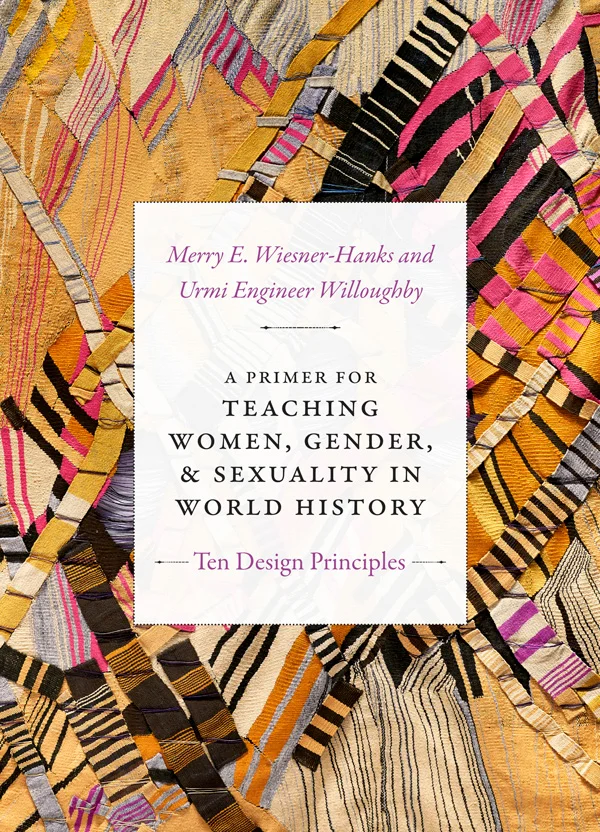
Book
Pages: 168
Published: October 2018
Authors: Merry E. Wiesner-Hanks and Urmi Engineer Willoughby
Subjects
History > World History, Gender and Sexuality > Feminism and Women’s Studies, Pedagogy and Higher Education
History > World History, Gender and Sexuality > Feminism and Women’s Studies, Pedagogy and Higher Education
Praise
Buy
Availability: In stock
Price: $29.95
This title will be released on October 12, 2018
Buy the e-book:
Information
Author/Editor Bios
Back to TopMerry E. Wiesner-Hanks is Distinguished Professor of History and Women's and Gender Studies at the University of Wisconsin–Milwaukee and author of, most recently, A Concise History of the World.
Urmi Engineer Willoughby is Assistant Professor of History at Murray State University and author of Yellow Fever, Race, and Ecology in Nineteenth-Century New Orleans.
Urmi Engineer Willoughby is Assistant Professor of History at Murray State University and author of Yellow Fever, Race, and Ecology in Nineteenth-Century New Orleans.
Table Of Contents
Back to TopPreface: This Book and How to Use It vii
Part I. Starting from Scratch
1. Setting Goals: Why Teach Women's, Gender, or Sexuality History? 3
2. Choosing a Focus and a Title: Women, Gender, or Sexuality? 17
3. Organizing Material: Chronological and Thematic Approaches 27
4. Incorporating Key Issues: Theory and Concepts from Women's, Gender, and Sexuality Studies 41
Part II. Modifying Existing Courses
5. Integrating Gender More Fully as a Category of Analysis: Beyond "Add Men and Stir" 55
6. Globalizing a Regionally Based Course: Teaching What You Do Not Know 67
7. Incorporating Feminist Pedagogy as You Move Online: Feminist Principles in a Virtual World 77
Part III. Common Challenges and Opportunities
8. Fostering Historical Empathy: Ethical Frameworks and Contextualization 91
9. Developing Assessments That Fit Your Course Goals: Test, Papers, and Assignments 101
10. Connecting with the Community: Opportunities for Local Research and Civic Engagement 113
Notes 125
Selected Bibliography 141
Index 147
Part I. Starting from Scratch
1. Setting Goals: Why Teach Women's, Gender, or Sexuality History? 3
2. Choosing a Focus and a Title: Women, Gender, or Sexuality? 17
3. Organizing Material: Chronological and Thematic Approaches 27
4. Incorporating Key Issues: Theory and Concepts from Women's, Gender, and Sexuality Studies 41
Part II. Modifying Existing Courses
5. Integrating Gender More Fully as a Category of Analysis: Beyond "Add Men and Stir" 55
6. Globalizing a Regionally Based Course: Teaching What You Do Not Know 67
7. Incorporating Feminist Pedagogy as You Move Online: Feminist Principles in a Virtual World 77
Part III. Common Challenges and Opportunities
8. Fostering Historical Empathy: Ethical Frameworks and Contextualization 91
9. Developing Assessments That Fit Your Course Goals: Test, Papers, and Assignments 101
10. Connecting with the Community: Opportunities for Local Research and Civic Engagement 113
Notes 125
Selected Bibliography 141
Index 147
Rights
Back to TopSales/Territorial Rights: World
Rights and licensingAdditional Information
Back to Top
Paper ISBN:
978-1-4780-0096-9 /
Hardcover ISBN:
978-1-4780-0078-5 /
eISBN:
978-1-4780-0247-5 /
DOI:
https://doi.org/10.1215/9781478002475
Publicity material