
Affording Justice
How the Legal Profession Is Failing America’s Middle Class and What to Do About It
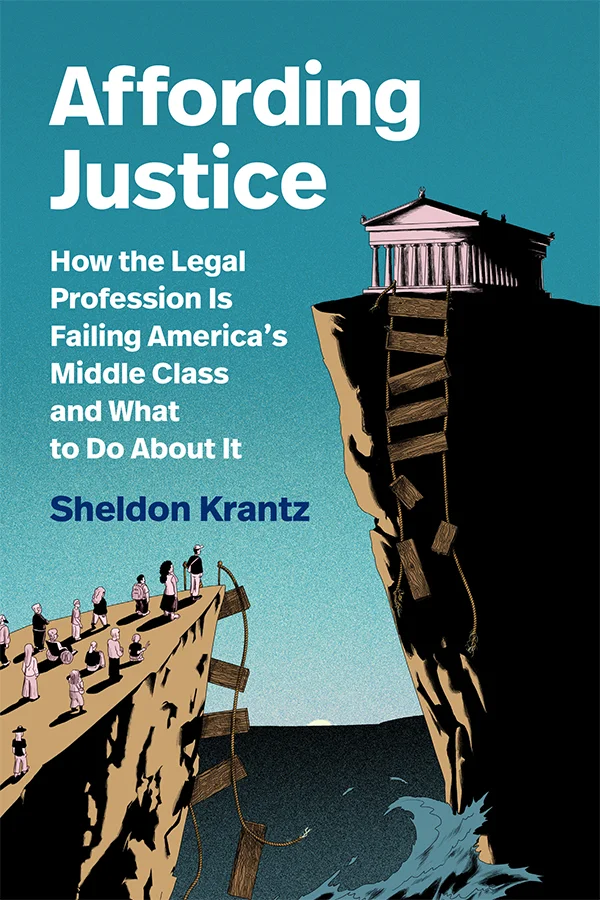
Book
Pages: 168
Illustrations: 8 illustrations
Publication Date: April 6, 2027
Praise
Buy
Availability: Loading...
Price: Loading...
This title will be published on April 6, 2027.
Information
Author/Editor Bios
Back to Top
Sheldon Krantz has worked for over sixty years as a lawyer, law professor, dean, litigation partner, and administrator of public interest programs. He is the author of numerous books, including The Legal Profession: What Is Wrong and How to Fix It.
Table Of Contents
Back to Top
Foreword / William M. Treanor
Introduction
Part I: The Problem
1 A Tale in Three Stories
2 Why Millions of Middle-Class Americans Can’t Afford to Hire a Lawyer
3 Why Doesn’t the Constitution Provide a Right to Counsel for Civil Matters?
4 Are Middle Class Americans Ever Eligible for Publicly Funded Legal Services?
Part II: The Solution
5 Ensuring That the Middle Class Is Treated Fairly on Civil Matters When Lawyers Are Not Available
6 Simplifying How Civil Justice Is Administered
7 Permitting Nonlawyers to Provide Legal Services
8 Using Community Resources Outside of Courts to Resolve Disputes
9 Teaching People How to Represent Themselves Effectively
10 Applying AI and Other Technologies to Eliminate the Gap in Civil Access to Justice
11 How Lawyers Can Provide Legal Services to the Middle Class As Part of Their Professional Responsibility
12 How Law Schools Can Advance Access to Civil Justice for the Middle Class
13 The Agendas of State Access to Justice Commissions Need to Include Middle-Class Access to Civil Justice
Conclusion
Acknowledgments
Notes
Index
Rights
Back to TopSales/Territorial Rights: World
Rights and licensingAdditional Information
Back to Top
Paper ISBN:
978-1-4780-3978-5 /
Hardcover ISBN:
978-1-4780-3477-3 /
eISBN:
978-1-4780-6341-4 /
Publicity material