
Architecture in Translation
Germany, Turkey, and the Modern House
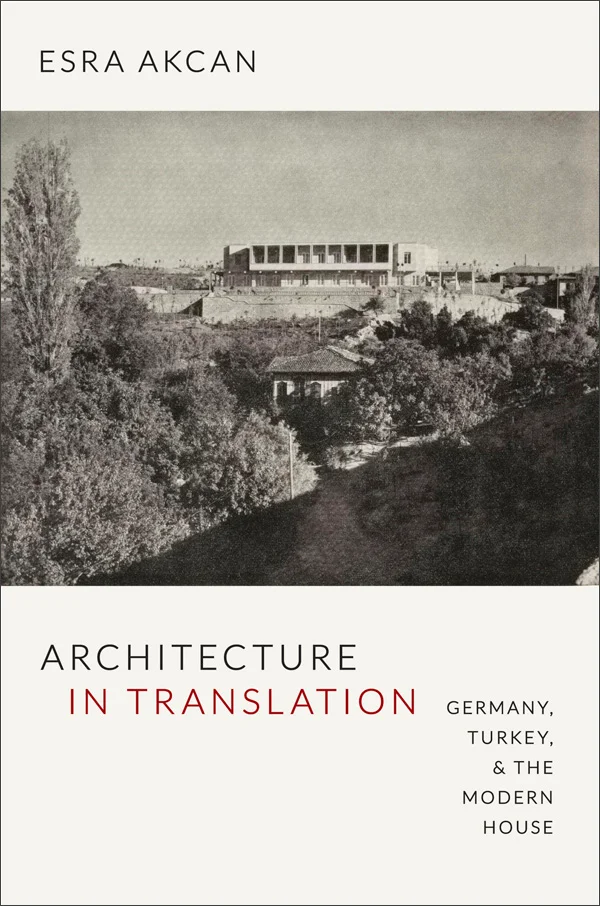
Book
Pages: 408
Illustrations: 143 illustrations
Published: July 2012
Author: Esra Akcan
Subjects
Art and Visual Culture > Art Criticism and Theory, Cultural Studies, Postcolonial and Colonial Studies
Art and Visual Culture > Art Criticism and Theory, Cultural Studies, Postcolonial and Colonial Studies
Praise
Buy
Availability: In stock
Price: $30.95
This title will be released on July 12, 2012
Buy the e-book:
Information
Author/Editor Bios
Back to TopEsra Akcan is Assistant Professor of Art History at the University of Illinois, Chicago. She is the author of (Land)Fill Istanbul: Twelve Scenarios for a Global City.
Table Of Contents
Back to Top
Acknowledgments i
Introduction. Modernity in Translation 1
Translation beyond Language 6
The Theoretical Possibility or Impossibility of Translation 9
Appropriating and Foreignizing Translations 15
The Historical Unevenness of Translation 17
The Ubiquity of Hybrids and the Scarcity of Cosmopolitan Ethics 21
1. Modernism From Above: A Conviction about Its Own Translatability 27
New City: Traveling Garden City 30
New House: Representative Affinities 52
New Housing: The Ideal Life 76
From Ankara to the Whole Nation: Translatability from Above and Below 93
2. Melancholy in Translation 101
The Melancholy of Istanbul 107
A Journey to the West 119
The Birth of the "Modern Turkish House" 133
3. Siedlung in Subaltern Exile 145
Siedlung and the Metropolis 148
Siedlung and the Generic Rational Dwelling 175
Siedlung and the Subaltern 195
4. Convictions about Untranslatability 215
Untranslatable Culture and Translatable Civilization 215
"The Original" 218
Against Translation? The National House and Siedlung 233
5. Toward a Cosmopolitan Architecture 247
Ex Oriente Lux 249
Melancholy of the East 252
Weltarchitektur—Translation of a Treatise 263
Toward Another Cosmopolitan Ethics in Architecture 277
Epilogue 283
Notes 291
Bibliography 337
Sources of Illustrations 375
Index 383
Introduction. Modernity in Translation 1
Translation beyond Language 6
The Theoretical Possibility or Impossibility of Translation 9
Appropriating and Foreignizing Translations 15
The Historical Unevenness of Translation 17
The Ubiquity of Hybrids and the Scarcity of Cosmopolitan Ethics 21
1. Modernism From Above: A Conviction about Its Own Translatability 27
New City: Traveling Garden City 30
New House: Representative Affinities 52
New Housing: The Ideal Life 76
From Ankara to the Whole Nation: Translatability from Above and Below 93
2. Melancholy in Translation 101
The Melancholy of Istanbul 107
A Journey to the West 119
The Birth of the "Modern Turkish House" 133
3. Siedlung in Subaltern Exile 145
Siedlung and the Metropolis 148
Siedlung and the Generic Rational Dwelling 175
Siedlung and the Subaltern 195
4. Convictions about Untranslatability 215
Untranslatable Culture and Translatable Civilization 215
"The Original" 218
Against Translation? The National House and Siedlung 233
5. Toward a Cosmopolitan Architecture 247
Ex Oriente Lux 249
Melancholy of the East 252
Weltarchitektur—Translation of a Treatise 263
Toward Another Cosmopolitan Ethics in Architecture 277
Epilogue 283
Notes 291
Bibliography 337
Sources of Illustrations 375
Index 383
Rights
Back to TopSales/Territorial Rights: World
Rights and licensingAdditional Information
Back to Top
Paper ISBN:
978-0-8223-5308-9 /
Hardcover ISBN:
978-0-8223-5294-5 /
eISBN:
978-0-8223-9557-7 /
DOI:
https://doi.org/10.1215/9780822395577
Publicity material