
Archives of Empire
Volume I. From The East India Company to the Suez Canal
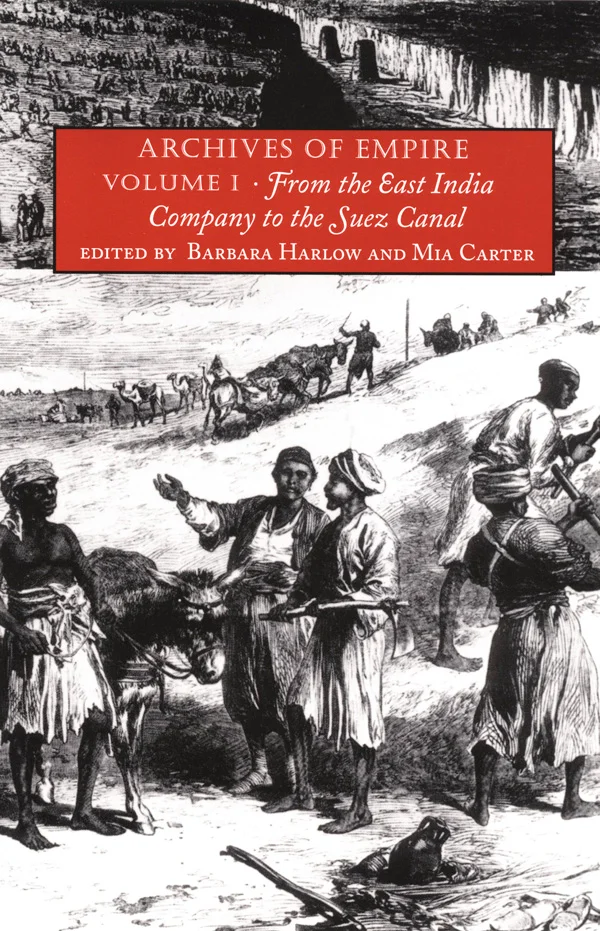
Book
Pages: 832
Illustrations: 28 illus., 1 map
Published: December 2003
Editors: Barbara Harlow and Mia Carter
Subjects
Literature and Literary Studies > Literary Criticism, History > World History, Postcolonial and Colonial Studies
Literature and Literary Studies > Literary Criticism, History > World History, Postcolonial and Colonial Studies
Praise
Buy
Availability: In stock
Price: $46.95
This title will be released on December 31, 2003
Buy the e-book:
Information
Author/Editor Bios
Back to TopBarbara Harlow is Louann and Larry Temple Centennial Professor of English at the University of Texas, Austin.
Mia Carter is Associate Professor of English at the University of Texas, Austin. They are coeditors of Imperialism and Orientalism: A Documentary Sourcebook.
Table Of Contents
Back to Top
Acknowledgments xix
General Introduction: Readings in Imperialism and Orientalism xxi
Volume Introduction: From the Company to the Canal 1
I. COMPANY TO CANAL, 1757-1869
INTRODUCTION: Adventure Capitalism: Mercantilism, Militarism, and the British East India Company 13
Chronology of Events 16
List of the Governors and Governors-General of India 17
List of the Newabs of Bengal 18
India under Cornwallis (1792) [map] 19
India under Wellesley (1799) [map] 19
India under Hastings (1832) [map] 20
India under Dalhousie (1856) [map] 20
G.A. (George Alfred) Henty, Excerpt from With Clive in India (n.d.) 21
“Agreement between the Nabob Nudjum-ul-Dowlah and the Company, 12 August 1765” 25
Anonymous, An Inquiry into the Rights of the East India Company of Making War and Peace (1772) 27
East India Company Act, 1773 31
James Mill, “The Constitution of the East India Company” (1817) 39
James Mill, Letter to Durmont (1819) 47
John Stuart Mill. Excerpt from Autobiography (1873) 48
Government of India Act, 1833 49
Lord Thomas Babington Macaulay, “Lord Clive” (1840) 59
Samuel Lucas, “The Spoliation of Oude” (1857) 72
Sir Arthur Wellesley, “Memorandum on Marquess Wellesley’s Government of India” (1806) 81
II. ORIENTAL DEPOTISM
INTRODUCTON: Oriental Despotisms and Political Economies 89
Baron de Montesquieu, “Distinctive Properties of a Despotic Government” (1746) 92
Baron de Montesquieu, Excerpts from Persian Letters (1721) 92
Adam Smith, “America and the East Indies” (1776) 95
Robert Orme, “Of the Government and People of Indostan” (1782) 107
John Stuart Mill, Excerpt from The Principles of Political Economy (1848) 111
John Stuart Mill, Excerpt from “Considerations on Representative Government” (1861) 113
Karl Marx, “On Imperialism in India” (1853) 117
III. THE IMPEACHMENT OF WARREN HASTINGS
INTRODUCTION: Warren Hastings: Naughty Nabob or National Hero? 131
Warren Hastings, “Warren Hastings to the Court of General Directors, 11 November 1773” 135
Warren Hastings, Excerpt from Memoirs Relative to the State of India (1786) 137
Edmund Burke, “Edmund Burke on the Impeachment of Warren Hastings, 15-19 February 1788” 143
Westminister Hall during the trial of Warren Hastings (1788) [illustration] 146
Fanny Burney, Diary Selections (1788) 155
Edmund Burke, “From the Third Day of Edmund Burke’s Speech Opening the Impeachment, 18 February 1788” 160
Warren Hastings, “From the Address of Warren Hastings in His Defence, 2 June 1791” 163
Lord Thomas Babington Macaulay, “Warren Hastings” (1841) 166
IV. THE CASE OF TIPU SULTAN
INTRODUCTION: Tipu Sultan: Oriental Despot or National Hero? 171
G.A. Henty, Excerpts from The Tiger of Mysore (189?) 173
“Tippoo Sahib at the Lines of Travancore” (1789) [illustration] 174
Major Diram, “Treaties of Peace, and Review of the Consequences of War” (1793) 175
Selected Letters between Tipu and Company Governors-General, 1798-1799 180
Wilkie Collins, “Prologue: The Storming of Seringapatam, 1799” (1869) 195
V. ORIENTALISM
INTRODUCTION: Orientalism: The East as a Career 203
Mary Shelley, Excerpts from Frankenstein (1813/1831) 206
Benjamin Disraeli, Excerpt from Sibyl, or the Two Nations (1845) 208
Definitions from the Hobson-Jobson Dictionary 209
G.W.F. Hegel, “India” (1822) 219
William Jones, “A Discourse on the Institution of a Society for Inquiring into the History, Civil and Natural, the Antiquities, Arts, Sciences, and Literatures of Asia” (1784) 223
Lord Thomas Babington Macaulay, “Minute on Indian Education” (1835) 227
Max Muller, “The Aryan Section” (1876) 239
VI. LAWS AND ORDERS
INTRODUCTION: Ordering “Chaos”: Administering the Law 249
Robert Orme, “Of the Laws and Justice of Indostan” (1782) 251
Sir William Jones, Preface to “Institutes of Hindu Law: Or, the Ordinances of Menu” (1794) 261
Lord Thomas Babington Macaulay, “Introductory Report upon the Indian Penal Code” (1837) 268
VII. THUGGEE/THAGI
INTRODUCTION: Decriminalizing the Landscape: Thugs and Poisoners 285
A thug “family tree” (1836) [illustration] 288
Thug depredations (1836) [map] 288
Thugs giving a demonstration of their method of strangulation (1855) [photo] 289
Captain William H. Sleeman, Excerpts from The Thugs or Phansigars of India: History of the Rise and Progress (1839) 297
Fanny Parks Parlby, “A Kutcherry or Kachahri” (1850) 307
Philip Meadows Taylor, “Thugs” (1877) 314
Philip Meadows Taylor, Excerpts from Confessions of a Thug (1837) 315
Captain William H. Sleeman, “Thug Approvers” (1833-1835?) 322
VIII. SUTTEE/SATI
INTRODUCTION: Sati/Suttee: Observances, Abolition, Observations 337
Colonel Henry Yule and A.C. Burnell, “Suttee” [definition] (1903) 340
Lord William Bentinck, “Bentinck’s Minute on Sati, 8 November 1892” 350
Sati Regulation XVII, A.D. 1829 of the Bengal Code, 4 December 1829 361
“The Duties of a Faithful Widow,” from Digest of Hindi Law (n.d.) 364
Raja Ram Mohan Roy, “Petitions and Addresses on the Practice of Suttee (1818-1831)” 369
G.W.F. Hegel, On Sati (1822) 374
Charles Dickens, Death by Fire of Miss Havisham (1861) 375
Jules Verne, “Fogg Rescues a Sati” (1873) 377
Maspero Jingle [advertisement for Maspero Egyptian cigarettes] 379
Ernest Renan, On Suttee (1893) 380
Flora Annie Steel, “The Reformer’s Wife” (1933) 381
IX. THE INDIAN UPRISING/SEPOY MUTINY 1857-1858
INTRODUCTION: The “Asiatic Mystery”: The Sepoy Mutiny, Rebellion, or Revolt 391
Chronology of Events 396
Rulers and Rebels: Some Major Figures 397
Excerpts from The Who’s Who of Indian Martyrs (1969-1973) 400
“Portrait of Nana Sahib” [illustration] 402
“Sepoys, 1757” (1890) [illustration] 406
“Attack of the Mutineers on the Redan Battery at Lucknow, July 30, 1857” (n.d.) [illustration] 406
“The Asiatic Mystery. As Prepared by Sepoy D’Israeli” (1857) [illustration] 407
“Proclamation to the People of Oude on Its Annexati
General Introduction: Readings in Imperialism and Orientalism xxi
Volume Introduction: From the Company to the Canal 1
I. COMPANY TO CANAL, 1757-1869
INTRODUCTION: Adventure Capitalism: Mercantilism, Militarism, and the British East India Company 13
Chronology of Events 16
List of the Governors and Governors-General of India 17
List of the Newabs of Bengal 18
India under Cornwallis (1792) [map] 19
India under Wellesley (1799) [map] 19
India under Hastings (1832) [map] 20
India under Dalhousie (1856) [map] 20
G.A. (George Alfred) Henty, Excerpt from With Clive in India (n.d.) 21
“Agreement between the Nabob Nudjum-ul-Dowlah and the Company, 12 August 1765” 25
Anonymous, An Inquiry into the Rights of the East India Company of Making War and Peace (1772) 27
East India Company Act, 1773 31
James Mill, “The Constitution of the East India Company” (1817) 39
James Mill, Letter to Durmont (1819) 47
John Stuart Mill. Excerpt from Autobiography (1873) 48
Government of India Act, 1833 49
Lord Thomas Babington Macaulay, “Lord Clive” (1840) 59
Samuel Lucas, “The Spoliation of Oude” (1857) 72
Sir Arthur Wellesley, “Memorandum on Marquess Wellesley’s Government of India” (1806) 81
II. ORIENTAL DEPOTISM
INTRODUCTON: Oriental Despotisms and Political Economies 89
Baron de Montesquieu, “Distinctive Properties of a Despotic Government” (1746) 92
Baron de Montesquieu, Excerpts from Persian Letters (1721) 92
Adam Smith, “America and the East Indies” (1776) 95
Robert Orme, “Of the Government and People of Indostan” (1782) 107
John Stuart Mill, Excerpt from The Principles of Political Economy (1848) 111
John Stuart Mill, Excerpt from “Considerations on Representative Government” (1861) 113
Karl Marx, “On Imperialism in India” (1853) 117
III. THE IMPEACHMENT OF WARREN HASTINGS
INTRODUCTION: Warren Hastings: Naughty Nabob or National Hero? 131
Warren Hastings, “Warren Hastings to the Court of General Directors, 11 November 1773” 135
Warren Hastings, Excerpt from Memoirs Relative to the State of India (1786) 137
Edmund Burke, “Edmund Burke on the Impeachment of Warren Hastings, 15-19 February 1788” 143
Westminister Hall during the trial of Warren Hastings (1788) [illustration] 146
Fanny Burney, Diary Selections (1788) 155
Edmund Burke, “From the Third Day of Edmund Burke’s Speech Opening the Impeachment, 18 February 1788” 160
Warren Hastings, “From the Address of Warren Hastings in His Defence, 2 June 1791” 163
Lord Thomas Babington Macaulay, “Warren Hastings” (1841) 166
IV. THE CASE OF TIPU SULTAN
INTRODUCTION: Tipu Sultan: Oriental Despot or National Hero? 171
G.A. Henty, Excerpts from The Tiger of Mysore (189?) 173
“Tippoo Sahib at the Lines of Travancore” (1789) [illustration] 174
Major Diram, “Treaties of Peace, and Review of the Consequences of War” (1793) 175
Selected Letters between Tipu and Company Governors-General, 1798-1799 180
Wilkie Collins, “Prologue: The Storming of Seringapatam, 1799” (1869) 195
V. ORIENTALISM
INTRODUCTION: Orientalism: The East as a Career 203
Mary Shelley, Excerpts from Frankenstein (1813/1831) 206
Benjamin Disraeli, Excerpt from Sibyl, or the Two Nations (1845) 208
Definitions from the Hobson-Jobson Dictionary 209
G.W.F. Hegel, “India” (1822) 219
William Jones, “A Discourse on the Institution of a Society for Inquiring into the History, Civil and Natural, the Antiquities, Arts, Sciences, and Literatures of Asia” (1784) 223
Lord Thomas Babington Macaulay, “Minute on Indian Education” (1835) 227
Max Muller, “The Aryan Section” (1876) 239
VI. LAWS AND ORDERS
INTRODUCTION: Ordering “Chaos”: Administering the Law 249
Robert Orme, “Of the Laws and Justice of Indostan” (1782) 251
Sir William Jones, Preface to “Institutes of Hindu Law: Or, the Ordinances of Menu” (1794) 261
Lord Thomas Babington Macaulay, “Introductory Report upon the Indian Penal Code” (1837) 268
VII. THUGGEE/THAGI
INTRODUCTION: Decriminalizing the Landscape: Thugs and Poisoners 285
A thug “family tree” (1836) [illustration] 288
Thug depredations (1836) [map] 288
Thugs giving a demonstration of their method of strangulation (1855) [photo] 289
Captain William H. Sleeman, Excerpts from The Thugs or Phansigars of India: History of the Rise and Progress (1839) 297
Fanny Parks Parlby, “A Kutcherry or Kachahri” (1850) 307
Philip Meadows Taylor, “Thugs” (1877) 314
Philip Meadows Taylor, Excerpts from Confessions of a Thug (1837) 315
Captain William H. Sleeman, “Thug Approvers” (1833-1835?) 322
VIII. SUTTEE/SATI
INTRODUCTION: Sati/Suttee: Observances, Abolition, Observations 337
Colonel Henry Yule and A.C. Burnell, “Suttee” [definition] (1903) 340
Lord William Bentinck, “Bentinck’s Minute on Sati, 8 November 1892” 350
Sati Regulation XVII, A.D. 1829 of the Bengal Code, 4 December 1829 361
“The Duties of a Faithful Widow,” from Digest of Hindi Law (n.d.) 364
Raja Ram Mohan Roy, “Petitions and Addresses on the Practice of Suttee (1818-1831)” 369
G.W.F. Hegel, On Sati (1822) 374
Charles Dickens, Death by Fire of Miss Havisham (1861) 375
Jules Verne, “Fogg Rescues a Sati” (1873) 377
Maspero Jingle [advertisement for Maspero Egyptian cigarettes] 379
Ernest Renan, On Suttee (1893) 380
Flora Annie Steel, “The Reformer’s Wife” (1933) 381
IX. THE INDIAN UPRISING/SEPOY MUTINY 1857-1858
INTRODUCTION: The “Asiatic Mystery”: The Sepoy Mutiny, Rebellion, or Revolt 391
Chronology of Events 396
Rulers and Rebels: Some Major Figures 397
Excerpts from The Who’s Who of Indian Martyrs (1969-1973) 400
“Portrait of Nana Sahib” [illustration] 402
“Sepoys, 1757” (1890) [illustration] 406
“Attack of the Mutineers on the Redan Battery at Lucknow, July 30, 1857” (n.d.) [illustration] 406
“The Asiatic Mystery. As Prepared by Sepoy D’Israeli” (1857) [illustration] 407
“Proclamation to the People of Oude on Its Annexati
Rights
Back to TopSales/Territorial Rights: World
Rights and licensingAdditional Information
Back to Top
Paper ISBN:
978-0-8223-3164-3 /
Hardcover ISBN:
978-0-8223-3176-6 /
eISBN:
978-0-8223-8503-5 /
DOI:
https://doi.org/10.1215/9780822385035
Publicity material