
Beneath the Surface
A Transnational History of Skin Lighteners
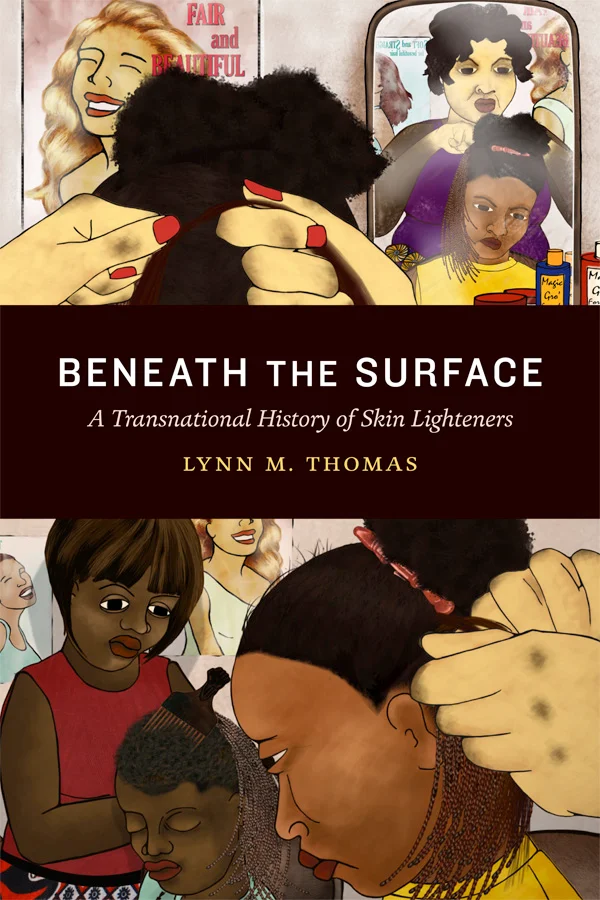
Book
Pages: 368
Illustrations: 85 illustrations (incl. 39 in color)
Published: January 2020
Author: Thomas, Lynn M.
Subjects
African Studies, History > African History, Gender and Sexuality > Feminism and Women’s Studies
African Studies, History > African History, Gender and Sexuality > Feminism and Women’s Studies
Praise
Buy
Availability: Loading...
Price: Loading...
This title will be released on January 10, 2020
Buy the e-book:
Information
Author/Editor Bios
Back to Top
Lynn M. Thomas is Professor of History at the University of Washington; coeditor of The Modern Girl Around the World: Consumption, Modernity, and Globalization, also published by Duke University Press; and author of Politics of the Womb: Women, Reproduction, and the State in Kenya.
Table Of Contents
Back to Top
Acknowledgments ix
A Layered History 1
1. Cosmetic Practices and Colonial Crucibles 22
2. Modern Girls and Racial Respectability 47
3. Local Manufacturing and Color Consciousness 75
4. Beauty Queens and Consumer Capitalism 98
5. Active Ingredients and Growing Criticism 150
6. Black Consciousness and Biomedical Opposition 190
Sedimented Meanings and Compounded Politics 221
Notes 237
Bibliography 293
Index
A Layered History 1
1. Cosmetic Practices and Colonial Crucibles 22
2. Modern Girls and Racial Respectability 47
3. Local Manufacturing and Color Consciousness 75
4. Beauty Queens and Consumer Capitalism 98
5. Active Ingredients and Growing Criticism 150
6. Black Consciousness and Biomedical Opposition 190
Sedimented Meanings and Compounded Politics 221
Notes 237
Bibliography 293
Index
Rights
Back to TopSales/Territorial Rights: World exc Southern Africa
Rights and licensingAwards
Back to TopNamed to the Shortlist for the 2022 African Studies Association of the UK (ASAUK) Fage & Oliver Monograph Prize
Additional Information
Back to Top
Related Links
- Read a piece on Beneath the Surface on The Conversation by Lynn M. Thomas
- Watch an interview with Lynn Thomas on SABC News
- Listen to an interview with Lynn Thomas on the New Books Network
- Watch the Beneath the Surface book launch on WISER
- Listen to an interview with Lynn Thomas on The Glossy Beauty Podcast
Publicity material