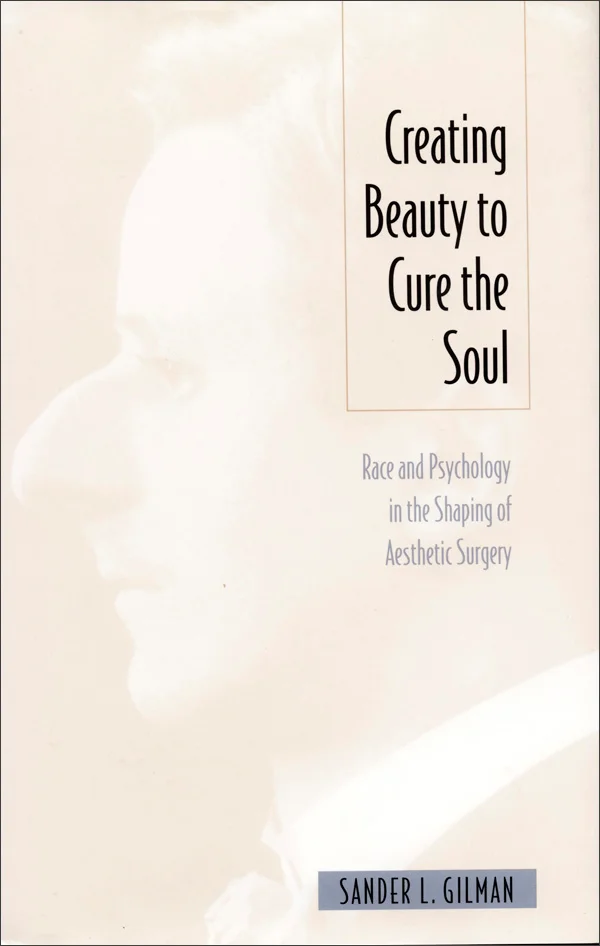
“[A] stimulating . . . reading of certain themes in the histories of the body, race and ethnicity, and medicine.” - Lois W. Banner , Bulletin of the History of Medicine
“A wide-ranging and richly rewarding book.” - Diane Jonte-Pace , Religious Studies Review
“Following the development of aesthetic surgery and the psychological theories for and against it, Gilman makes a convincing case for the ways in which stereotypes of race and gender have infused our understanding of health, beauty, ugliness, and disease. . . . [H]ighly nuanced.” - Joel T. Braslow , American Historical Review
“Gilman draws on psychological and philosophical theories of the self and self-image to give a context for patient decisions about cosmetic surgery.” - Marguerite Strobel , Hastings Center Report
“Gilman raises many important questions regarding the origins of happiness in a culture over-invested in diverse forms of legible ‘health’” - Virginia Blum , JCPS
“It is fascinating to discover the interactions of the various strands that make up this story, where medicine and technology become tools and agents of broader themes that in turn highlight the central concerns of a society at a given time.” - Erika Bourguignon , Antioch Review
“The breadth and depth of Gilman’s knowledge and scholarship is dazzling.” - Journal of the American Psychoanalytic Association
“While Gilman’s book is favourable for academic accounts for the relationship between race, cosmetic surgery, and psychoanalysis, his writing style is particularly accessible. He also writes with humour and manages to travel over history seemingly effortlessly, contrasting the ideas of Kant and Neitzsche with examinations of the Phantom of the Opera and Zola.” - Psychoanalytic Studies
"Arguing that pseudoscientific theories of race from the 19th and early 20th centuries still impact our current standards of beauty and ‘unhappiness’ with our own bodies, prolific critic Gilman explores plastic surgery as an extension of psychotherapy. He traces the history of aesthetic surgery from its initial function of hiding disease (most particularly syphilis) to is later incarnation as a means of erasing ethnic identity (specifically Jewish identifications by nose shape and size) and creating a more ‘normal’ appearance." - , Publishers Weekly
"As a psychoanalytically informed and sophisticated cultural historian, Gilman critiques not only the profession of aesthetic surgery but also those persons who subject themselves to surgical intervention in order to overcome what must be seen as a psychological problem. He critically explores the ethical issues involved in surgically operating on a ‘healthy’ body to fit the patient’s desire or wishes, an the rationalizations offered by cosmetic surgeons to justify their ‘specialization. . . . ’ [T]he book is an enjoyable venture into cultural history, well written and thus worthwhile. . ." - , Psychoanalytic Books
"Gilman's Creating Beauty to Cure the Soul provides an interesting history of aesthetic surgery while offering a cogent, provocative argument about the way it justifies itself as a field. Thanks to his erudition and his genuine respect for the medical profession, Creating Beauty is refreshingly free from the "bashing" one encounters in some academic studies of science and medicine." - Laura Otis , Perspectives in Biology and Medicine
"The development of aesthetic surgery required not only the discovery of anesthesia and antisepsis but also the emergence in society of a common perception of what constituted acceptable appearance. In Creating Beauty to Cure the Soul, Gilman shows how such ideas emerged during the Enlightenment with, among others, Kant and Karl Rosenkrantz, who saw the body in affective and then moral terms; what looked beautiful was pleasing and was a sign of virtue, health, and happiness. Certain visible differences—‘ugliness’—were then categorized as unhealthy and stigmatized. If the ‘ugly’ were either ill, or predisposed to become ill, and destined to pass on these characteristics to their offspring, then no amount of surgery or cosmetics could alter this. . . . [Gilman] deserves great credit for uncovering the relationship between the complex and occasionally contradictory ideas of psychoanalysis and the more prosaic world of surgery, showing how psychoanalysis influenced and under pinned theories on the efficacy of aesthetic surgery." - , TLS
"This book raises many interesting ideas that could explain the current rage for cosmetic surgery. . . . The focus on the nose and psychoanalysis is unique . . . . Those interested in the phenomenon of cosmetic surgery will want to read this book." - JAMA
“Creating Beauty to Cure the Soul reveals the multi-dimensional cultural, political, and ‘racial’ aspects of the development of modern aesthetic surgery. With his usual acuity, aplomb, and elan, Sander Gilman shows that the distinction between ‘reconstructive’ and ‘aesthetic’ plastic surgery is a thoroughly cultural, thoroughly constructed, and thus thoroughly political/racialized difference.” - Daniel Boyarin, author of Unheroic Conduct: The Rise of Heterosexuality and theInvention of the Jewish Man
“Erudite and wide-ranging, Creating Beauty to Cure the Soul will stimulate a great deal of discussion. A welcomed addition to Gilman’s already impressive ouevre.” - Dr. George Makari, Cornell University Medical College
“Sander Gilman’s undisputed mastery in explaining and analyzing human stereotypes receives a new and fascinating dimension through the role which aesthetic surgery plays in connecting ideas of physical change and human happiness.” - George L. Mosse, author of The Image of Man and The Crisis of German Ideology