
Decolonizing Afghanistan
Countering Imperial Knowledge and Power
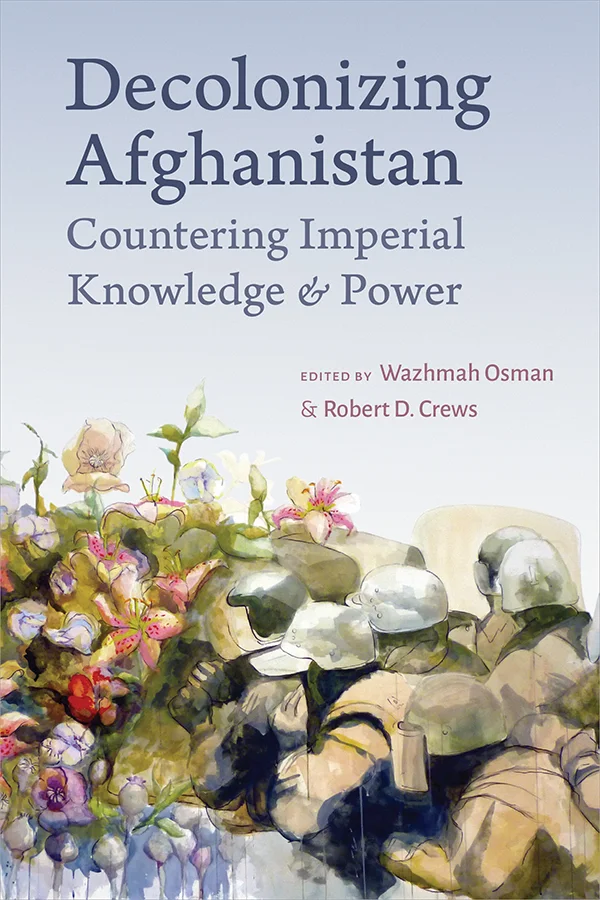
Book
Pages: 376
Illustrations: 33 illustrations
Published: October 2025
Editors: Wazhmah Osman and Robert D. Crews
Contributors: Zohra Saed, Helena Zeweri, Nivi Manchanda, Morwari Zafar, Matthieu Aikins, Ali Karimi, Marya Hannun, Hosai Qasmi, Purnima Bose, Dawood Azami, Sabauon Nasseri, Tausif Noor, Gazelle Samizay, and Paula Chakravartty
Postcolonial and Colonial Studies, Asian Studies > South Asia, Cultural Studies > Surveillance Studies
Praise
Buy
Price: $29.95
This title will be released on October 28, 2025
Buy the e-book:
Open Access
Request a desk or exam copyInformation
Author/Editor Bios
Back to TopRobert D. Crews is Professor of History at Stanford University.
Table Of Contents
Back to TopPart 1. Imperial Imaginaries and the Historical Production of Afghanistan as a Diagnostic Object of Global Security
1. Imperial Misconceptions: The Politics of Knowledge Production / Nivi Manchanda 35
2. Afghanistan and the Soviet Colonial Archive / Robert D. Crews 54
3. The Imperial Gaze and the Development Gaze: Reckoning with the Two Faces of American Empire and Its Afterlives and Deaths / Wazhmah Osman 72
Part 2. Infrastructures and Technologies of Empire
4. Operationalizing "Afghan Culture": Role-Playing and Translation in US Military Counterinsurgency Training / Morwari Zafar 97
5. Shifting Loyalties and Profits: The Rise of Afghanistan's Western-Funded Private Security Contractors / Matthieu Aikins 115
6. Tracking and Targeting: The US Surveillance Infrastructures in Afghanistan / Ali Karimi 134
Part 3. The Politics and Optics of Representation: Media and Propaganda
7. Modernity and Gender Beyond the European Gaze: International Media Coverage of Afghanistan and the Making of News in the 1920s—King Amanullah and Queen Suraya's Grand Tour / Marya Hannun 153
8. A Changing Orientalist Representation of Afghans and Afghanistan in Indian Cinema / Hosai Qasmi 174
9. Withdrawal Narratives: Afghan Women, Time, and Developmental Idealism / Purnima Bose 194
10. The Second Front: The Taliban Information Operation and the Battle for Hearts and Minds in the US/NATO War in Afghanistan (2001–2021) / Dawood Azami 218
Part 4. Reflecting and Speaking Back to Empire
11. Between Humanitarian Aid and Political Critique: Afghan American Mobilizations Post-Evacuation / Helena Zeweri 247
12. Reflections: Afghan Literature and Politics Under US Occupation / Sabauon Nasseri 267
13. Imperial Remainders: Reconfiguring the Legacy of US Occupation in Contemporary Afghan Art / Tausif Noor 284
14. Disrupting the Colonial Canvas: Afghan Art in the Wake of Withdrawal / Gazelle Simizay 295
15. An Other Afghanistan: Indigeneity, Migration, and Belonging in Andkhoy (1973) / Zohra Saed 317
Coda / Paula Chakravartty 335
Acknowledgments 343
Contributors 345
Index 351
Rights
Back to TopSales/Territorial Rights: World
Rights and licensingAdditional Information
Back to Top- Wazhmah Osman's website
- Robert Crews's website
- Watch a conversation between Wazhmah Osman and Zahra Ali about the entanglement of US imperialism in Afghanistan and Iraq and the ongoing War on Terror.
Publicity material