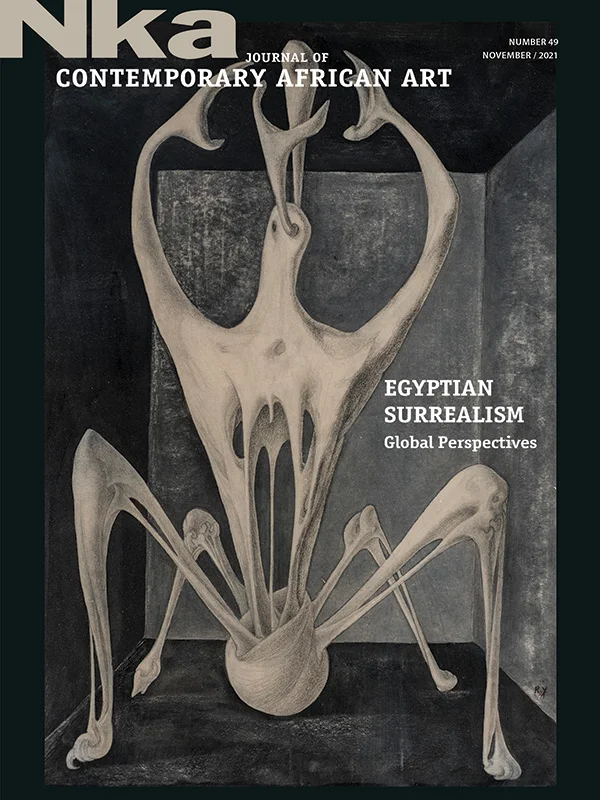
Contributors to this special issue explore the history and evolution of the Egyptian Surrealist movement from the late 1930s to the early 1960s, as well as the relationships of artists engaged in this movement with their Western and international counterparts. Associated with the intellectual and progressive political movements of the era, the Egyptian Surrealist movement served as a form of interaction between thinkers in Egypt and the intellectual streams in the world. It also became a voice affirming political and artistic liberty at a distinct historical moment not only in Egypt but worldwide, when the totalitarian regimes of Stalinism, Nazism, fascism, and the Japanese authoritarian military were escalating aggression, shattering world peace, and imposing restrictions on the freedom of artistic and literary movements.
Contributors: Gerard Aching, Ila Al Amam, Edwar al-Kharrat, Hoor Al-Qasimi, Amina Diab, Manthia Diawara, Ila El Amam, Chihab El Khachab, Bachir El Sibaei, Malek Khouri, Hisham Geshta, Samir Gharib, Maria Golia, Salah M. Hassan, Dina Hussein, Helen Jennings, Hannah Sage Kay, Mona Khazindar, Michael Richardson, Alex Dika Seggerman, Ola Seif, May Telmissany, Unity Woodman