
Fear of a Dead White Planet
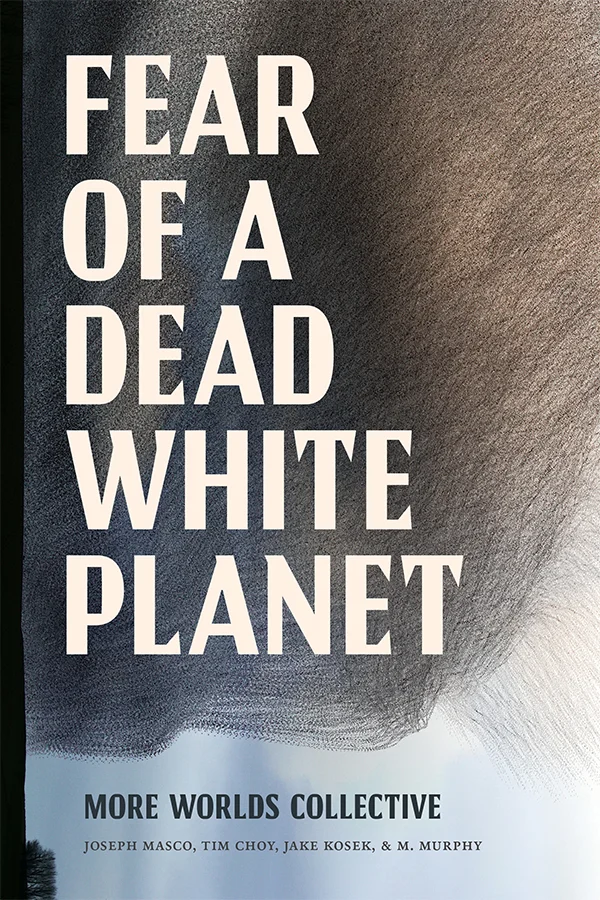
Book
Pages: 200
Illustrations: 16 illustrations
Published: July 2025
Authors: More Worlds Collective, Joseph Masco, Tim Choy, Kosek, Jake, and M. Murphy
Subjects
Science and Technology Studies, Anthropology > Cultural Anthropology, Environmental Studies > Environmental Humanities
Science and Technology Studies, Anthropology > Cultural Anthropology, Environmental Studies > Environmental Humanities
Praise
Buy
Availability: In stock
Price: $23.95
This title will be released on July 31, 2025
Buy the e-book:
Open Access
Funding information for the OA format is found at the bottom of the page.
Information
Author/Editor Bios
Back to Top
Joseph Masco is Samuel N. Harper Professor of Anthropology at the University of Chicago.
Tim Choy is Professor of Science and Technology Studies and of Anthropology at the University of California, Davis.
Jake Kosek is Associate Professor of Geography at the University of California, Berkeley.
M. Murphy is Professor and Canada Research Chair in Environmental Data Justice and Science and Technology Studies at the University of Toronto.
Tim Choy is Professor of Science and Technology Studies and of Anthropology at the University of California, Davis.
Jake Kosek is Associate Professor of Geography at the University of California, Berkeley.
M. Murphy is Professor and Canada Research Chair in Environmental Data Justice and Science and Technology Studies at the University of Toronto.
Table Of Contents
Back to Top
Part O. Invitation 1
Part 1. Against the One World, For Conditions 4
1.1 What Is a Planet? 4
1.2 What Is an Intergalactic Bummer Train? 11
1.3 What Is Environment? 15
1.4 Who, Where, What? 29
1.5 What Is a Core / What Are Worlds? 39
1.6 What Is a Species / What Is a Loss? 48
Part 2. Who’s Afraid of a Dead White Planet? 55
2.1 Situated Premise—Fear of a Dead White Planet 55
2.2 Some Propositions 78
Part 3. Middles 87
3.1 What Is a Middle? 87
3.2 What Is Land? 88
3.3 What Is a Lung? 95
3.4 What Is a Virus? 99
3.5 What Is Thinking? 106
Part 4. Terraformatics 115
4.1 Resolve 115
4.2 Impossible Methods for Terraformatics Research Studies 124
Part 5. Conclusion and Future Assessment 138
5.1 Welcome to the End 138
5.2 Gleaning Group III.5, Work Log 21220401, Tamalpais Archipelgo, RSVTERRA9 139
Acknowledgments / Work History 143
References 157
Index 181
Part 1. Against the One World, For Conditions 4
1.1 What Is a Planet? 4
1.2 What Is an Intergalactic Bummer Train? 11
1.3 What Is Environment? 15
1.4 Who, Where, What? 29
1.5 What Is a Core / What Are Worlds? 39
1.6 What Is a Species / What Is a Loss? 48
Part 2. Who’s Afraid of a Dead White Planet? 55
2.1 Situated Premise—Fear of a Dead White Planet 55
2.2 Some Propositions 78
Part 3. Middles 87
3.1 What Is a Middle? 87
3.2 What Is Land? 88
3.3 What Is a Lung? 95
3.4 What Is a Virus? 99
3.5 What Is Thinking? 106
Part 4. Terraformatics 115
4.1 Resolve 115
4.2 Impossible Methods for Terraformatics Research Studies 124
Part 5. Conclusion and Future Assessment 138
5.1 Welcome to the End 138
5.2 Gleaning Group III.5, Work Log 21220401, Tamalpais Archipelgo, RSVTERRA9 139
Acknowledgments / Work History 143
References 157
Index 181
Rights
Back to TopSales/Territorial Rights: World
Rights and licensingAdditional Information
Back to Top
Paper ISBN:
978-1-4780-3210-6 /
Hardcover ISBN:
978-1-4780-2884-0 /
eISBN:
978-1-4780-6105-2 /
DOI:
https://doi.org/10.1215/9781478061052
Publicity material
Funding Information
Back to Top
This book is freely available in an open access edition thanks to the generous support by the University of California Davis Library.
Open Access publication made possible in part by support from the Berkeley Research Impact Initiative (BRII) sponsored by the University of California Berkeley Library.
Open Access publication made possible in part by support from the Berkeley Research Impact Initiative (BRII) sponsored by the University of California Berkeley Library.