
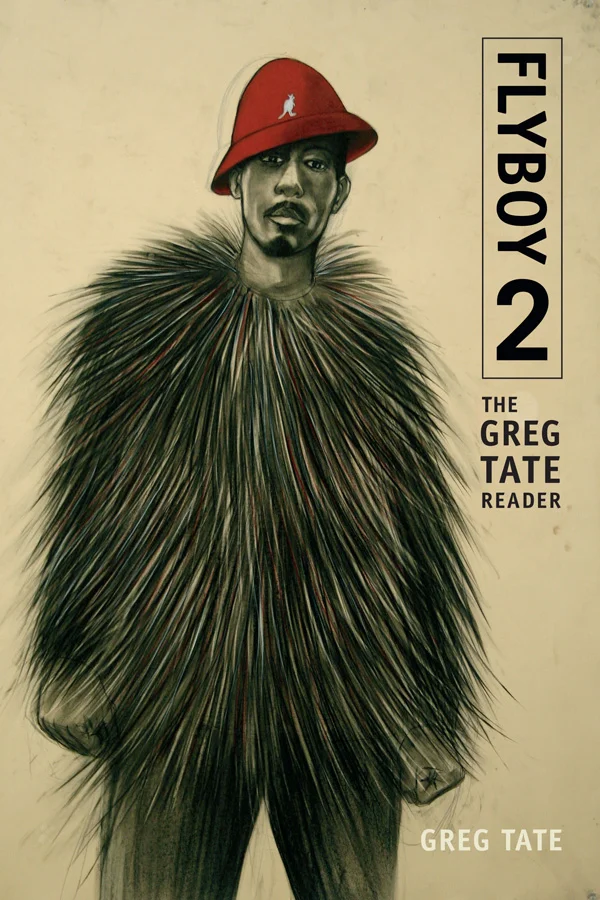
Flyboy 2
The Greg Tate Reader
Buy
Availability: Loading...
Price: Loading...
This title will be released on August 05, 2016
Buy the e-book:
Information
Author/Editor Bios
Back to TopGreg Tate is a music and popular culture critic and journalist whose work has appeared in many publications, including the Village Voice, Vibe, Spin, the Wire, and Downbeat. He is the author of Flyboy in the Buttermilk: Essays on Contemporary America and Midnight Lightning: Jimi Hendrix and the Black Experience and the editor of Everything but the Burden: What White People Are Taking from Black Culture. Tate, via guitar and baton, also leads the conducted improvisation ensemble Burnt Sugar the Arkestra Chamber, who tour internationally.
Table Of Contents
Back to TopIntroduction: Lust, of All Things (Black) 1
1. The Black Male Show
Amiri Baraka 9
Wayne Shorter 16
Jimi Hendrix 24
John Coltrane 41
Gone Fishing: Remembering Lester Bowie 44
The Black Artists' Group 50
Butch Morris 55
Charles Edward Anderson Berry and the History of Our Future 57
Lonnie Holley 68
Marion Brown (1931–2010) and Djinji Brown 71
Dark Angels of Dust: David Hammons and the Art of Streetwise Trancendentalism 73
Bill T. Jones: Combative Moves 78
Garry Simmons: Conceptual Bomber 81
The Persistence of Vision: Storyboard P 83
Ice Cube 91
Wynton Marsalis: Jazz Crusader 102
Thonton Dail: Free, Black, and Brightening Up the Darkness of the World 110
Kehinde Wiley 124
Rammellzee: The Ikonoklast Samurai 127
Richard Pryor: Pryor Lives 136
Richard Pryor 146
Gil Scott-Heron 149
The Man in Our Mirror: Michael Jackson 152
Miles Davis 158
2. She Laughing Mean and Impressive Too
Born to Dyke: I Love My Sister Laughing and Then Again When She's Looking Mean, Queer, and Impressive 167
Joni Mitchell: Black and Blond 175
Azealia Banks 177
Sade: Black Magic Woman 180
All the Things You Could Be by Now If Iames Brown Was a Feminist 186
Itabari Njeri 193
Kara Walker 196
Women at the Edge of Space, Time, and Art: Ruminations on Candida Romero's Little Girls 202
Ellen Gallagher 208
To Bid a Poet Black and Abstract 210
"The Gikuyu Mythos versus the Cullud Grrrl from Outta Space": A Wangechi Mutu Feature 213
Come Join the Hieroglyphic Zombie Parade: Deborah Grant 219
Björk's Second Act 223
Thelma Golden 228
3. Hello Darknuss My Old Meme
Top Ten Reasons Why So Few Black Women Were Down to Occupy Wall Street Plus Four More 235
What Is Hip-Hop? 239
Intelligence Data: Bob Dylan 242
Hip-Hop Turns Thirty 246
Love and Crunk: Outkast 252
White Freedom: Eminem 254
Wu-Dunit: Wu-Tang Clan 256
Unlocking the Truth vs. John Cage 260
4. Screenings
Spike Lee's Bamboozled 265
It's A Mack Thing 270
Sex and Negrocity: John Singleton's Baby Boy 272
Lincoln in Whiteface: Jeffrey Wright and Don Cheadle in Susan-Lori Parks's Topdog/Underdog 275
The Black Power Mixtape 278
5. Race, Sex, Politricks and Belle Lettres
Clarence Major 285
The Atlantic Sound: Caryl Phillips's The Atlantic Sound 288
Acocalypse Now: Patricia Hill Collins's Black Sexual Politics; Thomas Shevory's Notorious H.I.V.; Jacob Levenson's The Secret Epidemic 290
Blood and Bridges 292
Nigger-'Tude 296
Triple Threat: Jerry Gafio Watts's Amiri Baraka; Hazel Rowley's Richard Wright; David Macey's Frantz Fanon 299
Bottom Feeders: Natsuo Kirino's Out 306
Scaling the Heights: Maryse Condé's Windward Heights 307
Fear of a Mongrel Planet: Zadie Smith's White Teeth 310
Adventures in the Skin Trade: Lisa Teasley's Glow in the Dark 313
Generous Hexed: Jeffery Renard Allen's Rails under My Back 315
Going Underground: Gayl Jones's Mosquito 317
Judgment Day: Toni Morrison's Love and Edward P. Jones's The Known World 320
Black Modernity and Laughter, or How It Came to Be That N*g*as Got Jokes 322
Kalahari Hopscotch, or Notes toward a Twenty-Volume Afrocentric Futurist Manifesto 330
Sources 343
Index 347
1. The Black Male Show
Amiri Baraka 9
Wayne Shorter 16
Jimi Hendrix 24
John Coltrane 41
Gone Fishing: Remembering Lester Bowie 44
The Black Artists' Group 50
Butch Morris 55
Charles Edward Anderson Berry and the History of Our Future 57
Lonnie Holley 68
Marion Brown (1931–2010) and Djinji Brown 71
Dark Angels of Dust: David Hammons and the Art of Streetwise Trancendentalism 73
Bill T. Jones: Combative Moves 78
Garry Simmons: Conceptual Bomber 81
The Persistence of Vision: Storyboard P 83
Ice Cube 91
Wynton Marsalis: Jazz Crusader 102
Thonton Dail: Free, Black, and Brightening Up the Darkness of the World 110
Kehinde Wiley 124
Rammellzee: The Ikonoklast Samurai 127
Richard Pryor: Pryor Lives 136
Richard Pryor 146
Gil Scott-Heron 149
The Man in Our Mirror: Michael Jackson 152
Miles Davis 158
2. She Laughing Mean and Impressive Too
Born to Dyke: I Love My Sister Laughing and Then Again When She's Looking Mean, Queer, and Impressive 167
Joni Mitchell: Black and Blond 175
Azealia Banks 177
Sade: Black Magic Woman 180
All the Things You Could Be by Now If Iames Brown Was a Feminist 186
Itabari Njeri 193
Kara Walker 196
Women at the Edge of Space, Time, and Art: Ruminations on Candida Romero's Little Girls 202
Ellen Gallagher 208
To Bid a Poet Black and Abstract 210
"The Gikuyu Mythos versus the Cullud Grrrl from Outta Space": A Wangechi Mutu Feature 213
Come Join the Hieroglyphic Zombie Parade: Deborah Grant 219
Björk's Second Act 223
Thelma Golden 228
3. Hello Darknuss My Old Meme
Top Ten Reasons Why So Few Black Women Were Down to Occupy Wall Street Plus Four More 235
What Is Hip-Hop? 239
Intelligence Data: Bob Dylan 242
Hip-Hop Turns Thirty 246
Love and Crunk: Outkast 252
White Freedom: Eminem 254
Wu-Dunit: Wu-Tang Clan 256
Unlocking the Truth vs. John Cage 260
4. Screenings
Spike Lee's Bamboozled 265
It's A Mack Thing 270
Sex and Negrocity: John Singleton's Baby Boy 272
Lincoln in Whiteface: Jeffrey Wright and Don Cheadle in Susan-Lori Parks's Topdog/Underdog 275
The Black Power Mixtape 278
5. Race, Sex, Politricks and Belle Lettres
Clarence Major 285
The Atlantic Sound: Caryl Phillips's The Atlantic Sound 288
Acocalypse Now: Patricia Hill Collins's Black Sexual Politics; Thomas Shevory's Notorious H.I.V.; Jacob Levenson's The Secret Epidemic 290
Blood and Bridges 292
Nigger-'Tude 296
Triple Threat: Jerry Gafio Watts's Amiri Baraka; Hazel Rowley's Richard Wright; David Macey's Frantz Fanon 299
Bottom Feeders: Natsuo Kirino's Out 306
Scaling the Heights: Maryse Condé's Windward Heights 307
Fear of a Mongrel Planet: Zadie Smith's White Teeth 310
Adventures in the Skin Trade: Lisa Teasley's Glow in the Dark 313
Generous Hexed: Jeffery Renard Allen's Rails under My Back 315
Going Underground: Gayl Jones's Mosquito 317
Judgment Day: Toni Morrison's Love and Edward P. Jones's The Known World 320
Black Modernity and Laughter, or How It Came to Be That N*g*as Got Jokes 322
Kalahari Hopscotch, or Notes toward a Twenty-Volume Afrocentric Futurist Manifesto 330
Sources 343
Index 347
Rights
Back to TopSales/Territorial Rights: World
Rights and licensingAwards
Back to TopGreg Tate (1957–2021) is the Winner of the 2022 Lifetime Achievement in Jazz Journalism Award, presented by the Jazz Journalists Association
Additional Information
Back to Top
Related Links
- Read an interview with Greg Tate in Publishers Weekly
- Read an interview with Greg Tate in the Amsterdam News
- Read an interview with Greg Tate in Vulture
- Read an interview with Greg Tate in the Los Angeles Review of Books
Publicity material