
Home / Books / Identifying Talent, Institutionalizing Diversity

Identifying Talent, Institutionalizing Diversity

Race and Philanthropy in Post-Civil Rights America
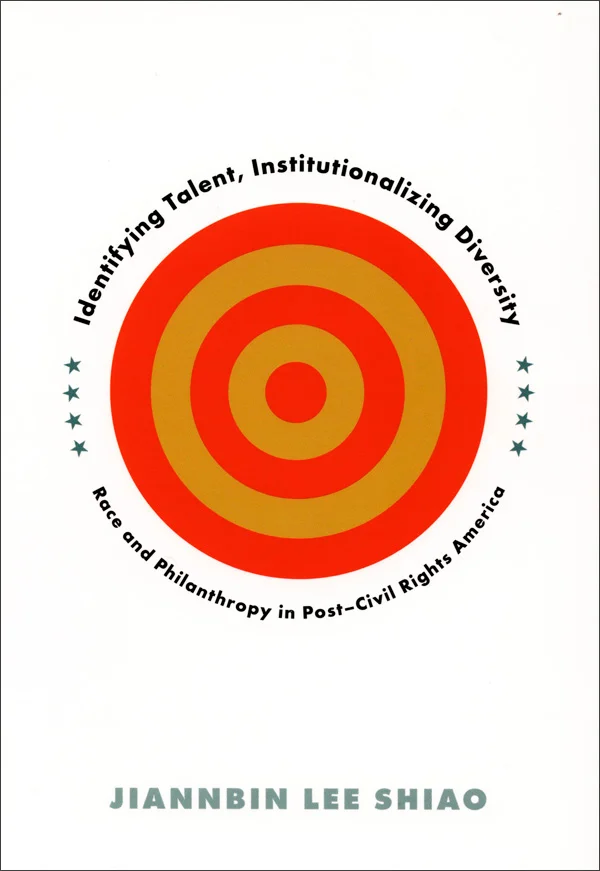
Identifying Talent, Institutionalizing Diversity cover image

Book

Pages: 312

Illustrations: 10 tables

Published: December 2004

“Diversity” has become a mantra in corporate boardrooms, higher education, and government hiring and contracting. In Identifying Talent, Institutionalizing Diversity, Jiannbin Lee Shiao explains the leading role that large philanthropies have played in establishing diversity as a goal throughout American society in the post–civil rights era. By creating and institutionalizing diversity policies, these private organizations have quietly transformed the practice of affirmative action. Shiao describes how, from the 1960s through the 1990s, philanthropies responded to immigration, the recognition of nonblack minority groups, and the conservative backlash against affirmative action. He shows that these pressures not only shifted discourse and practice within philanthropy away from a binary black-white conception of race but also dovetailed with a change in its mission from supporting “good causes” to “identifying talent.”

Based on three years of research on the racial and ethnic priorities of the San Francisco Foundation and the Cleveland Foundation, Shiao demonstrates the geographically uneven impact of the national transition to diversification. The demographics of the regions served by the foundations in San Francisco and Cleveland are quite different, and paradoxically, the foundation in Cleveland—which serves an area with substantially fewer immigrants—has had greater institutional opportunities for implementing diversity policies. Shiao connects these regional histories with the national philanthropic field by underscoring the prominent role of the Ford Foundation, the third largest private foundation in the country, in shaping diversity policies. Identifying Talent, Institutionalizing Diversity reveals philanthropic diversity policy as a lens through which to focus on U.S. race relations and the role of the private sector in racial politics.

Praise

Identifying Talent is definitely for individuals working in philanthropic organizations nationally, who can see from this book how the policies they establish and the individuals they select for their boards and as administrators and employees affect the agencies with which they are associated. It is a very useful book and one that I would use in my classes as a reference. . . . Reading Identifying Talent will make the ongoing Gates-Buffett connection more intriguing to follow, and the book will become a seminal source for future philanthropic research.” - Johnnie Griffin , Administrative Science Quarterly

“The volume is a welcome contribution to the field. It incorporates much of the relevant literature, and is rightly positioned among the small number of foundation histories that embed foundation activity in the larger historical, demographic and political contexts.” - Eugene D. Miller , Social Forces

"Shiao's timely and profound study brings a unique voice to the intersections of diversity, philanthropy, and politics." - Anthony Edwards , MultiCultural Review

"Using in-depth case studies. . ., the volume raises a number of important, even intriguing, questions. . . . There is a lot of good information in the book. Sholars from the fields of sociology, organizational change, intergroup relations or philanthropy will enjoy digesting and debating this sinewy read." - Lynn Huntley, Foundation News & Commentary

“Who spoke of diversity or multiculturalism in the 1960s? Who doesn’t in the 2000s? In tracing the role of private philanthropy, Jiannbin Lee Shiao illuminates the confounding realities of affirmative action and racial diversity in particular and of American philanthropy and politics in general. Informative and interesting, Identifying Talent, Institutionalizing Diversity is a key text in understanding the post–civil rights United States.” - John Lie, Class of 1959 Professor and Dean, International and Area Studies, University of California, Berkeley

“Within the U.S. context, foundations and philanthropies play a crucial role in racial politics. To this important topic, Jiannbin Lee Shiao brings an incredible amount of theoretical insights and empirical knowledge. Identifying Talent, Institutionalizing Diversity is a major contribution to race and ethnic studies, the sociology of philanthropy, and urban and community studies.” - Edward J. W. Park, Director and Associate Professor, Asian Pacific American Studies Program, Loyola Marymount University

Buy

Availability: Loading...

Price: Loading...

Request a desk or exam copy

Information

Author/Editor Bios

Back to Top

Jiannbin Lee Shiao is Assistant Professor of Sociology at the University of Oregon.

Table Of Contents

Back to Top
Tables and Figures ix
Acknowledgments xi
1. Diversity, Philanthropy, and Race Relations 1
2. Race Talk in the National Magazine of Foundation Philanthropy 28
3. Business Philanthropy in the Greater Cleveland Area 67
4. Progressive Philanthropy in the San Francisco Bay Area 110
5. Elite Visibility in Institutional Racial Formation 151
6. Exploring the Validity of Diversity Policy for Foundations Themselves 200
7. The Institutional Segmentation of Post-Civil Rights America 234
Notes 259
References 269
Index 283

Rights

Back to Top

Sales/Territorial Rights: World

Rights and licensing

Additional Information

Back to Top
Paper ISBN: 978-0-8223-3447-7 / Hardcover ISBN: 978-0-8223-3436-1 / eISBN: 978-0-8223-8621-6 / DOI: https://doi.org/10.1215/9780822386216

Publicity material