
Home / Books / Intersectionality as Critical Social Theory

Intersectionality as Critical Social Theory
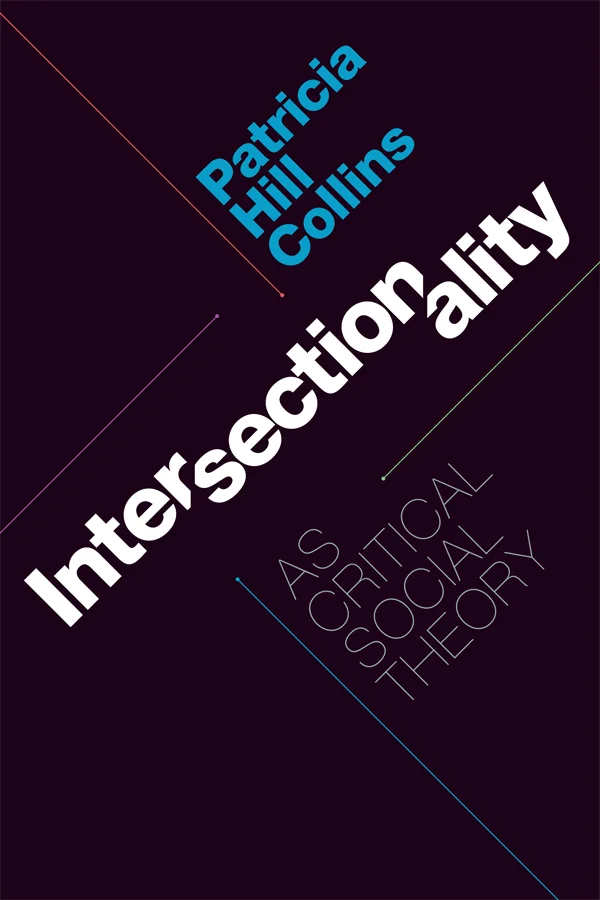
Book

Pages: 376

Published: August 2019

In Intersectionality as Critical Social Theory Patricia Hill Collins offers a set of analytical tools for those wishing to develop intersectionality's capability to theorize social inequality in ways that would facilitate social change. While intersectionality helps shed light on contemporary social issues, Collins notes that it has yet to reach its full potential as a critical social theory. She contends that for intersectionality to fully realize its power, its practitioners must critically reflect on its assumptions, epistemologies, and methods. She places intersectionality in dialog with several theoretical traditions—from the Frankfurt school to black feminist thought—to sharpen its definition and foreground its singular critical purchase, thereby providing a capacious interrogation into intersectionality's potential to reshape the world.

Praise

“With remarkable brilliance and breadth, Patricia Hill Collins examines the theoretical dimensions of intersectionality in new ways and in dialogue with other influential social theories and resistant knowledges. Intersectionality as Critical Social Theory explains why critical social theory matters in the real world and how intersectionality can achieve its potential as a tool for social action needed to transform the world for the better. Once again, Patricia Hill Collins shines as a masterful scholar of critical inquiry, politics, and social change.” - Dorothy Roberts, author of Killing the Black Body: Race, Reproduction, and the Meaning of Liberty

“Anyone who claims the mantle of Black feminist theorist is standing in the house Patricia Hill Collins built. She is one of our most important intellectual architects. Here she continues to be at her very best, asking the thorny questions that those of us who are scholars and practitioners of intersectionality often avoid. Collins reminds us what it looks like to use ideas in service of freedom projects, demanding at every turn that we do it with integrity, rigor, and a critical attention to the high stakes nature of social justice work. This book resets our freedom compass, reminding us both of what our work is and for whom we do it.” - Brittney Cooper, author of Eloquent Rage: A Black Feminist Discovers Her Superpower

"This remarkable monograph expresses the most important facets of the critical lens. . . [and] gives hope that collective social action has the potential to affect democratic change even under conditions of multiple oppressions." - Anna Amelina & Jana Schäfer, Ethnic and Racial Studies

"Highly recommended. Upper-division undergraduates through faculty; professionals." - I. Ken, Choice

“Collins raises provocative questions throughout the book.… I anticipate readers not only better understanding intersectionality but changing how they think about theory, theorists, and theorizing more broadly.”

- Ross Haenfler, Symbolic Interaction

“This book constitutes an extremely valuable resource for students, activists, and scholars who, while having already engaged with foundational texts on the topic, seek to deepen their understanding of intersectionality. Further, Intersectionality as Critical Social Theory also opens a door for those who wish to continue the intellectual journey of theorizing intersectionality that Collins eloquently embarks on. - Miriam Yosef, KULT_online

“This book is more than a mere investigation of the theoretical of methodological aspects of intersectionality.... Intersectionality as Critical Social Theory is a book that cannot be missed by scholars, activists, and students of all disciplines.” - C. Laura Lovin, Feminist Encounters

Intersectionality as Critical SocialTheory is required reading for academics, activists and educators working across and between disciplines including feminist studies, philosophy, critical race theory, sociology, and education. Now more than ever, Professor Hill Collins is essential.” - Adina Giannelli, Gender and Education

“Hill Collins offers a guide for those who want to use intersectional theory in myriad ways.... Chapters or sections can stand on their own as teaching tools, reference materials, or working models for intersectional scholarship.” - Lilly Fisher, Women's Studies

Intersectionality as Critical Social Theory is a dense and exceedingly thoughtful book. Collins is careful and focused, asking hard questions about the nature of social theory and theorizing.” - Rose M. Brewer, American Journal of Sociology

"Intersectionality as Critical Social Theory is a theoretical page-turner. . . . It is an ideal companion text for graduate seminars on intersectionality; for practitioners of intersectionality who wish to deepen their praxis; and for academic readers who could benefit from the commitments to self-reflexivity, intellectual heterogeneity, ethics, and social justice, which Collins aptly and deftly restores to intersectionality." - Anna Carastathis, Hypatia

Buy

Availability: In stock

Price: $30.95

Request a desk or exam copy

Information

Author/Editor Bios

Back to Top
Patricia Hill Collins is Distinguished University Professor Emerita of Sociology at the University of Maryland, College Park, and the author of numerous books, most recently, Intersectionality (with Sirma Bilge) and On Intellectual Activism.

Table Of Contents

Back to Top
Acknowledgments  ix
Introduction  1
Part I. Framing the Issues: Intersectionality and Critical Social Theory
1. Intersectionality as Critical Inquiry  21
2. What's Critical about Critical Social Theory?  54
Part II. How Power Matters: Intersectionality and Intellectual Resistance
3. Intersectionality and Resistant Knowledge Projects  87
4. Intersectionality and Epistemic Resistance  121
Part III. Theorizing Intersectionality: Social Action as a Way of Knowing
5. Intersectionality, Experience, and Community  157
6. Intersectionality and the Question of Freedom  189
Part IV. Sharpening Intersectionality's Critical Edge
7. Relationality within Intersectionality  225
8. Intersectionality without Social Justice?  253
Epilogue. Intersectionality and Social Change  286
Appendix  291
Notes  295
References  331
Notes  353

Rights

Back to Top

Sales/Territorial Rights: World

Rights and licensing

Awards

Back to Top

A 2020 Choice Magazine Outstanding Academic Title

Patricia Hill Collins is the winner of the 2023 Berggruen Prize for Philosophy and Culture

Additional Information

Back to Top
Related Links Paper ISBN: 978-1-4780-0646-6 / Hardcover ISBN: 978-1-4780-0542-1 / eISBN: 978-1-4780-0709-8 / DOI: https://doi.org/10.1215/9781478007098