
Knowing by Ear
Listening to Voice Recordings with African Prisoners of War in German Camps (1915–1918)
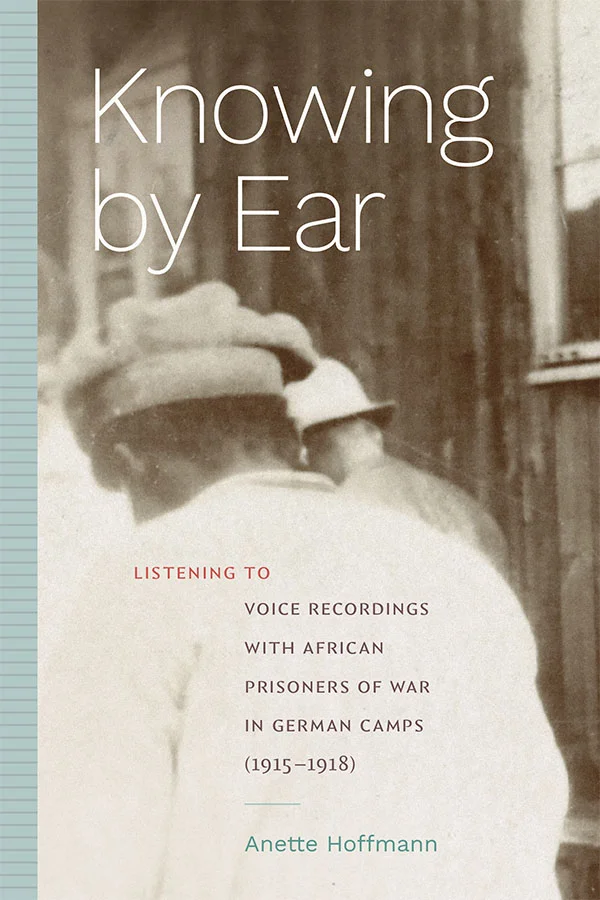
Book
Pages: 224
Illustrations: 16 page color insert
Published: March 2024
Author: Anette Hoffmann
Praise
Buy
Availability: Loading...
Price: Loading...
This title will be released on March 29, 2024
Buy the e-book:
Information
Author/Editor Bios
Back to Top
Anette Hoffmann is a Senior Researcher at the University of Cologne’s Institute for African Studies and Egyptology. She is the author of Listening to Colonial History: Echoes of Coercive Knowledge Production in Historical Sound Recordings from Southern Africa.
Table Of Contents
Back to Top
Note on Sound Recordings ix
Prologue: Catchers of the Living 1
Fragment 1. Samba Diallo: “The War of the Whites” / "Catcher of the Living"
Introduction: Listening to Acoustic Fragments 11
Fragment II. Jámafáda: “The War is Horrible”
1. Abdoulay Niang: Voice, Race, and the Suspension of Communication in Linguistic Recordings 23
Fragment III. Asmani Ben Ahmad: “Once Upon a Time”
2. Mohamed Nur: Traces in Archives, Linguistics Texts, and Museums in Germany 66
Fragment IV. Josef Ntwanumbi: “We are Initiates”
3. Albert Kudjabo and Stephan Bischoff: Mysterious Sounds, Opaque Languages and Otherworldly Voices 101
Fragment V. Mamadou Gregoire: “The Sea Requests Fish from the Rivers”
Afterword: Knowing by Ear 147
Acknowledgments 157
Notes 161
References 183
Index 201
Prologue: Catchers of the Living 1
Fragment 1. Samba Diallo: “The War of the Whites” / "Catcher of the Living"
Introduction: Listening to Acoustic Fragments 11
Fragment II. Jámafáda: “The War is Horrible”
1. Abdoulay Niang: Voice, Race, and the Suspension of Communication in Linguistic Recordings 23
Fragment III. Asmani Ben Ahmad: “Once Upon a Time”
2. Mohamed Nur: Traces in Archives, Linguistics Texts, and Museums in Germany 66
Fragment IV. Josef Ntwanumbi: “We are Initiates”
3. Albert Kudjabo and Stephan Bischoff: Mysterious Sounds, Opaque Languages and Otherworldly Voices 101
Fragment V. Mamadou Gregoire: “The Sea Requests Fish from the Rivers”
Afterword: Knowing by Ear 147
Acknowledgments 157
Notes 161
References 183
Index 201
Rights
Back to TopSales/Territorial Rights: World
Rights and licensingAwards
Back to TopWinner of the 2025 Alan Merriam Prize, presented by the Society for Ethnomusicology
Co-Winner of the 2025 Offermann-Hergarten Prize, presented by the Offermann-Hergarten Foundation and the University of Cologne’s Faculty of Philosophy
Honorable Mention, 2025 Award for Excellence in Best Historical Research in Record Labels or General Recording Topics, presented by the Association for Recorded Sound Collections
Additional Information
Back to Top
Related Links
- Anette Hoffmann's website
- Listen to an interview with Anette Hoffman on the New Books Network podcast
- Anette Hoffman writes about her research in The Conversation
Publicity material