
Home / Books / Kwaito Bodies

Kwaito Bodies

Remastering Space and Subjectivity in Post-Apartheid South Africa
Book

Pages: 288

Illustrations: 35 illustrations

Published: April 2020

Author: Xavier Livermon

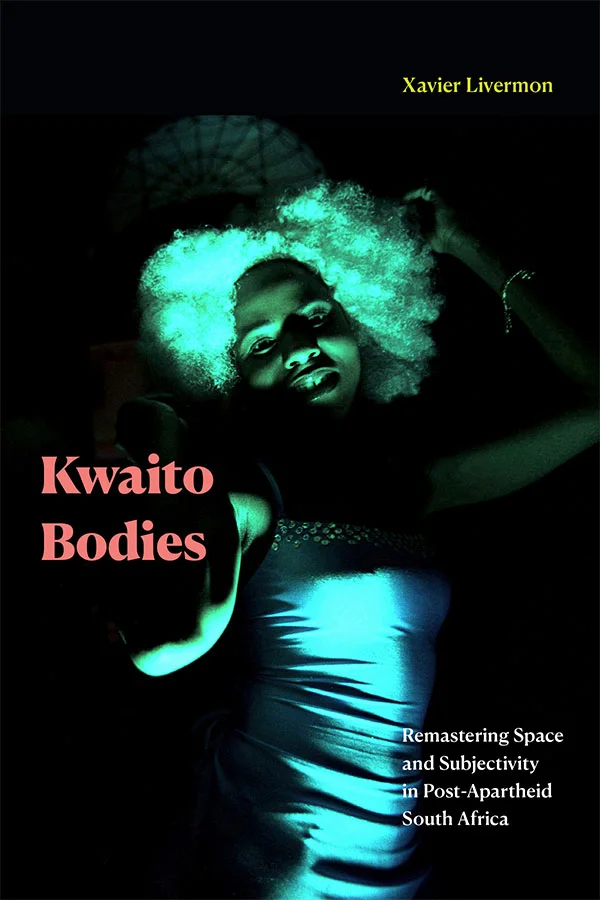
In Kwaito Bodies Xavier Livermon examines the cultural politics of the youthful black body in South Africa through the performance, representation, and consumption of kwaito, a style of electronic dance music that emerged following the end of apartheid. Drawing on fieldwork in Johannesburg's nightclubs and analyses of musical performances and recordings, Livermon applies a black queer and black feminist studies framework to kwaito. He shows how kwaito culture operates as an alternative politics that challenges the dominant constructions of gender and sexuality. Artists such as Lebo Mathosa and Mandoza rescripted notions of acceptable femininity and masculinity, while groups like Boom Shaka enunciated an Afrodiasporic politics. In these ways, kwaito culture recontextualizes practices and notions of freedom within the social constraints that the legacies of colonialism, apartheid, and economic inequality place on young South Africans. At the same time, kwaito speaks to the ways in which these legacies reverberate between cosmopolitan Johannesburg and the diaspora. In foregrounding this dynamic, Livermon demonstrates that kwaito culture operates as a site for understanding the triumphs, challenges, and politics of post-apartheid South Africa.

Praise

Kwaito Bodies is a much-needed corrective to the history of popular culture in South Africa. With the deft insight of a seasoned ethnographer and through legible prose that suffers nothing by way of sophisticated analytics, Xavier Livermon renders a complicated narrative about how the musical form kwaito holds promise for a whole generation of sexual dissidents in post-apartheid South Africa. This book is a game-changer for African sexuality studies.” - E. Patrick Johnson, author of Honeypot: Black Southern Women Who Love Women

“Xavier Livermon celebrates the often maligned affect of South African youth by noticing their creative play and their insistence on finding pleasure in the fraught everyday of post-apartheid urban life. His nuanced recognition of kwaito bodies lends insight into the social disjunctures and political failures of the post-apartheid state as well as into the struggles and creative improvisations of black bodies within Afrodiasporic space. Written with appreciation and curiosity, this book leaves the reader with a sense of possibility and hope and a reminder of why we need to party.” - Louise Meintjes, author of Dust of the Zulu: Ngoma Aesthetics after Apartheid

“Livermon makes an important contribution to existing studies of kwaito by paying particular attention to embodiment.... Livermon addresses a scope of contradictory, shifting, and misrecognized political tactics that articulate radical self-and world-making possibilities.” - AB Brown, GLQ

"Livermon successfully ties together twenty years of musical growth with politics and shows how the body itself remains political within the South African framework." - Debjyoti Ghosh, E3W Review of Books

“In Kwaito Bodies, Xavier Livermon provides a novel perspective on kwaito music and the youth culture it spawned. . . . Livermon skillfully uses kwaito-related incidents, artists, performances, and venues to reveal their larger meaning and significance as black South African youth negotiate their place in the postapartheid social order.” - Graeme Reid, Journal of African History

“An important contribution in a time when the Black body has (re)gained significant attention across the world, [Kwaito Bodies] provides a visceral investigation into Black youth culture in postapartheid South Africa.” - William Fourie, Transposition

Buy

Availability: In stock

Price: $34.95

Request a desk or exam copy

Information

Author/Editor Bios

Back to Top
Xavier Livermon is Associate Professor of African and African Diaspora Studies at the University of Texas at Austin and coeditor of Black Sexual Economies: Race and Sex in a Culture of Capital.

Table Of Contents

Back to Top
Acknowledgments  ix
Introduction. Waar Was Jy? Yeoville circa 1996  1
1. Afrodiasporic Space: Refiguring Africa in Diaspora Analytics  29
2. Jozi Nights: The Post-Apartheid City, Encounter, and Mobility  57
3. "Si-Ghetto Fabulous": Self-Fashioning, Consumption, and Pleasure in Kwaito  92
4. The Kwaito Feminine: Lebo Mathosa as a "Dangerous Woman"  122
5. The Black Masculine in Kwaito: Mandoza and the Limits of Hypermasculine Performance  155
6. Mafikizolo and Youth Day Parties: (Melancholic) Conviviality and the Queering of Utopian Memory  188
Coda. Kwaito Futures, Remastered Freedoms  224
Notes  235
Glossary  239
References  243
Index  259

Rights

Back to Top

Sales/Territorial Rights: World

Rights and licensing

Awards

Back to Top

Finalist, 2021 African Studies Association Best Book Prize