
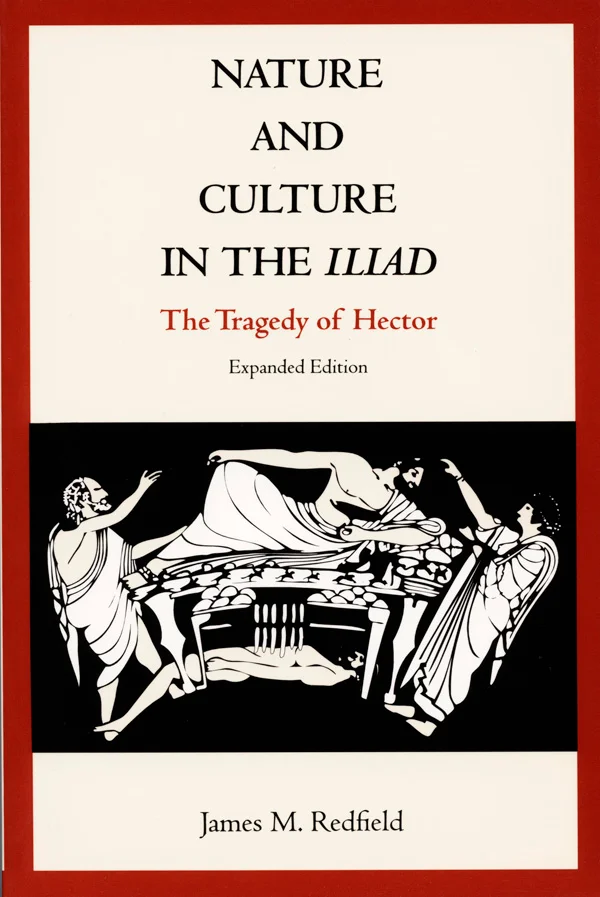
Nature and Culture in the Iliad
The Tragedy of Hector
Buy
Availability: Loading...
Price: Loading...
This title will be released on March 11, 1994
Information
Author/Editor Bios
Back to TopJames M. Redfield is Howard L. Willett Professor of Social Thought and Classics at the University of Chicago.
Table Of Contents
Back to Top
Preface to the Expanded Edition vii
Preface xi
Acknowledgments xvii
Introduction: Achilles and Hector 3
1. Imitation 30
2. Tragedy 69
3. Our Hero 99
4. Error 128
5. Purification 160
The Gods of the Iliad: An Amplification 225
Notes 249
References 291
Bibliography to the Expanded Edition 299
Index of Greek Words 301
Index 307
Preface xi
Acknowledgments xvii
Introduction: Achilles and Hector 3
1. Imitation 30
2. Tragedy 69
3. Our Hero 99
4. Error 128
5. Purification 160
The Gods of the Iliad: An Amplification 225
Notes 249
References 291
Bibliography to the Expanded Edition 299
Index of Greek Words 301
Index 307
Rights
Back to TopSales/Territorial Rights: World
Rights and licensingAdditional Information
Back to Top
Paper ISBN:
978-0-8223-1422-6 /
eISBN:
978-0-8223-9739-7 /
Publicity material