
No Tea, No Shade
New Writings in Black Queer Studies
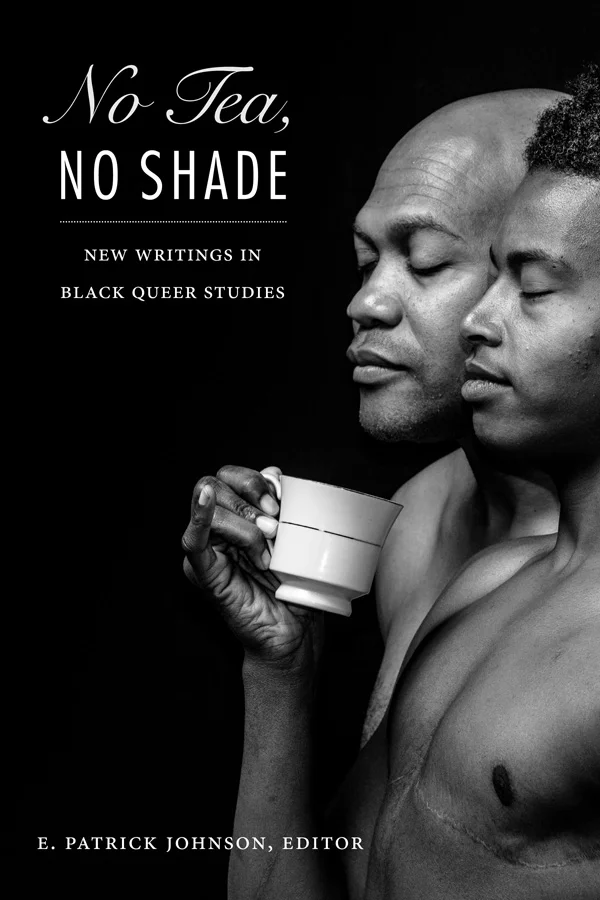
Book
Pages: 440
Illustrations: 21 illustrations
Published: October 2016
Editor: E. Patrick Johnson
Contributors: Jafari Sinclaire Allen, Marlon M. Bailey, Zachary Blair, La Marr Jurelle Bruce, Cathy J. Cohen, Jennifer DeClue, Treva Ellison, Lyndon K. Gill, Kai Green, Alexis Pauline Gumbs, Kwame Holmes, Shaka McGlotten, Amber Jamilla Musser, Alison Rose Reed, Ramón H. Rivera-Servera, Tanya Saunders, C. Riley Snorton, Kaila Adia Story, Omise′eke Natasha Tinsley, Julia Roxanne Wallace, and Kortney Ziegler
Gender and Sexuality > LGBTQ Studies, Theory and Philosophy > Queer Theory, African American Studies and Black Diaspora
Praise
Buy
Price: Loading...
This title will be released on October 28, 2016
Buy the e-book:
Information
Author/Editor Bios
Back to TopTable Of Contents
Back to TopAcknowledgments xv
Introduction / E. Patrick Johnson 1
1. Black/Queer Rhizomatics: Train Up a Child in the Way Ze Should Grow / Jafari S. Allen 27
2. The Whiter the Bread, the Quicker You're Dead: Spectacular Absence and Postracialized Blackness in (White) Queer Theory / Alison Reed 48
3. Troubling the Waters: Mobilizing a Trans*Analytic / Kai M. Green 65
4. Gender Trouble in Triton / C. Riley Snorton 83
5. Reggaetón's Crossings: Black Aesthetics, Latina Nightlife, and Queer Choreography / Ramón H. Rivera-Servera 95
6. Represent Freedom: Diaspora and the Meta-Queerness of Dub Theater / Lyndon K. Gill 113
7. To Transcender Transgender: Choreographers of Gender Fluidity in the Performances of MilDred Gerestant / Omise'eke Natasha Tinsley 131
8. Toward a Hemispheric Analysis of Black Lesbian Feminist Activism and Hip Hop Feminism: Artist Perspectives from Cuba and Brazil / Tanya Saunders 147
9. The Body Beautiful: Black Drag, American Cinema, and Heteroperpetually Ever After / La Marr Jurelle Bruce 166
10. Black Sissy Masculinity and the Politics of Dis-respectability / Kortney Ziegler 196
11. Let's Play: Exploring Cinematic Black Lesbian Fantasy, Pleasure, and Pain / Jennifer Declue 216
12. Black Gay (Raw) Sex / Marlon M. Bailey 239
13. Black Data / Shaka McGlotten 262
14. Boystown: Gay Neighborhoods, Social Media, and the (Re)production of Racism / Zachary Blair 287
15. Beyond the Flames: Queering the History of the 1968 D.C. Riot / Kwama Holmes 304
16. The Strangeness of Progress and the Uncertainty of Blackness / Treva Ellison 323
17. Re-membering Audre: Adding Lesbian Feminist Mother Poet to Black / Amber Jamilla Musser 346
18. On the Cusp of Deviance: Respectability Politics and the Cultural Marketplace of Sameness / Kaila Adia Story 362
19. Something Else to Be: Generations of Black Queer Brilliance and the Mobile Homecoming Experiential Archive / Alexis Pauline Gumbs and Julia Roxanne Wallace 380
Bibliography 395
Contributors 409
Index 415
Rights
Back to TopSales/Territorial Rights: World
Rights and licensingAwards
Back to TopE. Patrick Johnson is the recipient of the 2023 David R. Kessler Award from the Center for LGBTQ Studies. The award is given annually to a scholar or activist who has produced a substantive body of work that has significantly influenced LGBTQ studies.
Additional Information
Back to TopPublicity material