
Home / Books / Otaku and the Struggle for Imagination in Japan

Otaku and the Struggle for Imagination in Japan
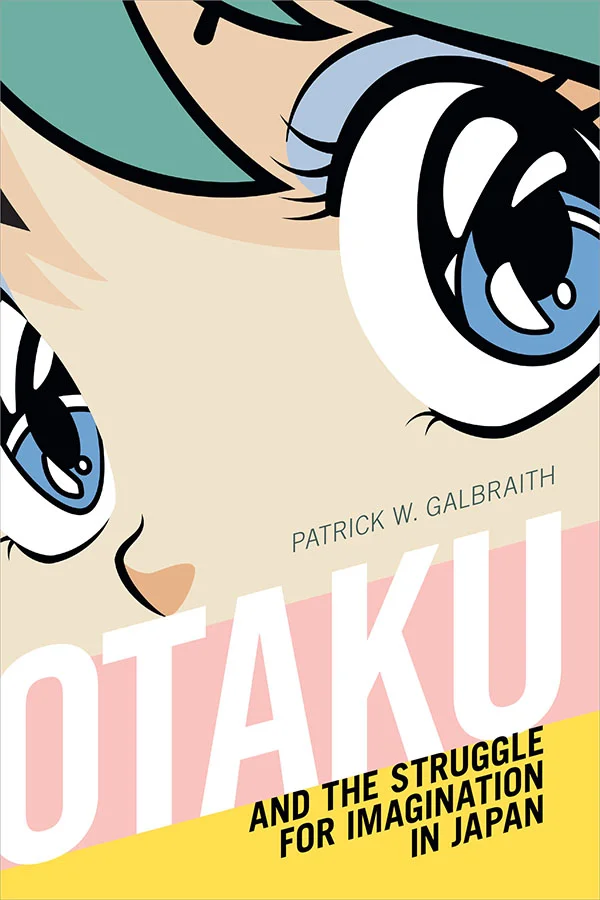
Book

Pages: 336

Illustrations: 95 illustrations

Published: December 2019

From computer games to figurines and maid cafes, men called “otaku” develop intense fan relationships with “cute girl” characters from manga, anime, and related media and material in contemporary Japan. While much of the Japanese public considers the forms of character love associated with “otaku” to be weird and perverse, the Japanese government has endeavored to incorporate “otaku” culture into its branding of “Cool Japan.” In Otaku and the Struggle for Imagination in Japan, Patrick W. Galbraith explores the conflicting meanings of “otaku” culture and its significance to Japanese popular culture, masculinity, and the nation. Tracing the history of “otaku” and “cute girl” characters from their origins in the 1970s to his recent fieldwork in Akihabara, Tokyo (“the Holy Land of Otaku”), Galbraith contends that the discourse surrounding “otaku” reveals tensions around contested notions of gender, sexuality, and ways of imagining the nation that extend far beyond Japan. At the same time, in their relationships with characters and one another, “otaku” are imagining and creating alternative social worlds.

Praise

“In this tremendous book, Patrick W. Galbraith brings to life the relatively unknown world of Japanese popular culture. His voice shines throughout thoughtful interviews, detailed ethnography, sensitive portraits of people characterized as ‘otaku,’ and nuanced readings of videogames and interactive fiction. An impressive contribution to the field of manga and anime studies.” - Ian Condry, author of The Soul of Anime: Collaborative Creativity and Japan’s Media Success Story

“This book offers nothing less than a thorough rethinking of normative sexuality and alternative sexualities through the figure of the otaku and their practices. It's everything that the fields of Japan studies, queer theory, and media history need at this moment. A virtually flawless and captivating read.” - Marc Steinberg, author of Anime’s Media Mix: Franchising Toys and Characters in Japan

"This thoughtful investigation of hegemonic masculinity and its alternatives at the margins of imagination is well-sourced with cultural and academic research as well as personal experience." - R. Tait-Ripperdan, Choice

Otaku and the Struggle for Imagination in Japan brings much-needed nuance to a debate that is too often characterised by gross oversimplification.”

- Tom Mes, newbooks.asia

“Galbraith accomplishes two primary aims in Otaku: he provides a chronology of the process by which manga/anime obsessives went from being outsiders who cannot deal with ‘reality’ to becoming objects of fear and loathing … and then (semi)legitimate emblems of Japanese national popular culture; and he effectively shows how otaku have purposefully created alternative lifestyles that reject conventions of masculinity, productivity, and romantic love.”

- E. Taylor Atkins, Journal of Asian Studies

“[Otaku and the Struggle for Imagination in Japan] is a book the field of Japan studies has been waiting for—a concise, readable, teachable, authoritative guide to the subject of primary interest for many of our students.... [It] will certainly keep Japan studies arguing for years to come and that is what makes it great.” - Jonathan E. Abel, Journal of Japanese Studies

“[Otaku and the Struggle for Imagination in Japan] is very effective in raising the more fundamental question that seems to be begged by this world, as to how different the difference of otaku life really is.... [Galbraith] has produced a book that is replete with elements of interest for scholarly and non-scholarly readers alike.” - Thomas Looser, Pacific Affairs

“Galbraith's Otaku and the Struggle for Imagination in Japan is an engaging addition to both his own body of work and the larger body of existing research into otaku culture and consumption.... Galbraith's straightforward prose and detailed discussions of otaku would be readily accessible to even novices in the field.” - Barbara Greene, International Social Science Review

Otaku and the Struggle for Imagination in Japan is a meticulously researched book...[and] a strong contribution to the field of Japanese popular culture.” - Emma E. Cook, Journal of the Royal Anthropological Institute

“This is an excellent and thought-provoking text which will no doubt take its rightful place in the canon of manga, anime, and otaku studies. . . . The narrative [Galbraith] weaves contains just the right amount of academic theoretical discourse, reflections on his personal involvement in the movement, more as a participant than as a participant observer, and a solid history of Japanese (sub-)culture over the last 50 years.” - Holger Briel, Japanese Studies

Buy

Availability: In stock

Price: $28.95

Request a desk or exam copy

Information

Author/Editor Bios

Back to Top
Patrick W. Galbraith is a lecturer at Senshu University in Tokyo. He is the author of The Moe Manifesto: An Insider's Look at the Worlds of Manga, Anime, and Gaming, coauthor of AKB48, and coeditor of Idols and Celebrity in Japanese Media Culture.

Table Of Contents

Back to Top
Dedication / Acknowledgments  ix
Introduction. "Otaku" and the Struggle for Imagination in Japan  1
1. Seeking an Alternative: "Male Sojo Fans since the 1970s  20
2. "Otaku" Research and Reality Problems  49
3. Moe: An Affective Response to Fictional Characters  76
4. Akihabara: "Otaku" and Contested Imaginaries in Japan  127
5. Maid Cafés: Relations with Fictional and Real Others in Spaces Between  184
Conclusion. Eshi 100: The Politics of Japanese, "Otaku," Popular Culture in Akihabara and Beyond  227
Notes  261
Bibliography  289
Index  311

Rights

Back to Top

Sales/Territorial Rights: World

Rights and licensing

Additional Information

Back to Top
Paper ISBN: 978-1-4780-0629-9 / Hardcover ISBN: 978-1-4780-0509-4 / eISBN: 978-1-4780-0701-2 / DOI: https://doi.org/10.1215/9781478007012