
Playing for Keeps
Improvisation in the Aftermath
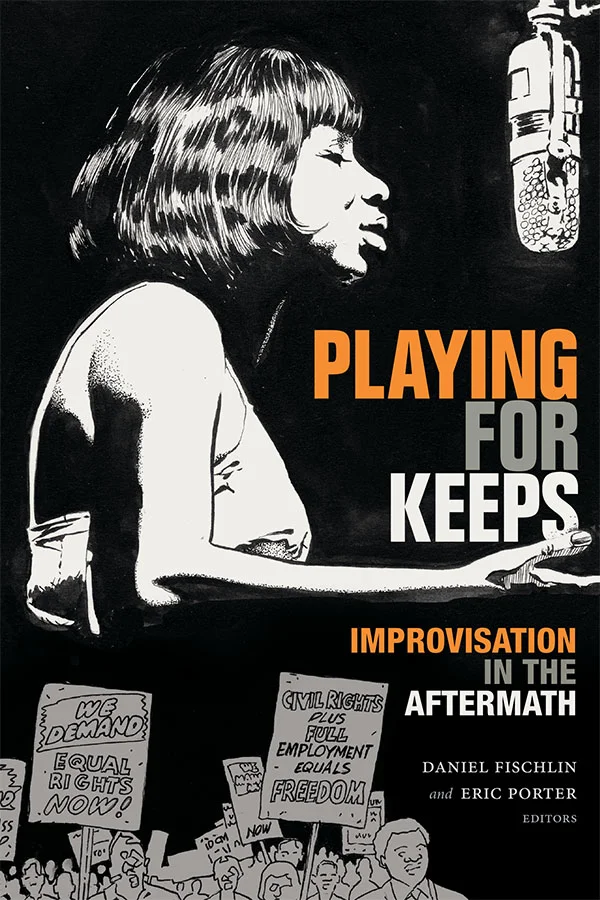
Book
Pages: 352
Illustrations: 27 illustrations
Published: April 2020
Editors: Daniel Fischlin and Eric Porter
Contributors: Randy DuBurke, Rana El Kadi, Kevin Fellezs, Kate Galloway, Vijay Iyer, Mark Lomanno, Moshe Morad, Sara Ramshaw, Matana Roberts, Darci Sprengel, Paul Stapleton, Stephanie Vos, and Reem Abdul Hadi
Praise
Buy
Availability: In stock
Price: $39.95
This title will be released on April 10, 2020
Buy the e-book:
Information
Author/Editor Bios
Back to Top
Daniel Fischlin is University Research Chair and Professor in the School of English and Theatre Studies at the University of Guelph and coauthor of The Fierce Urgency of Now: Improvisation, Rights, and the Ethics of Co-creation, also published by Duke University Press.
Eric Porter is Professor of History and History of Consciousness at the University of California, Santa Cruz, and coauthor of New Orleans Suite: Music and Culture in Transition.
Eric Porter is Professor of History and History of Consciousness at the University of California, Santa Cruz, and coauthor of New Orleans Suite: Music and Culture in Transition.
Table Of Contents
Back to Top
Acknowledgments ix
Playing for Keeps: An Introduction / Daniel Fischlin and Eric Porter 1
1. manifesto / Matana Roberts 25
2. The Exhibition of Vandalizim: Improvising Healing, Politics, and Film in South Africa / Stephanie Vos 29
3. The Rigors of Afro/Canarian Jazz: Sounding Peripheral Vision with Severed Tongues / Mark Lomanno 55
4. "Opening Up a Space That Maybe Wouldn't Exist Otherwise" / Holding It Down in the Aftermath / Vijay Iyer in conversation with Daniel Fischlin and Eric Porter 81
5. Experimental and Improvised Norths: The Sonic Geographies of Tanya Tagaq's Collaborations with Derek Charke and the Kronos Quartet / Kate Galloway 94
6. Nina Simone: CIVIL JAZZ! / Randy DuBurke 121
7. Free Improvised Music in Postwar Beirut: Differential Sounds, Intersectarian Collaborations, and Critical Collective Memory / Rana El Kadi 129
8. Street Concerts and Sexual Harassment in Post-Mubarak Egypt: Tarab as Affective Politics / Darci Sprengel 160
9. Improvisation, Grounded Humanity, and Witnessing in Palestine: An Interview with Al-Mada's Odeh Turjman and Reem Abdul Hadi / Daniel Fischlin 191
10. Silsulim (Improvised "Curls") in the Vocal Performance of Israeli Popular Music: Identity, Power, and Politics / Moshe Morad 250
11. Three Moments in Ki Ho`alu (Hawaiian Slack Key Guitar): Improvising as a Kanaka Maoli (Native Hawaiian) Adaptive Strategy / Kevin Fellezs 275
12. From Prepeace to Postconflict: The Ethics of (Non) Listening and Cocreation in a Divided Society / Sara Ramshaw and Paul Stapleton 300
Contributors 325
Index 331
Playing for Keeps: An Introduction / Daniel Fischlin and Eric Porter 1
1. manifesto / Matana Roberts 25
2. The Exhibition of Vandalizim: Improvising Healing, Politics, and Film in South Africa / Stephanie Vos 29
3. The Rigors of Afro/Canarian Jazz: Sounding Peripheral Vision with Severed Tongues / Mark Lomanno 55
4. "Opening Up a Space That Maybe Wouldn't Exist Otherwise" / Holding It Down in the Aftermath / Vijay Iyer in conversation with Daniel Fischlin and Eric Porter 81
5. Experimental and Improvised Norths: The Sonic Geographies of Tanya Tagaq's Collaborations with Derek Charke and the Kronos Quartet / Kate Galloway 94
6. Nina Simone: CIVIL JAZZ! / Randy DuBurke 121
7. Free Improvised Music in Postwar Beirut: Differential Sounds, Intersectarian Collaborations, and Critical Collective Memory / Rana El Kadi 129
8. Street Concerts and Sexual Harassment in Post-Mubarak Egypt: Tarab as Affective Politics / Darci Sprengel 160
9. Improvisation, Grounded Humanity, and Witnessing in Palestine: An Interview with Al-Mada's Odeh Turjman and Reem Abdul Hadi / Daniel Fischlin 191
10. Silsulim (Improvised "Curls") in the Vocal Performance of Israeli Popular Music: Identity, Power, and Politics / Moshe Morad 250
11. Three Moments in Ki Ho`alu (Hawaiian Slack Key Guitar): Improvising as a Kanaka Maoli (Native Hawaiian) Adaptive Strategy / Kevin Fellezs 275
12. From Prepeace to Postconflict: The Ethics of (Non) Listening and Cocreation in a Divided Society / Sara Ramshaw and Paul Stapleton 300
Contributors 325
Index 331
Rights
Back to TopSales/Territorial Rights: World
Rights and licensingAdditional Information
Back to Top
Related Links
Paper ISBN:
978-1-4780-0814-9 /
Hardcover ISBN:
978-1-4780-0680-0 /
eISBN:
978-1-4780-0912-2 /
DOI:
https://doi.org/10.1215/9781478009122
Publicity material