
Home / Books / Poor Things

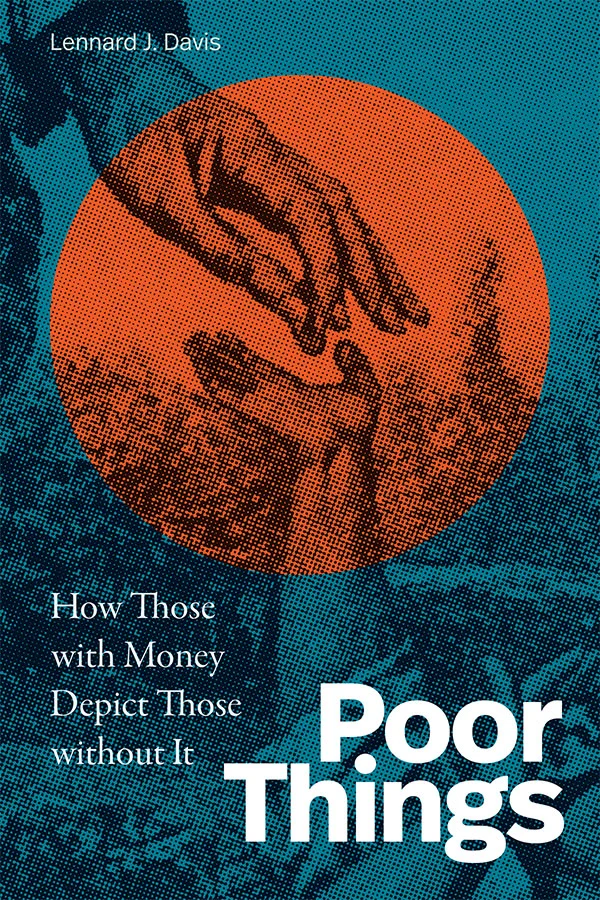
Poor Things

How Those with Money Depict Those without It
Book

Pages: 304

Illustrations: 34 illustrations

Published: November 2024

For generations most of the canonical works that detail the lives of poor people have been created by rich or middle-class writers like Charles Dickens, John Steinbeck, or James Agee. This has resulted in overwhelming depictions of poor people as living abject, violent lives in filthy and degrading conditions. In Poor Things, Lennard J. Davis labels this genre “poornography”: distorted narratives of poverty written by and for the middle and upper classes. Davis shows how poornography creates harmful and dangerous stereotypes that build barriers to social justice and change. To remedy this, Davis argues, poor people should write realistic depictions of themselves, but because of representational inequality they cannot. Given the obstacles to the poor accessing the means of publication, Davis suggests that the work should, at least for now, be done by “transclass” writers who were once poor and who can accurately represent poverty without relying on stereotypes and clichés. Only then can the lived experience of poverty be more fully realized.

Praise

“Lennard J. Davis’s Poor Things provocatively argues that those who write about poor people but are not or have not themselves been poor are governed by various tropes and protocols that serve to depict the poor as revolting and ultimately less human than the rich. The implications of the argument go well beyond the nineteenth-century focus that Davis adopts, having resonances for fields such as economics, anthropology, sociology, and others. Poor Things is a masterpiece of intellectual suggestiveness.” - Ato Quayson, Jean G. and Morris M. Doyle Professor of Interdisciplinary Studies, Stanford University

“Lennard J. Davis has little to no faith in the ability of middle-class writers to write about poor people without relying on stereotypes. Using a personal narrative, so important to working-class academic writing, allows Davis to convincingly argue that a purely structural class critique is insufficient because such critique typically overlooks the realities of the lived experience of poverty. Therein lie the stakes of his book: that novels written by people in poverty can act as a cultural brake on the social dynamics by which the moneyed and the impoverished are, right now, pulled so violently apart.” - Matt Brim, author of Poor Queer Studies: Confronting Elitism in the University

"Whether considering the hypocrisy of 'poornography' or the common limitations of well-meaning characterizations of the impoverished, Davis's range of authentic criticism is impressive. . . . Poor Things provides a deep reflection and the start of a conversation that could go on forever." - Theodore Bain, Journal of American Culture

"Recommended. Graduate students through faculty." - Choice

“The importance of Poor Things has to do with the urgency and starkness of its intervention. . . .  By revealing the limitations of the transclass exception . . . Davis is all the more able to set the stakes of his argument: that novels have the power to do meaningful cultural work, and representational equality—literature written by people in poverty—can act as a cultural brake on the social dynamics by which the moneyed and the impoverished are, right now, pulled so violently apart.”

- Matt Brim, Journal of Working-Class Studies

“Sometimes books can change how readers see the world. After reading Poor Things, for example, academics may never see works about the poor the same. Nor, if you believe Davis, should they.”

- John Marsh, American Literary History

"By far the clearest, most persuasive study of the politics of depicting the poor I have had the fortune to read." - Chris A. Chambers, Political Theory

Buy

Availability: In stock

Price: $27.95

Request a desk or exam copy

Information

Author/Editor Bios

Back to Top
Lennard J. Davis is Distinguished Professor of Liberal Arts and Sciences at the University of Illinois Chicago and the author of many books, including Enabling Acts: The Hidden Story of How the Americans with Disabilities Act Gave the Largest US Minority Its Rights.

Table Of Contents

Back to Top
Preface. What It’s All About?  ix
Introduction. Scenes from a Life and from Lives  1
Interchapter 1. Why Me?  21
1. How to Read This Book and How the Lives of the Poor Have Been Read, or Why You? 25
2. The Problem of Representing the Poor  42
3. Transclass: Endo- and Exo-writers  70
4. Biocultural Myths of the Poor Body  110
5. Female Sex Workers  153
6. The Encounter, or, the Object Talks Back  170
Interchapter 2. They Got It Right Now?  205
Conclusion. What Is to Be Done? Endings and Beginnings  219
Notes  231
Bibliography  253
Index

Rights

Back to Top

Sales/Territorial Rights: World

Rights and licensing