
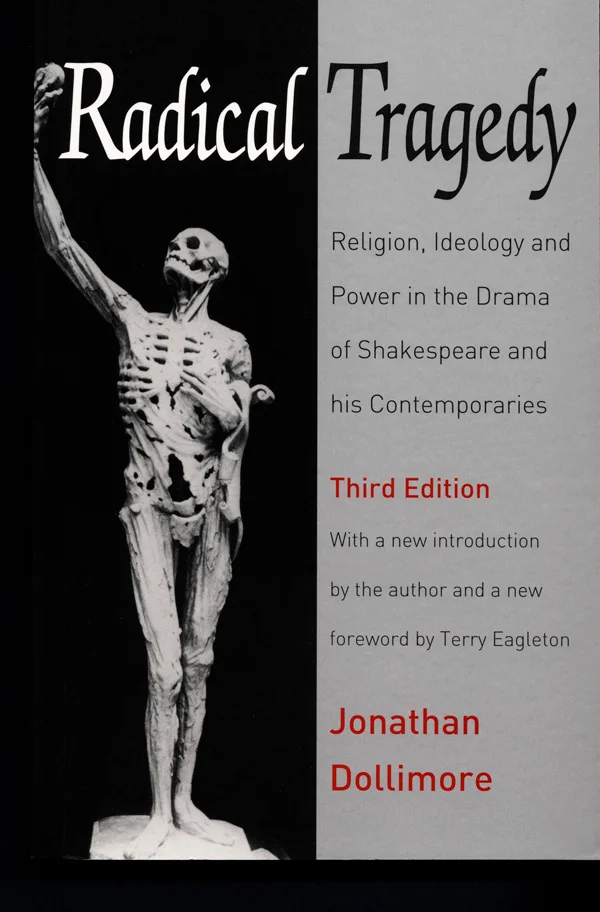
Radical Tragedy
Religion, Ideology and Power in the Drama of Shakespeare and His Contemporaries
Book
Pages: 416
Published: December 2003
Author: Jonathan Dollimore
Contributor: Terry Eagleton
Subjects
Literature and Literary Studies > Literary Criticism, Pre-Modern Studies > Medieval and Early Modern Studies
Literature and Literary Studies > Literary Criticism, Pre-Modern Studies > Medieval and Early Modern Studies
Praise
Buy
Availability: Loading...
Price: Loading...
This title will be released on December 04, 2003
Information
Author/Editor Bios
Back to TopJonathan Dollimore is Professor of English at the University of York. His books include Death, Desire, and Loss in Western Culture; Sex, Literature, and Censorship; Political Shakespeare: Essays in Cultural Materialism (with Alan Sinfield); and Sexual Dissidence: Augustine to Wilde, Freud to Foucault.
Table Of Contents
Back to Top
Acknowledgments ix
Foreword / Terry Eagleton x
Introduction to the Third Edition xiv
i September 1914 xiv
ii September 2001 xvi
iii September 1939
xix
iv Art and Humanism xxii
v Humanism and Materialism xxv
vi Returns xxvi
vii Knowledge and Desire xxx
Notes xxxv
Bibliography xxxvii
Introduction to the Second Edition xli
Part I: Radical Drama: Its Contexts and Emergence
1. Contexts 3
i Literary Criticism: Order versus History 5
ii Ideology, Religion and Renaissance Scepticism 9
iii Ideology and the Decentering of Man 17
iv Secularism versus Nihilism 19
v Censorship 22
vi Inversion and Misrule 25
2. Emergence: Marston's Antonio Plays (c. 1599-1601) and Shakespeare's Troilus and Cressida (c. 1601-1602) 29
i Discontinuous Identity (1) 30
ii Providence and Natural Law (1) 36
iii Discontinuous Identity (2) 40
iv Providence and Natural Law (2) 42
v Ideology and the Absolute 44
vi Social Contradiction and Discontinuous Identity 47
vii Renaissance Man versus Decentered Malcontent 49
Part II: Structure, Mimesis, Providence
3. Structure: From Resolution to Dislocation 53
i Bradley 53
ii Archer and Eliot 56
iii Coherence and Discontinuity 59
iv Brecht: A Difference Reality 63
4. Reniassance Literary Theory: Two Concepts of Mimesis 70
i Poetry versus History 71
ii The Fictive and the Real 73
5. The Disintegration of Providentialist Belief 83
i Atheism and Religious Scepticism 83
ii Providentialism and History 87
iii Organic Providence 90
iv From Mutability to Cosmic Decay 92
v Goodman and Elemental Chaos 99
vi Providence and Protestantism 103
vii Providence, Decay and the Drama 107
6. Dr. Faustus (c. 1589-92): Subversion Through Transgression 109
i Limit and Transgression 110
ii Power and the Unitary Soul 116
7. Mustapha (c. 1594-6): Ruined Aesthetic, Ruined Theology 120
i Tragedy, Theology and Cosmic Decay 120
ii Mustapha: Tragedy as Dislocation 123
8. Sejanus (1603): History and Realpolitik 134
i History, Fate, Providence 134
9. The Revenger's Tragedy (c. 1606): Providence, Parody and Black Camp 139
i Providence and Parody 139
ii Desire and Death 143
Part III: Man Decentered
10. Subjectivity and Social Process 153
i Tragedy, Humanism and the Transcendent Subject 156
ii The Jacobean Displacement of the Subject 158
iii The Essentialist Tradition: Christianity, Stoicism and Renaissance Humanism 161
iv Internal Tensions 163
v Anti-Essentialism in Political Theory and Renaissance Skepticism 169
vi Renaissance Individualism? 174
11. Bussy D'Ambois (c. 1604): A Hero at Court 182
i Shadows and Substance 182
ii Court Power and Native Noblesse 185
12. King Lear (c. 1605-6) and Essentialist Humanism 189
i Redemption and Endurance: Two Sides of Essentialist Humanism 191
ii King Lear: A Materialist Reading 195
iii The Refusal of Closure 202
13. Antony and Cleopatra (c. 1607): Virtus under Erasure 204
i Virtus and History 206
ii Virtus and Realpolitik (1) 207
iii Honour and Policy 213
iv Sexuality and Power 215
14. Coriolanus (c. 1608): The Chariot Whell and its Dust 218
i Virtus and Realpolitik (2) 218
ii Essentialism and Class War 222
15. The White Devil (1612): Transgression Without Virtue 231
i Religion and State Power 231
ii The Virtuous and the Vicious 232
iii Sexual and Social Exploitation 235
iv The Assertive Woman 239
v The Dispossessed Intellectual 242
vi Living Contradictions 244
Part IV: Subjectivity: Idealism versus Materialism
16. Beyond Essentialist Humanism 249
i Origins of the Transcendent Subject 250
ii Essence and Universal: Enlightenment Transitions 253
iii Discrimination and Subjectivity 256
iv Formative Literary Influences: Pope to Eliot 258
v Existentialism 262
vi Lawrence, Leavis and Individualism 264
vii The Decentered Subject 269
Notes 272
Bibliography of Works Cited 290
Index of Names and Texts 307
Index of Subjects 311
Foreword / Terry Eagleton x
Introduction to the Third Edition xiv
i September 1914 xiv
ii September 2001 xvi
iii September 1939
xix
iv Art and Humanism xxii
v Humanism and Materialism xxv
vi Returns xxvi
vii Knowledge and Desire xxx
Notes xxxv
Bibliography xxxvii
Introduction to the Second Edition xli
Part I: Radical Drama: Its Contexts and Emergence
1. Contexts 3
i Literary Criticism: Order versus History 5
ii Ideology, Religion and Renaissance Scepticism 9
iii Ideology and the Decentering of Man 17
iv Secularism versus Nihilism 19
v Censorship 22
vi Inversion and Misrule 25
2. Emergence: Marston's Antonio Plays (c. 1599-1601) and Shakespeare's Troilus and Cressida (c. 1601-1602) 29
i Discontinuous Identity (1) 30
ii Providence and Natural Law (1) 36
iii Discontinuous Identity (2) 40
iv Providence and Natural Law (2) 42
v Ideology and the Absolute 44
vi Social Contradiction and Discontinuous Identity 47
vii Renaissance Man versus Decentered Malcontent 49
Part II: Structure, Mimesis, Providence
3. Structure: From Resolution to Dislocation 53
i Bradley 53
ii Archer and Eliot 56
iii Coherence and Discontinuity 59
iv Brecht: A Difference Reality 63
4. Reniassance Literary Theory: Two Concepts of Mimesis 70
i Poetry versus History 71
ii The Fictive and the Real 73
5. The Disintegration of Providentialist Belief 83
i Atheism and Religious Scepticism 83
ii Providentialism and History 87
iii Organic Providence 90
iv From Mutability to Cosmic Decay 92
v Goodman and Elemental Chaos 99
vi Providence and Protestantism 103
vii Providence, Decay and the Drama 107
6. Dr. Faustus (c. 1589-92): Subversion Through Transgression 109
i Limit and Transgression 110
ii Power and the Unitary Soul 116
7. Mustapha (c. 1594-6): Ruined Aesthetic, Ruined Theology 120
i Tragedy, Theology and Cosmic Decay 120
ii Mustapha: Tragedy as Dislocation 123
8. Sejanus (1603): History and Realpolitik 134
i History, Fate, Providence 134
9. The Revenger's Tragedy (c. 1606): Providence, Parody and Black Camp 139
i Providence and Parody 139
ii Desire and Death 143
Part III: Man Decentered
10. Subjectivity and Social Process 153
i Tragedy, Humanism and the Transcendent Subject 156
ii The Jacobean Displacement of the Subject 158
iii The Essentialist Tradition: Christianity, Stoicism and Renaissance Humanism 161
iv Internal Tensions 163
v Anti-Essentialism in Political Theory and Renaissance Skepticism 169
vi Renaissance Individualism? 174
11. Bussy D'Ambois (c. 1604): A Hero at Court 182
i Shadows and Substance 182
ii Court Power and Native Noblesse 185
12. King Lear (c. 1605-6) and Essentialist Humanism 189
i Redemption and Endurance: Two Sides of Essentialist Humanism 191
ii King Lear: A Materialist Reading 195
iii The Refusal of Closure 202
13. Antony and Cleopatra (c. 1607): Virtus under Erasure 204
i Virtus and History 206
ii Virtus and Realpolitik (1) 207
iii Honour and Policy 213
iv Sexuality and Power 215
14. Coriolanus (c. 1608): The Chariot Whell and its Dust 218
i Virtus and Realpolitik (2) 218
ii Essentialism and Class War 222
15. The White Devil (1612): Transgression Without Virtue 231
i Religion and State Power 231
ii The Virtuous and the Vicious 232
iii Sexual and Social Exploitation 235
iv The Assertive Woman 239
v The Dispossessed Intellectual 242
vi Living Contradictions 244
Part IV: Subjectivity: Idealism versus Materialism
16. Beyond Essentialist Humanism 249
i Origins of the Transcendent Subject 250
ii Essence and Universal: Enlightenment Transitions 253
iii Discrimination and Subjectivity 256
iv Formative Literary Influences: Pope to Eliot 258
v Existentialism 262
vi Lawrence, Leavis and Individualism 264
vii The Decentered Subject 269
Notes 272
Bibliography of Works Cited 290
Index of Names and Texts 307
Index of Subjects 311
Rights
Back to TopSales/Territorial Rights: North America
Rights and licensingAdditional Information
Back to Top
Paper ISBN:
978-0-8223-3347-0 /
Hardcover ISBN:
978-0-8223-3335-7 /
Publicity material