
Siting Postcoloniality
Critical Perspectives from the East Asian Sinosphere
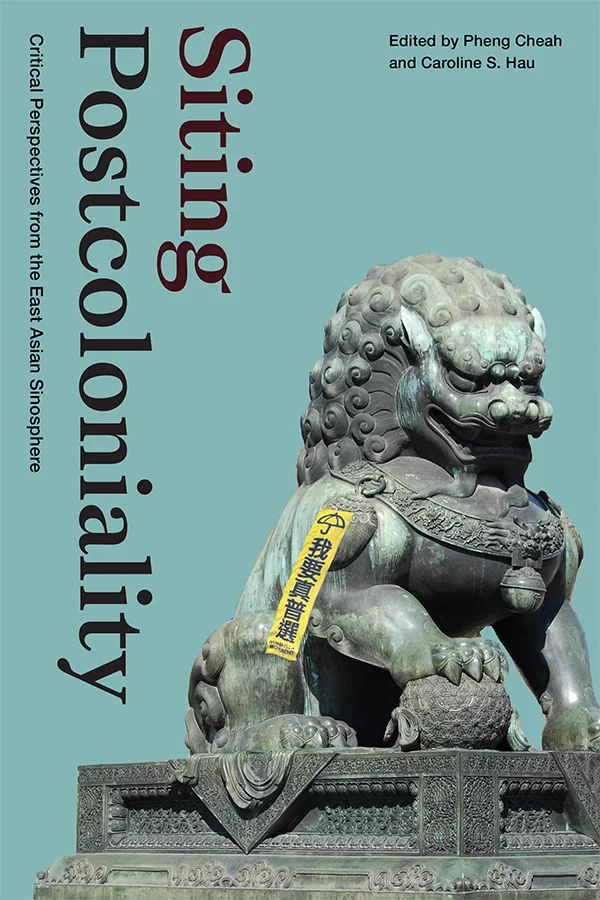
Book
Pages: 344
Published: December 2022
Editors: Pheng Cheah and Caroline S. Hau
Contributors: Dai Jinhua, Elaine Yee Lin Ho, Wendy Larson, Ping-Hui Liao, Pei-yin Lin, Kwai-Cheung Lo, Tai-lok Lui, Pang, Laikwan, Lisa Rofel, David Der-wei Wang, Erebus Wong, and Robert J. C. Young
Subjects
Postcolonial and Colonial Studies, Asian Studies > East Asia, Theory and Philosophy > Postcolonial Theory
Postcolonial and Colonial Studies, Asian Studies > East Asia, Theory and Philosophy > Postcolonial Theory
Praise
Buy
Availability: Loading...
Price: Loading...
This title will be released on December 09, 2022
Buy the e-book:
Information
Author/Editor Bios
Back to Top
Pheng Cheah is Professor of Rhetoric and Geography at the University of California, Berkeley, and author of What Is a World? On Postcolonial Literature as World Literature, also published by Duke University Press.
Caroline S. Hau is Professor of Southeast Asian Studies at Kyoto University and author of The Chinese Question: Ethnicity, Nation, and Region in and beyond the Philippines.
Caroline S. Hau is Professor of Southeast Asian Studies at Kyoto University and author of The Chinese Question: Ethnicity, Nation, and Region in and beyond the Philippines.
Table Of Contents
Back to Top
Series Editor’s Preface / Carlos Rojas vii
Acknowledgments xi
Introduction: Situations and Limits of Postcolonial Theory / Pheng Cheah 1
Part I. Framing the Postcolonial
1. Mythmaking: The Nomos of Postcoloniality / Robert J. C. Young 33
2. On Twenty-First-Century Postcolonialism / Dai Jinhua, translated by Erebus Wong and Lisa Rofel 53
Part II. Chinese Socialist Postcoloniality
3. Who Owns Social Justice? Permanent Revolution, the Chinese Gorky, and the Postcolonial / Wendy Larson 71
4. De-Sovietization and Internationalism: The People’s Republic of China’s Alternative Modernity Project / Pang Laikwan 90
Part III. Hong Kong Postcoloniality among the British, Japanese, and Chinese Empires
5. From Manchukuo to Hong Kong: Postcolonizing Asian Colonial Experiences / Lo Kwai-Cheung 109
6. Decolonization? What Decolonization? Hong Kong’s Political Transition / Lui Tai-lok 127
7. Locating Anglophone Writing in Sinophone Hong Kong / Elaine Yee Lin Ho 148
Part IV. Taiwan Postcoloniality between Japanese and Chinese Colonialisms
8. The Slippage between Empires: The Production of the Colonized Subject in Taiwan / Lin Pei-yin 171
9. Questions of Postcolonial Agency: Two Film Examples from Taiwan / Liao Ping-hui 191
Part V. Diasporas in East and Southeast Asian Postcoloniality
10. Sinophone Geopoetics: From Postcolonialism to Postloyalism / David Der-wei Wang 213
11. Multiple Colonialisms and Their Philippine Legacies / Caroline S. Hau 232
12. Diasporic Worldliness in Postcolonial Globalization / Pheng Cheah 250
References 277
Contributors 313
Index 315
Acknowledgments xi
Introduction: Situations and Limits of Postcolonial Theory / Pheng Cheah 1
Part I. Framing the Postcolonial
1. Mythmaking: The Nomos of Postcoloniality / Robert J. C. Young 33
2. On Twenty-First-Century Postcolonialism / Dai Jinhua, translated by Erebus Wong and Lisa Rofel 53
Part II. Chinese Socialist Postcoloniality
3. Who Owns Social Justice? Permanent Revolution, the Chinese Gorky, and the Postcolonial / Wendy Larson 71
4. De-Sovietization and Internationalism: The People’s Republic of China’s Alternative Modernity Project / Pang Laikwan 90
Part III. Hong Kong Postcoloniality among the British, Japanese, and Chinese Empires
5. From Manchukuo to Hong Kong: Postcolonizing Asian Colonial Experiences / Lo Kwai-Cheung 109
6. Decolonization? What Decolonization? Hong Kong’s Political Transition / Lui Tai-lok 127
7. Locating Anglophone Writing in Sinophone Hong Kong / Elaine Yee Lin Ho 148
Part IV. Taiwan Postcoloniality between Japanese and Chinese Colonialisms
8. The Slippage between Empires: The Production of the Colonized Subject in Taiwan / Lin Pei-yin 171
9. Questions of Postcolonial Agency: Two Film Examples from Taiwan / Liao Ping-hui 191
Part V. Diasporas in East and Southeast Asian Postcoloniality
10. Sinophone Geopoetics: From Postcolonialism to Postloyalism / David Der-wei Wang 213
11. Multiple Colonialisms and Their Philippine Legacies / Caroline S. Hau 232
12. Diasporic Worldliness in Postcolonial Globalization / Pheng Cheah 250
References 277
Contributors 313
Index 315
Rights
Back to TopSales/Territorial Rights: World
Rights and licensingAdditional Information
Back to Top
Paper ISBN:
978-1-4780-1931-2 /
Hardcover ISBN:
978-1-4780-1668-7 /
eISBN:
978-1-4780-2395-1 /
DOI:
https://doi.org/10.1215/9781478023951
Publicity material