
Home / Books / Slavery and the Invention of Dutch Art

Slavery and the Invention of Dutch Art
Book

Pages: 176

Illustrations: 52 illustrations, including 16 in color

Published: January 2025

Author: Caroline Fowler

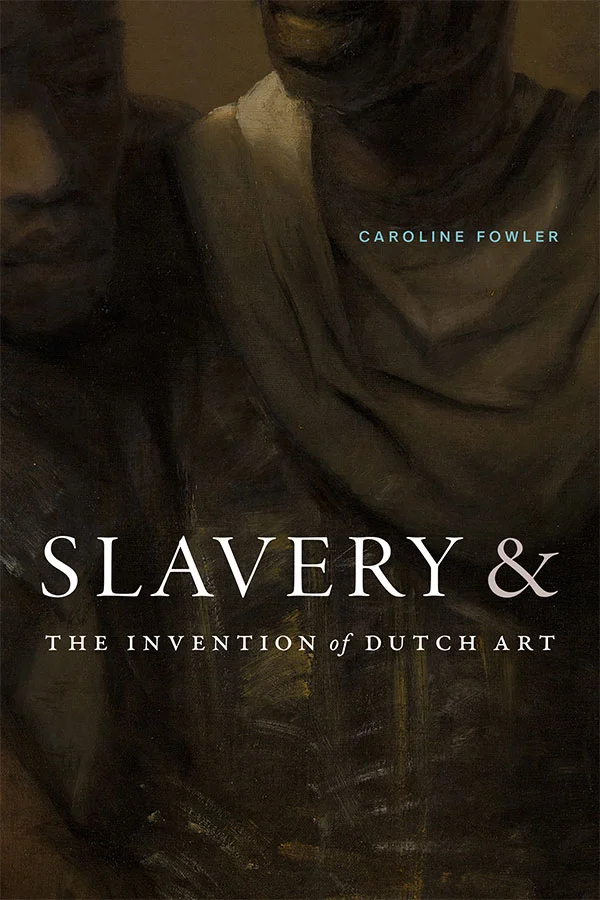
In Slavery and the Invention of Dutch Art, Caroline Fowler examines the fundamental role of the transatlantic slave trade in the production and evolution of seventeenth-century Dutch art. Whereas the sixteenth-century image debates in Europe engaged with crises around the representation of divinity, Fowler argues that the rise of the transatlantic slave trade created a visual field of uncertainty around picturing the transformation of life into property. Fowler demonstrates how the emergence of landscape, maritime, and botanical painting were deeply intertwined with slavery’s economic expansion. Moreover, she considers how the development of one of the first art markets was inextricable from the trade in human lives as chattel property. Reading seventeenth-century legal theory, natural history, inventories, and political pamphlets alongside contemporary poetry, theory, and philosophy from Black feminism and the African diaspora, Fowler demonstrates that ideas about property, personhood, and citizenship were central to the oeuvres of artists such as Rembrandt van Rijn, Hercules Segers, Frans Post, Johannes Vermeer, and Maria Sibylla Merian and therefore inescapably within slavery’s grasp.

Praise

Slavery and the Invention of Dutch Art dives into unexploited visual and artistic material in the history of racial capitalism’s beginnings at the time of Rembrandt. It is also a completely new interpretation of the objectification of the enslaved body by a Reformed religion of an imageless God. This major and refined perspective is made, for the first time, necessary and obvious by Caroline Fowler, who takes the cultural ramifications of racial slavery one step farther, thanks to the means of a bold and expanded art history.” - Anne Lafont, Professor of Art History, École des hautes études en sciences sociales, Paris

“The scholarly audience and the museum world have been waiting for a book like this for a long time. Given the shifting perspective in Old World heritage institutions on the place of slavery, racialization, and empire, there is a great need for Caroline Fowler’s thorough theorization and reflection. An impressive book.” - Karwan Fatah-Black, author of White Lies and Black Markets: Evading Metropolitan Authority in Colonial Suriname, 1650–1800

“In this passionate and imaginative book Caroline Fowler offers important new accounts of canonical artists from the portraiture of Rembrandt to the interior scenes of Gerard ter Borch, Frans van Mieris, and Vermeer to the iconoclastic interiors of Pieter Jansz. Saenredam. Brilliant and original.” - Joseph Koerner, author of Bosch and Bruegel: From Enemy Painting to Everyday Life

"This is a wide-ranging and accessible survey of the critical absence in Dutch art of enslaved people, who fundamentally contributed to the economic flourishing of the Dutch Republic. Building on recent research into the global trade in human cargo, raw materials, and other goods, the author focuses on the invisibility of enslaved Indigenous and African workers in Dutch art. . . . Highly recommended. All readers." - A. Golahny, Choice

“[Fowler’s] thoughtful analyses encourage readers to reexamine how the global violence of the slave trade may have infiltrated images that have long been considered provincially Dutch. In her reexamination of these works, she draws attention to art history’s overdependence on what can be seen, as well as its exaltation of sight as the principal way of knowing.”

- Carrie Anderson, William & Mary Quarterly

Buy

Availability: In stock

Price: $30.00

Request a desk or exam copy

Information

Author/Editor Bios

Back to Top
Caroline Fowler is Starr Director of the Research and Academic Program at the Clark Institute. She is the author of The Art of Paper: From the Holy Land to the Americas and Drawing and the Senses: An Early Modern History.

Table Of Contents

Back to Top
Acknowledgments  vii
Introduction. Transubstantiation across Atlantic Worlds  1
1. Art Markets and Futures Speculation  22
2.Seascapes and Landscapes  34
3. Monuments and Architectural Painting  52
4. Domestic Interiors and Natural History  81
Conclusion. Historiography and Race  108
Notes  125
Bibliography  141
Index  159

Rights

Back to Top

Sales/Territorial Rights: World

Rights and licensing

Additional Information

Back to Top
Paper ISBN: 978-1-4780-3132-1 / Hardcover ISBN: 978-1-4780-2809-3 / eISBN: 978-1-4780-6031-4 / DOI: https://doi.org/10.1215/9781478060314