
The Abolition of Slavery and the Aftermath of Emancipation in Brazil
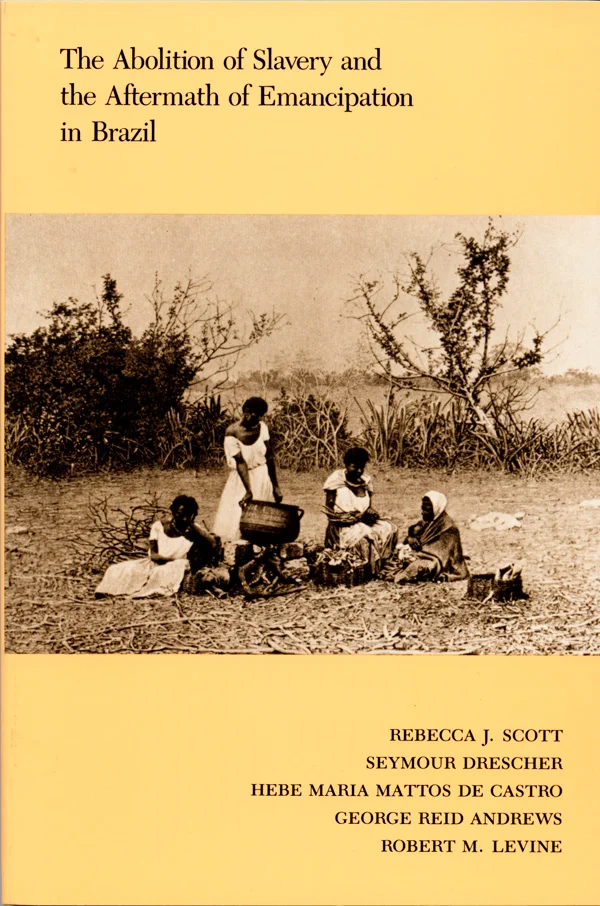
Book
Pages: 182
Editor: Rebecca Scott
Contributors: Rebecca Scott, Seymour Drescher, Hebe Maria Mattos de Castro, Andrews, George Reid, and Robert M. Levine
Buy
Availability: In stock
Price: $30.95
Buy the e-book:
Information
Table Of Contents
Back to Top
A Note of introduction / David Bushnell v
Exploring the Meaning of Freedom: Postemancipation Societies in Comparative Perspective / Rebecca J. Scott 1
Brazilian Abolition in Comparative Perspective / Seymour Drescher 23
Beyond Masters and Slaves: Subsistence Agriculture as Survival Strategy in Brazil during the Second Half of the Nineteenth Century / Hebe Maria Mattos de Castro 55
Black and White Workers: Sao Paulo, Brazil, 1888–1938 / George Reid Andrews 85
"Mud-Hut Jerusalem": Canudos Revisited / Robert M. Levine 119
Index 167
Notes on the Contributors 174
Exploring the Meaning of Freedom: Postemancipation Societies in Comparative Perspective / Rebecca J. Scott 1
Brazilian Abolition in Comparative Perspective / Seymour Drescher 23
Beyond Masters and Slaves: Subsistence Agriculture as Survival Strategy in Brazil during the Second Half of the Nineteenth Century / Hebe Maria Mattos de Castro 55
Black and White Workers: Sao Paulo, Brazil, 1888–1938 / George Reid Andrews 85
"Mud-Hut Jerusalem": Canudos Revisited / Robert M. Levine 119
Index 167
Notes on the Contributors 174
Rights
Back to TopSales/Territorial Rights: World
Rights and licensingAdditional Information
Back to Top
Paper ISBN:
978-0-8223-0888-1 /
eISBN:
978-0-8223-8154-9 /
DOI:
https://doi.org/10.1215/9780822381549
Publicity material