
The Constitutional Jurisprudence of the Federal Republic of Germany
Third edition, Revised and Expanded
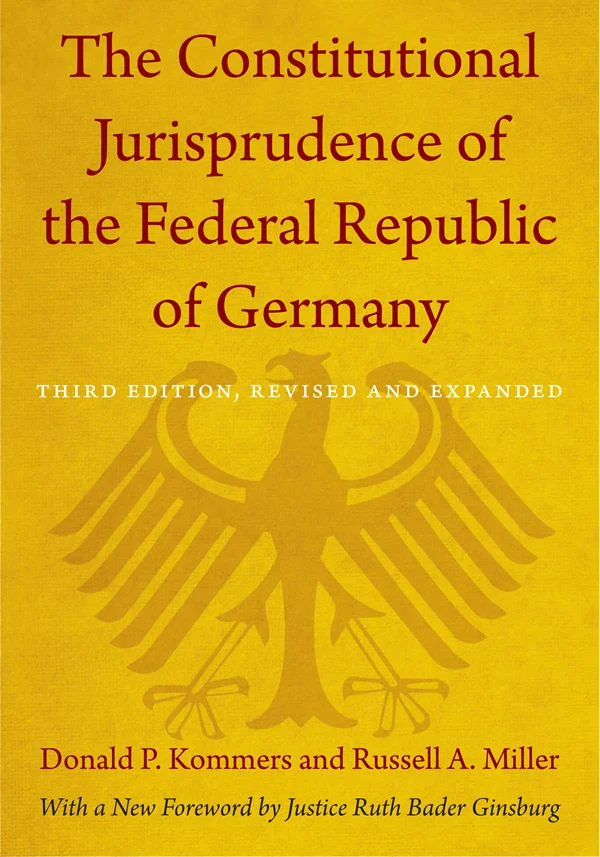
Book
Pages: 904
Illustrations: 8 tables
Published: November 2012
Authors: Donald P. Kommers and Russell A. Miller
Contributor: Ruth Bader Ginsberg
Praise
Buy
Availability: In stock
Price: $74.95
This title will be released on November 09, 2012
Buy the e-book:
Information
Author/Editor Bios
Back to TopDonald P. Kommers is Joseph and Elizabeth Robbie Professor of Political Science and Professor of Law Emeritus at the University of Notre Dame.
Russell A. Miller is a Professor at Washington and Lee University School of Law.
Table Of Contents
Back to Top
Foreword to the Third Edition / Justice Ruth Bader Ginsburg xi
Preface to the Third Edition xiii
Acknowledgments xvii
Note on Translations and Judicial Opinions xxi
Abbreviations xxv
Part I. German Constitutionalism
1. The Federal Constitutional Court 3
Origin 4
Jurisdiction 10
Institution 17
Process 25
Judicial Review in Operation 33
Conclusion 40
2. Basic Law and Its Interpretation 42
New Constitutionalism of the Basic Law 43
Nature of the Polity 48
Theories of the Constitution 55
Theory of Basic Rights 59
Interpretive Modes and Techniques 62
Sources of Interpretation 70
Conclusion 75
Part II. Constitutional Structures and Relationships
3. Federalism 79
Territorial Organization 80
Doctrine of Federal Comity 90
Apportionment and Distribution of Revenue 95
Local Self-Government 104
Bundesrat, Reformstau, and Modern Federalism 110
Division of Legislative Power 120
Cooperative Federalism 138
Implementation of Federal Law 141
Conclusion 150
4. Separation of Powers 152
Executive-Legislative Relations 153
Judicial versus Legislative Authority 164
Delegation of Legislative Power 175
Foreign and Military Affairs 189
Conclusion 214
5. Political Representation and Democracy 216
Parliamentary Democracy 216
Elections and Voting 238
Party State and Political Spending 269
Militant Democracy 285
Conclusion 300
6. Jurisprudence of the Open State 302
Basic Law and International Law 302
Germany's Constitutional Openness and International Tribunals 319
Basic Law and European Law 325
Conclusion 352
Part III. Basic Rights and Liberties
7. Human Dignity, Personal Liberty, and Equality 355
Dignity of Persons 356
Right to Life 373
Right to Personality 399
Equality 419
Conclusion 439
8. Freedom of Speech, Press, and Art 441
A Jurisprudence of Balancing 442
Reputational Interests and Offensive Speech 460
Resocialization, Privacy, Truth-Telling, and Assembly 479
Freedom of the Press and Broadcasting 502
Artistic and Academic Freedom 519
Conclusion 536
9. Religion, Conscience, and Family Rights 538
Free Exercise of Religion 539
Minority Religions 553
Religious Practices and Symbols in Public Schools 566
Taxation, Autonomy, and Religious Societies 590
Marriage and Family Rights 600
Conclusion 620
10. Economic Liberties and the Social State 622
Nature of the Economic System 623
Right to Property 630
Occupational and Associational Rights 659
Reunification and Economic Liberties 685
Conclusion 711
Appendix A: Chronological Chart of the Justices 713
Appendix B: Biographical Sketches of Presidents and Vice Presidents 717
Notes 725
Tables of Cases 833
Index
Permissions 845
Preface to the Third Edition xiii
Acknowledgments xvii
Note on Translations and Judicial Opinions xxi
Abbreviations xxv
Part I. German Constitutionalism
1. The Federal Constitutional Court 3
Origin 4
Jurisdiction 10
Institution 17
Process 25
Judicial Review in Operation 33
Conclusion 40
2. Basic Law and Its Interpretation 42
New Constitutionalism of the Basic Law 43
Nature of the Polity 48
Theories of the Constitution 55
Theory of Basic Rights 59
Interpretive Modes and Techniques 62
Sources of Interpretation 70
Conclusion 75
Part II. Constitutional Structures and Relationships
3. Federalism 79
Territorial Organization 80
Doctrine of Federal Comity 90
Apportionment and Distribution of Revenue 95
Local Self-Government 104
Bundesrat, Reformstau, and Modern Federalism 110
Division of Legislative Power 120
Cooperative Federalism 138
Implementation of Federal Law 141
Conclusion 150
4. Separation of Powers 152
Executive-Legislative Relations 153
Judicial versus Legislative Authority 164
Delegation of Legislative Power 175
Foreign and Military Affairs 189
Conclusion 214
5. Political Representation and Democracy 216
Parliamentary Democracy 216
Elections and Voting 238
Party State and Political Spending 269
Militant Democracy 285
Conclusion 300
6. Jurisprudence of the Open State 302
Basic Law and International Law 302
Germany's Constitutional Openness and International Tribunals 319
Basic Law and European Law 325
Conclusion 352
Part III. Basic Rights and Liberties
7. Human Dignity, Personal Liberty, and Equality 355
Dignity of Persons 356
Right to Life 373
Right to Personality 399
Equality 419
Conclusion 439
8. Freedom of Speech, Press, and Art 441
A Jurisprudence of Balancing 442
Reputational Interests and Offensive Speech 460
Resocialization, Privacy, Truth-Telling, and Assembly 479
Freedom of the Press and Broadcasting 502
Artistic and Academic Freedom 519
Conclusion 536
9. Religion, Conscience, and Family Rights 538
Free Exercise of Religion 539
Minority Religions 553
Religious Practices and Symbols in Public Schools 566
Taxation, Autonomy, and Religious Societies 590
Marriage and Family Rights 600
Conclusion 620
10. Economic Liberties and the Social State 622
Nature of the Economic System 623
Right to Property 630
Occupational and Associational Rights 659
Reunification and Economic Liberties 685
Conclusion 711
Appendix A: Chronological Chart of the Justices 713
Appendix B: Biographical Sketches of Presidents and Vice Presidents 717
Notes 725
Tables of Cases 833
Index
Permissions 845
Rights
Back to TopSales/Territorial Rights: World
Rights and licensingAdditional Information
Back to Top
Paper ISBN:
978-0-8223-5266-2 /
Hardcover ISBN:
978-0-8223-5248-8 /
eISBN:
978-0-8223-9538-6 /
DOI:
https://doi.org/10.1215/9780822395386
Publicity material