View author and book videos on our YouTube channel.
“It is dense, but refreshing and ultimately uplifting. Walter Mignolo’s visionary ideas about the decline and fall of (Western) modernity and hence leadership should be on the syllabus in schools, let alone higher education institutions.” — The Latin American Review of Books
"[I]n this provocative book, Mignolo delivers a complex analysis of the modernity/coloniality couple and of how it unfolded from the sixteenth century until today.” — Cecilia Tossounian, Bulletin of Latin American Research
“It is dense, but refreshing and ultimately uplifting. Walter Mignolo’s visionary ideas about the decline and fall of (Western) modernity and hence leadership should be on the syllabus in schools, let alone higher education institutions.” —The Latin American Review of Books
"[I]n this provocative book, Mignolo delivers a complex analysis of the modernity/coloniality couple and of how it unfolded from the sixteenth century until today.” —Cecilia Tossounian, Bulletin of Latin American Research
“The Darker Side of Western Modernity is a significant, visionary, and hopeful text. More than just revealing the logic and strategy at work in the ‘darker side of Western modernity,’ this book makes evident and gives life to decolonial delinking and thought. Walter D. Mignolo’s eye is toward emergent processes and projects of political-epistemic resistance, disobedience, and transformation that give sustenance, reason, and concretion to the prospect and anticipation of other possible worlds. Through these processes and projects, Mignolo remaps the order of knowing, reading, and doing, while also indicating paths and perspectives for significantly different communal futures.” — Catherine E. Walsh, Director, Doctoral Program in Latin American Cultural Studies, Universidad Andina Simón Bolívar, Quito, Ecuador
“Walter D. Mignolo is one of our leading theorists of coloniality/modernity and decolonial thinking. With this superb book, the third in an ‘unintended trilogy’ exploring the nature and limits of modern social thought, Mignolo continues his ambition to ‘break the Western code’ embodied in its rhetoric of modernity and logic of coloniality. This volume brings to light a darker side of the project of modernity, the oppressive relations that were at its heart, and offers decolonial options for the building of communal futures different from our pasts. It is necessary reading for all those interested in the emancipatory potential of social theory for dealing with the challenges of the twenty-first century.” — Gurminder K. Bhambra, author of, Rethinking Modernity: Postcolonialism and the Sociological Imagination
If you are requesting permission to photocopy material for classroom use, please contact the Copyright Clearance Center at copyright.com;
If the Copyright Clearance Center cannot grant permission, you may request permission from our Copyrights & Permissions Manager (use Contact Information listed below).
If you are requesting permission to reprint DUP material (journal or book selection) in another book or in any other format, contact our Copyrights & Permissions Manager (use Contact Information listed below).
Many images/art used in material copyrighted by Duke University Press are controlled, not by the Press, but by the owner of the image. Please check the credit line adjacent to the illustration, as well as the front and back matter of the book for a list of credits. You must obtain permission directly from the owner of the image. Occasionally, Duke University Press controls the rights to maps or other drawings. Please direct permission requests for these images to permissions@dukeupress.edu.
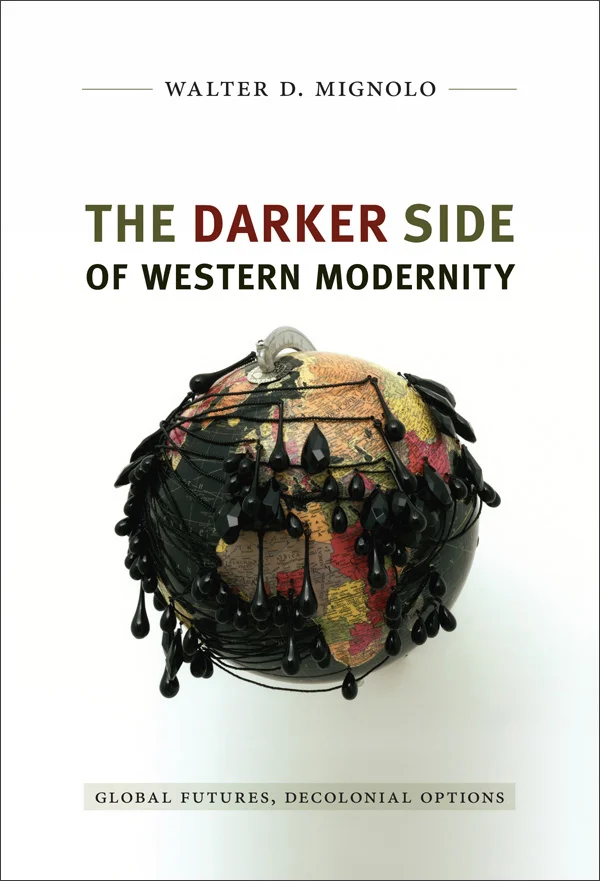
For book covers to accompany reviews, please contact the publicity department.
If you're interested in a Duke University Press book for subsidiary rights/translations, please contact permissions@dukeupress.edu. Include the book title/author, rights sought, and estimated print run.
Instructions for requesting an electronic text on behalf of a student with disabilities are available here.
Walter D. Mignolo is Director of the Institute for Global Studies in Humanities, William H. Wannamaker Professor of Literature and Romance Studies, and Professor of Cultural Anthropology at Duke University. He is the author of The Idea of Latin America; Local Histories/Global Designs: Coloniality, Subaltern Knowledges, and Border Thinking; and The Darker Side of The Renaissance: Literacy, Territoriality and Colonization and a co-editor of Rereading the Black Legend: The Discourses of Religious and Racial Difference in the Renaissance Empires.