
The Government of Beans
Regulating Life in the Age of Monocrops
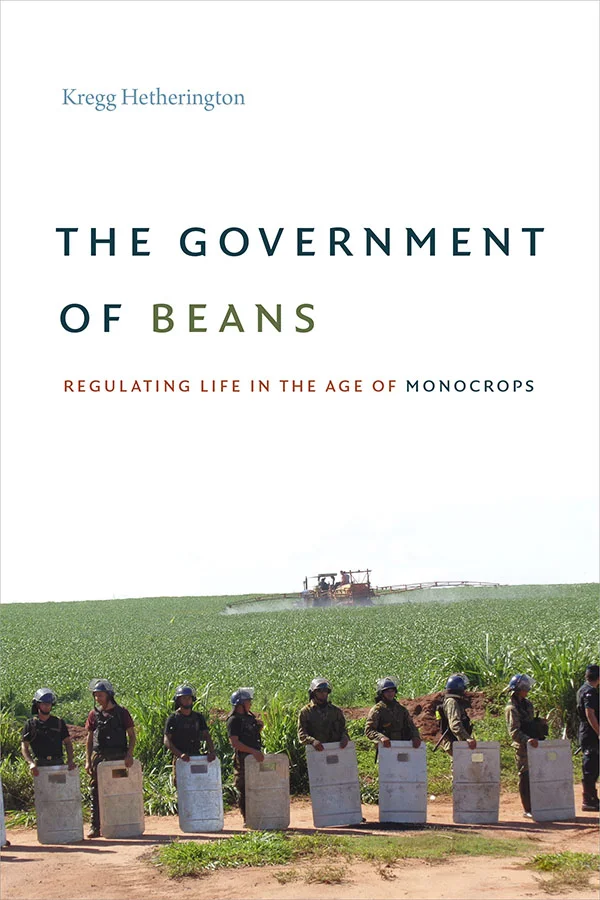
Book
Pages: 296
Illustrations: 1 illustration
Published: May 2020
Author: Hetherington, Kregg
Praise
Buy
Availability: In stock
Price: $28.95
This title will be released on May 14, 2020
Buy the e-book:
Information
Author/Editor Bios
Back to Top
Kregg Hetherington is Associate Professor of Anthropology at Concordia University. He is the editor of Infrastructure, Environment, and Life in the Anthropocene and author of Guerrilla Auditors: The Politics of Transparency in Neoliberal Paraguay, both also published by Duke University Press.
Table Of Contents
Back to Top
Acknowledgments vii
Introduction. Governing the Anthropocene 1
Part I. A Cast of Characters 19
1. The Accidental Monocrop 23
2. Killer Soy 32
3. The Absent State 43
4. The Living Barrier 53
5. The Plant Health Service 62
6. The Vast Tofu Conspiracy 70
Part II. An Experiment in Government 81
7. Capturing the Civil Service 85
8. Citizen Participation 96
9. Regulation by Denunciation 106
10. Citation, Sample, and Parallel States 120
11. Measurement as Tactical Sovereignty 130
12. A Massacre Where the Army Used to Be 144
Part III. Agribiopolitics 157
13. Plant Health and Human Health 163
14. A Philosophy of Life 174
15. Cotton, Welfare, and Genocide 184
16. Immunizing Welfare 194
17. Dummy Huts and the Labor of Killing 203
Conclusion. Remains of Experiments Past 216
Notes 223
Bibliography 257
Index 277
Introduction. Governing the Anthropocene 1
Part I. A Cast of Characters 19
1. The Accidental Monocrop 23
2. Killer Soy 32
3. The Absent State 43
4. The Living Barrier 53
5. The Plant Health Service 62
6. The Vast Tofu Conspiracy 70
Part II. An Experiment in Government 81
7. Capturing the Civil Service 85
8. Citizen Participation 96
9. Regulation by Denunciation 106
10. Citation, Sample, and Parallel States 120
11. Measurement as Tactical Sovereignty 130
12. A Massacre Where the Army Used to Be 144
Part III. Agribiopolitics 157
13. Plant Health and Human Health 163
14. A Philosophy of Life 174
15. Cotton, Welfare, and Genocide 184
16. Immunizing Welfare 194
17. Dummy Huts and the Labor of Killing 203
Conclusion. Remains of Experiments Past 216
Notes 223
Bibliography 257
Index 277
Rights
Back to TopSales/Territorial Rights: World
Rights and licensingAwards
Back to TopWinner of the 2021 APLA Book Prize in Critical Anthropology, presented by the Association for Political and Legal Anthropology section of the American Anthropological Association.
Winner, 2021 Julian Steward Award, presented by the Anthropology and Environment Society section of American Anthropological Association
Winner of the 2022 Rachel Carson Prize, presented by The Society for Social Studies of Science (4S)
Additional Information
Back to Top
Related Links
- Listen to an interview with Kregg Hetherington on This is Hell!
- Listen to an interview with Kregg Hetherington on New Books Network
- Watch a conversation with Amalia Leguizamon and Gaston Gordillo
Publicity material