
Home / Books / The Indian Militia and Description of the Indies

The Indian Militia and Description of the Indies
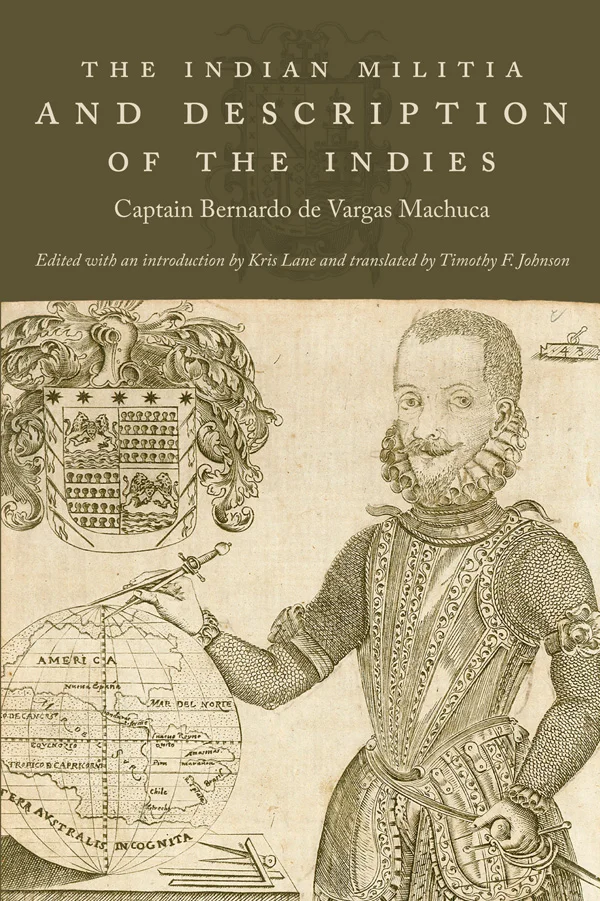
The Indian Militia and Description of the Indies cover image

The Cultures and Practices of Violence

More about this series

Book

Pages: 368

Illustrations: 31 illustrations, 2 maps

Published: November 2008

Sometimes referred to as the first published manual of guerrilla warfare, Bernardo de Vargas Machuca’s Indian Militia and Description of the Indies is actually the first known manual of counterinsurgency, or anti-guerrilla warfare. Published in Madrid in 1599 by a Spanish-born soldier of fortune with long experience in the Americas, the book is a training manual for conquistadors. The Aztec and Inca Empires had long since fallen by 1599, but Vargas Machuca argued that many more Native American peoples remained to be conquered and converted to Roman Catholicism. What makes his often shrill and self-righteous treatise surprising is his consistent praise of indigenous resistance techniques and medicinal practices.

Containing advice on curing rattlesnake bites with amethysts and making saltpeter for gunpowder from concentrated human urine, The Indian Militia is a manual in four parts, the first of which outlines the ideal qualities of the militia commander. Addressing the organization and outfitting of conquest expeditions, Book Two includes extended discussions of arms and medicine. Book Three covers the proper behavior of soldiers, providing advice on marching through peaceful and bellicose territories, crossing rivers, bivouacking in foul weather, and carrying out night raids and ambushes. Book Four deals with peacemaking, town-founding, and the proper treatment of conquered peoples. Appended to these four sections is a brief geographical description of all of Spanish America, with special emphasis on the indigenous peoples of New Granada (roughly modern-day Colombia), followed by a short guide to the southern coasts and heavens. This first English-language edition of The Indian Militia includes an extensive introduction, a posthumous report on Vargas Machuca’s military service, and a selection from his unpublished attack on the writings of Fray Bartolomé de Las Casas.

Praise

“In a new edition of The Indian Militia, Timothy F. Johnson’s translation and Kris Lane’s introduction and footnote commentaries faithfully render the conquistador’s viewpoint…Johnson and Lane deftly distill the personality of a man who was vainglorious and cruel, but also piteous in his frustrated ambitions.” - Jesse Cromwell, H-Net Reviews

The Indian Militia and Description of the Indies will contribute to a deeper understanding of topics such as the history of science, the history of medicine, the story of Spanish colonization, and ethnohistory. Kris Lane’s lively, literate introduction does a fine job of contextualizing the text and its contents as well as the life and times of Bernardo de Vargas Machuca.” - Susan Elizabeth Ramírez, author of To Feed and Be Fed: The Cosmological Bases of Authority and Identity in the Andes

“This volume is a wonderful addition to the English-language historiography of colonial Latin America.” - J. Michael Francis, author of Invading Colombia: Spanish Accounts of the Gonzalo Jiménez de Quesada Expedition of Conquest

The Indian Militia is a welcome addition to the growing body of English translations of less well known texts concerning the early Spanish empire in the Americas. The editor and translator have provided a useful introduction. . . . Established scholars, graduate students, and undergraduates will all benefit from having this volume in a convenient edition available for study or teaching.” - Ronald H. Fritze, Sixteenth Century Journal

“[A] wonderful contribution to the study of the Spanish colonization of the New World and sets a high standard for translational practices in general.” - Noel Fallows, Renaissance Quarterly

“In translating Bernardo Vargas Machuca’s Indian Militia (Milícia Indiana) and Description of the Indies, Kris Lane and Timothy F. Johnson have provided English-speakers with the first glimpse into the experiences of one of Spanish America’s most important military writers. Beyond its value to military historians, the text also contains valuable information on the colonial history of New Granada, as well as information for the burgeoning field of natural history in the Americas. Because Vargas provides little information regarding the location of the events he described, Kris Lane’s introduction usefully places him in northern South America, identifies the native peoples he fails to name and provides the necessary geographic and historical context that the text itself does not provide.” - Patricia Seed, Journal of Military History

“Once again, Kris Lane (this time, along with translator Timothy F. Johnson) has taken on a difficult project that others might consider too much of a challenge, and unlikely to produce anything in the way of ‘academic splash.’ And, once again, he, together with Johnson, has turned the project on its head, through careful research and a skilled writing style, to generate a first-rate example of a second-rate ‘conquistador.’” - Karen Vieira Powers, A Contracorriente

“This quirky and engaging book is a unique and fascinating source that allows students in to the mind of a particular type of Spaniard.” - John F. Schwaller, The Americas

“Though unequivocally directed at assisting the speedy conquest of still independent indigenous groups, Milicia indiana offers fascinating insights into the transformative effects of long residence in the Indies. . . . This is a smooth translation, engagingly introduced, which raises many questions that historians will no doubt wish to pursue further.” - Caroline A. Williams, Hispanic American Historical Review

Buy

Availability: Loading...

Price: Loading...

Request a desk or exam copy

Information

Author/Editor Bios

Back to Top

Bernardo de Vargas Machuca (c. 1550–1622) was a soldier from Simancas, Spain, who served in Italty and in numerous South American pacification campaigns. Kris Lane is Associate Professor of History at the College of William & Mary. He is the author of Quito, 1599: City and Colony in Transition and Pillaging the Empire: Piracy in the Americas, 1500–1750. Timothy F. Johnson is a teaching assistant in the Department of Spanish and Portuguese at the University of California, Davis.

Bernardo de Vargas Machuca (c. 1550–1622) was a soldier from Simancas, Spain, who served in Italty and in numerous South American pacification campaigns. Kris Lane is Associate Professor of History at the College of William & Mary. He is the author of Quito, 1599: City and Colony in Transition and Pillaging the Empire: Piracy in the Americas, 1500–1750. Timothy F. Johnson is a teaching assistant in the Department of Spanish and Portuguese at the University of California, Davis.

Table Of Contents

Back to Top
List of Illustrations ix
Preface xi
Acknowledgments xiii
Introductory Study xvii
Approvals, Dedications, and Sonnets 1
Book One of the Indian Militia 17
Book Two of the Indian Militia 55
Book Three of the Indian Militia 81
Book Four of the Indian Militia 133
A Brief Description of All the Western Indies 165
Hydrography of the Coasts and Seas of the Indies 213
Geography of the Most Distinguished Kingdoms and Provinces of the Indies 221
Compendium of the Sphere 229
Declaration of the Proper Names of this Book 235
Appendix One: A Posthumous Report on Bernardo de Vargas Machuca's Services, ca. 1622 239
Appendix Two: Selections from The Defense of Western Conquests, ca. 1603 245
Notes 259
Bibliography 281
Index 289

Rights

Back to Top

Sales/Territorial Rights: World

Rights and licensing

Additional Information

Back to Top
Paper ISBN: 978-0-8223-4314-1 / Hardcover ISBN: 978-0-8223-4297-7 / eISBN: 978-0-8223-8906-4 / DOI: https://doi.org/10.1215/9780822389064

Publicity material