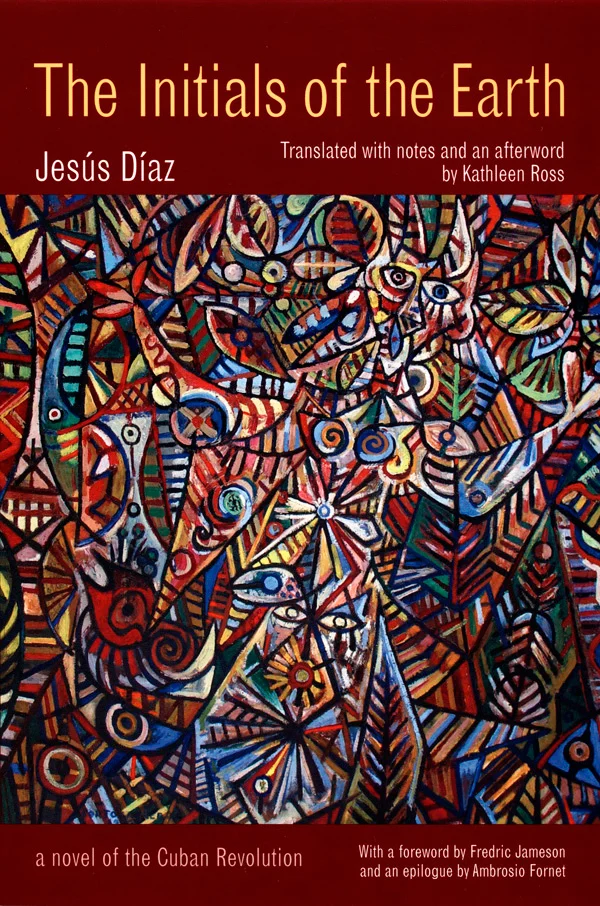
“A landmark in the literature of the Cuban Revolution. . . . This excellent English translation preserves the hybrid feel of the original Spanish.” - Forum for Modern Language Studies
“[A] novel where language—the language of 1950s US popular culture (cartoons, film, popular music), the playfulness of Cuban choteo, but also new and often strident revolutionary discourses—blend with and transform each other to create a mostly affectionate portrayal of how newly-formed activists were alternately bewildered and enchanted by the pace and scope of socio-political change. The novel develops into a marvelously ambiguous narrative of the revolution, a brutally honest but also humorous depiction of how the protagonist negotiates, with sometimes tragic consequences, the new world of the Revolution.” - PAR KUMARASWAMI, Bulletin of Spanish Studies
“[I trusted] Kathleen Ross to keep the prose flowing and honest to the unseen original art. What a task. Díaz loads his prose with stylistic games and the cultural allusions must have given Ross headaches and sleepless nights.” - Michael Sedona, La Bloga
“[T]he definitive novel of the Cuban Revolution. . . . The foreword and epilogue help contextualize the novel for readers unfamiliar with Cuban history. . . . Recommended.” - Y. Fuentes, Choice
“Any literary discussion of a translated literary text must start by judging the quality of the translation. And, in this work, Kathleen Ross has done a superb job. I particularly enjoyed the ways she is able to carry, in a different language, the percussive rhythm characterizing Diaz’s sharp and brief dialogues. . . . [T]he novel achieves its particular realistic style by crafting historical raw materials into a playful work of literature able to critique, as far as possible at the time, the dogmatism found under Cuba’s Socialist model. . . . [Diaz] is a master of parody, a very significant literary genre when writing under censorship. . . .” - Madeline Cámara, Cuban Affairs
“The chronology, the notes, the bibliography and the map help us understand where Jesús Díaz was coming from in 1987 and where he ended up. . . . And the translation, by Kathleen Ross, is splendid: inventive, idiomatic and precise without being pedantic.” - Terrence Rafferty, New York Times Book Review
“The Initials of the Earth is an emblematic novel of the Cuban Revolution, and the most significant of those set in the Cuba of the 1960s. . . . [It] is the novel that gives voice to the ways in which Cubans—and particularly young revolutionaries—experienced [those] years of epic change and crisis.” - Ambrosio Fornet, from the epilogue
“This translation of Las Iniciales de la tierra is an exceptional event, and a rare chance to experience Cuban revolutionary literature first-hand.” - Fredric Jameson, from the foreword