
Home / Books / The Prescription-to-Prison Pipeline

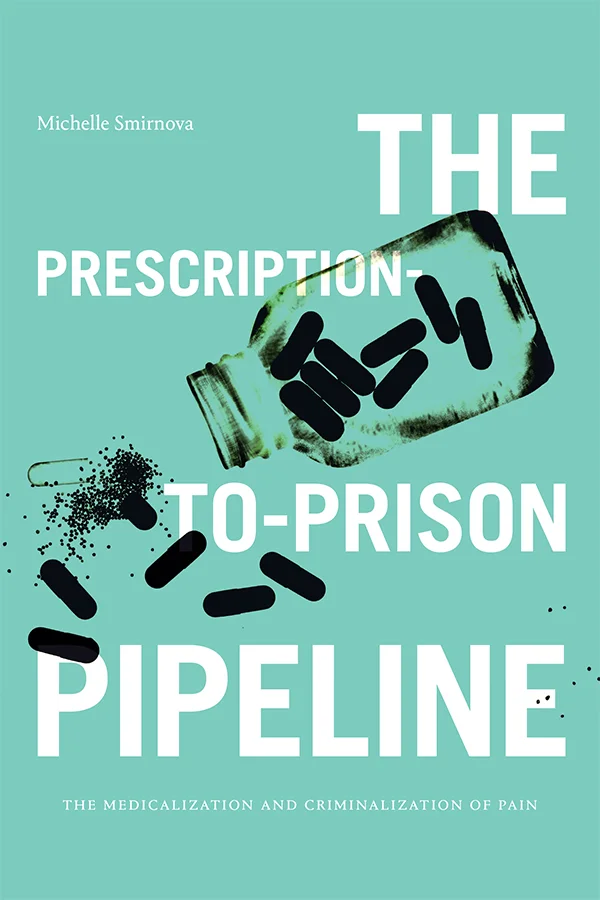
The Prescription-to-Prison Pipeline

The Medicalization and Criminalization of Pain
Book

Pages: 176

Published: March 2023

In The Prescription-to-Prison Pipeline Michelle Smirnova argues that the ongoing opioid drug epidemic is the result of an endless cycle in which suffering is medicalized and drug use is criminalized. Drawing on interviews with eighty incarcerated individuals in Missouri correctional institutions, Smirnova shows how contradictions in medical practices, social ideals, and legal policies disproportionately criminalize the poor for their social condition. This criminalization further exacerbates and perpetuates drug addiction and poverty. Tracing the processes by which social issues are constructed as biomedical ones that necessitate pharmacological intervention, Smirnova highlights how inequitable surveillance, policing, and punishment of marginalized populations intensify harms associated with both treatment and punishment, especially given that the distinctions between the two have become blurred. By focusing on the stories of people whose pain and pharmaceutical treatment led to incarceration, Smirnova challenges the binary of individual and social problems, effectively exploring how the conceptualization, diagnosis, and treatment of substance use may exacerbate outcomes such as relapse, recidivism, poverty, abuse, and death.

Praise

The Prescription-to-Prison Pipeline presents compelling data to examine how the relationships among trauma, physical pain, medical care, crime, drug use, and incarceration are interwoven and cocreated. This important book tells powerful stories that humanize those who are often demonized in popular imagination.” - Jennifer A. Reich, author of Calling the Shots: Why Parents Reject Vaccines

“Michelle Smirnova brings compassion and a keen sociological eye to to nonmedical prescription drug use. Drawing on interviews with eighty incarcerated people, Smirnova expertly shows how treatment and punishment have become linked through the prescription-to-prison pipeline. Her book provides an urgent and necessary structural analysis of the problems that drive nonmedical drug use and incarceration and offers meaningful, informed solutions. This is required reading for anyone interested in drug policy, the social construction of disease and crime, racial inequality, and fundamental causes of harm.” - Elizabeth Chiarello, Associate Professor of Sociology, Saint Louis University

"The Prescription-to-Prison Pipeline highlights ways in which inequity in medical and legal systems manifests inpatients who develop substance use issues following being prescribed medicine. Knowledge of these forces and howthey intersect fosters one’s commitment to changing them. The need is great and requires efforts in multiple sectors. Dismantling inequity is an enormous task." - Elizabeth C. Halloran, Family Medicine

"Michelle Smirnova’s The Prescription-to-Prison is a compelling narrative that hits squarely across numerous areas of sociology, including deviance and social control, criminology, medical sociology, social stratification, race/ethnicity, social class, and gender." - Thomas J. Mowen, American Journal of Sociology

"I would recommend this book to anyone who wants to understand the political economy of pain in the United States. I applaud Smirnova for her clarity of analysis. I sincerely hope this book is read by the broad group of US professional communities, including health care workers, policy makers, prison directors, and many others, who are responsible for improving the management of pain and ensuring better outcomes for our fellow citizens." - Ryan Whitacre, Journal of Anthropological Research

"This book brings a much-needed sociological and historical lens to a crisis whose framing has been dominated by journalists. Instead of focusing on the sensationalist tales of wealthy dynasties that profited from harm, Smirnova fixes her gaze on families who are over- and undertreated as well as over- and under policed as they struggle to survive a social system that fails them." - Elizabeth Chiarello, Journal of the History of the Behavioral Sciences

"A work of thorough, balanced, but impassioned advocacy." - Martha Tillson, Contemporary Sociology

Buy

Availability: Loading...

Price: Loading...

Request a desk or exam copy

Information

Author/Editor Bios

Back to Top
Michelle Smirnova is Associate Professor of Sociology and Affiliate Faculty of Race, Ethnic, and Gender Studies at the University of Missouri–Kansas City.

Table Of Contents

Back to Top
Acknowledgments  vii
Introduction: Quick Fixes to Enduring Problems  1
1. The Medicalization and Criminalization of Pain  27
2. Prescription: Getting Hooked  45
3. Pipeline: Sorting Use from Abuse  63
4. Prison: From Medicalization to Criminalization  79
Conclusions: When Medicine Becomes a Drug  93
Appendix: Methodological Note  111
Notes  121
Bibliography  135
Index  153

Rights

Back to Top

Sales/Territorial Rights: World

Rights and licensing

Additional Information

Back to Top
Related Links Paper ISBN: 978-1-4780-1969-5 / Hardcover ISBN: 978-1-4780-1706-6 / eISBN: 978-1-4780-2433-0 / DOI: https://doi.org/10.1215/9781478024330