
Home / Books / Transcendentalist Hermeneutics

Transcendentalist Hermeneutics

Institutional Authority and the Higher Criticism of the Bible
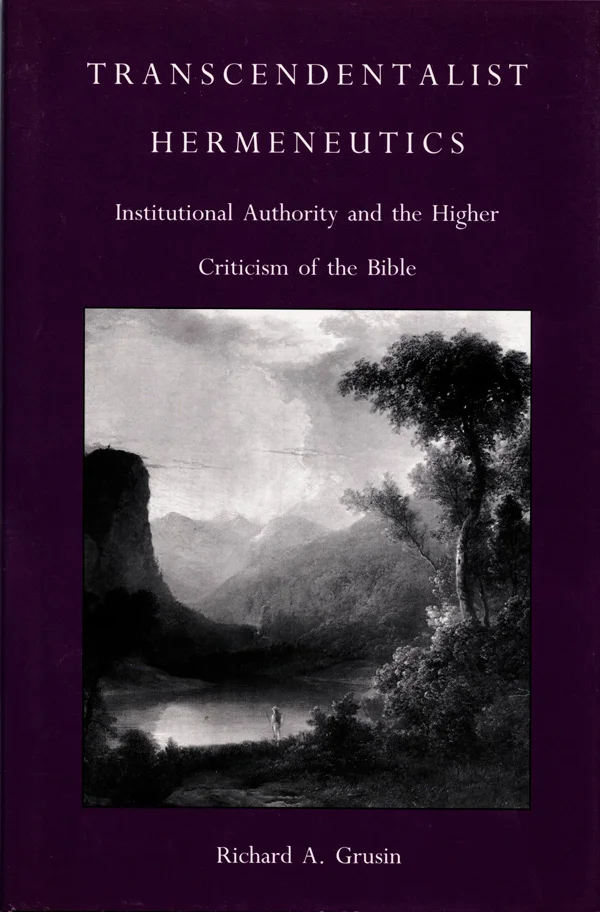
Transcendentalist Hermeneutics cover image

Post-Contemporary Interventions

More about this series

Book

Pages: 216

Published: November 1990

American literary historians have viewed Ralph Waldo Emerson’s resignation from the Unitarian ministry in 1832 in favor of a literary career as emblematic of a main current in American literature. That current is directed toward the possession of a self that is independent and fundamentally opposed to the “accoutrements of society and civilization” and expresses a Transcendentalist antipathy toward all institutionalized forms of religious observance.
In the ongoing revision of American literary history, this traditional reading of the supposed anti-institutionalism of the Transcendentalists has been duly detailed and continually supported. Richard A. Grusin challenges both traditional and revisionist interpretations with detailed contextual studies of the hermeneutics of Ralph Waldo Emerson, Henry David Thoreau, and Theodore Parker. Informed by the past two decades of critical theory, Grusin examines the influence of the higher criticism of the Bible—which focuses on authorship, date, place of origin, circumstances of composition, and the historical credibility of biblical writings—on these writers. The author argues that the Transcendentalist appeal to the authority of the “self” is not an appeal to a source of authority independent of institutions, but to an authority fundamentally innate.

Buy

Availability: Loading...

Price: Loading...

Request a desk or exam copy

Information

Rights

Back to Top

Sales/Territorial Rights: World

Rights and licensing

Additional Information

Back to Top
Hardcover ISBN: 978-0-8223-1059-4 / eISBN: 978-0-8223-8282-9 / DOI: https://doi.org/10.1215/9780822382829

Publicity material