
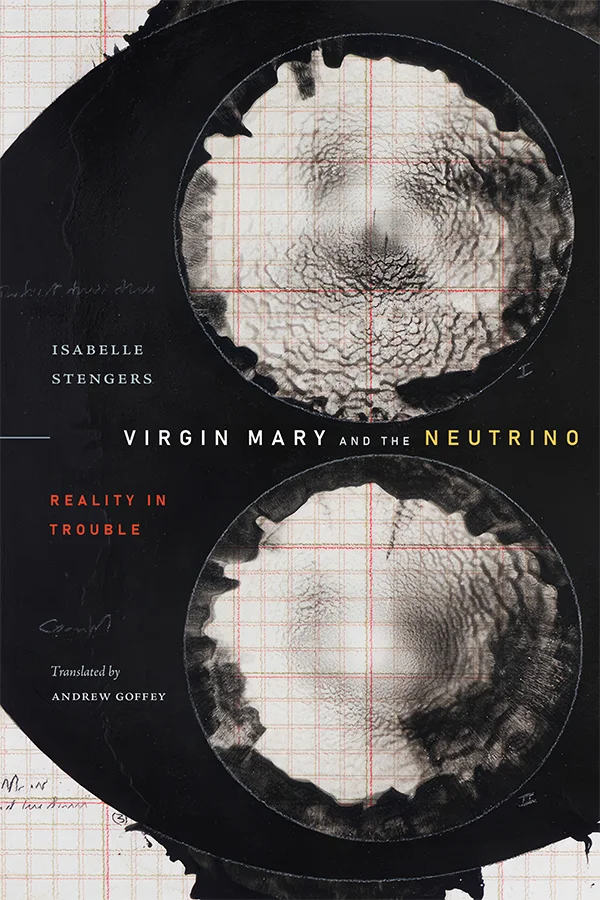
Virgin Mary and the Neutrino
Reality in Trouble
Experimental Futures: Technological Lives, Scientific Arts, Anthropological Voices
Book
Pages: 264
Published: November 2023
Author: Isabelle Stengers
Translator: Andrew Goffey
Subjects
Science and Technology Studies > Philosophy of Science, Science and Technology Studies > Feminist Science Studies, Theory and Philosophy > Critical Theory
Science and Technology Studies > Philosophy of Science, Science and Technology Studies > Feminist Science Studies, Theory and Philosophy > Critical Theory
Praise
Buy
Availability: Loading...
Price: Loading...
This title will be released on November 03, 2023
Buy the e-book:
Information
Author/Editor Bios
Back to Top
Isabelle Stengers is Emerita Professor of the Philosophy of Science at the Université libre de Bruxelles and is the author of numerous books, including Making Sense in Common: A Reading of Whitehead in Times of Collapse, Another Science is Possible: A Manifesto for Slow Science, and In Catastrophic Times: Resisting the Coming Barbarism.
Andrew Goffey is Associate Professor of Critical Theory and Cultural Studies at the University of Nottingham.
Andrew Goffey is Associate Professor of Critical Theory and Cultural Studies at the University of Nottingham.
Table Of Contents
Back to Top
Translator’s Preface vii
1. Scientists in Trouble 1
2. The Force of Experimentation 17
3. Dissolving Amalgams 38
4. The Sciences in Their Milieus 61
5.Troubling the Public Order 86
Intermezzo: The Creation of Concepts 111
6. On the Same Plane? 119
7. We Are Not Alone in the World 144
8. Ecology of Practices 169
9. The Cosmopolitical Test 197
Appendix: The First Experimental Apparatus? 207
Notes 217
Bibliography 235
Index 241
1. Scientists in Trouble 1
2. The Force of Experimentation 17
3. Dissolving Amalgams 38
4. The Sciences in Their Milieus 61
5.Troubling the Public Order 86
Intermezzo: The Creation of Concepts 111
6. On the Same Plane? 119
7. We Are Not Alone in the World 144
8. Ecology of Practices 169
9. The Cosmopolitical Test 197
Appendix: The First Experimental Apparatus? 207
Notes 217
Bibliography 235
Index 241
Rights
Back to TopSales/Territorial Rights: World
Rights and licensingAdditional Information
Back to Top
Related Links
Paper ISBN:
978-1-4780-2520-7 /
Hardcover ISBN:
978-1-4780-2029-5 /
eISBN:
978-1-4780-2727-0 /
DOI:
https://doi.org/10.1215/9781478027270
Publicity material