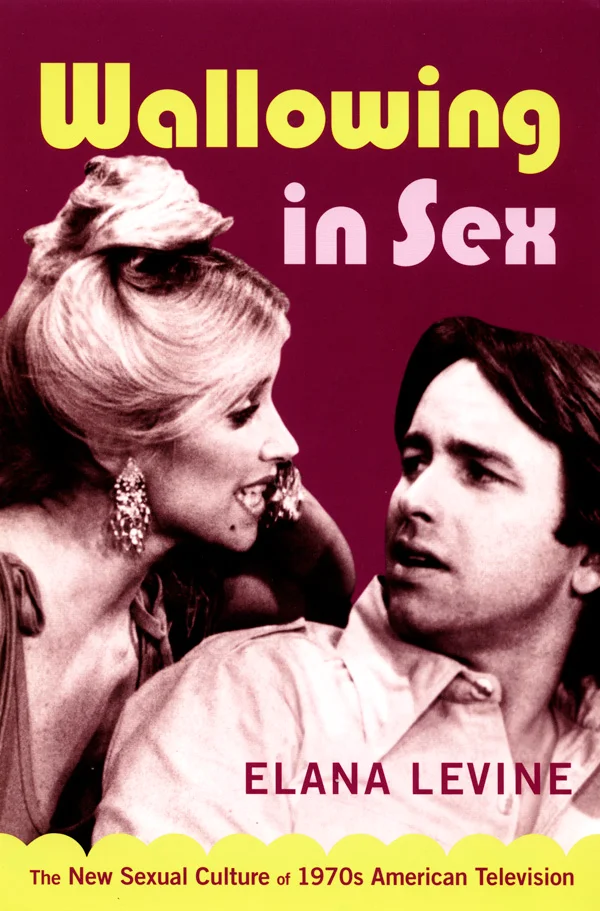
“Wallowing in Sex is a well-researched and useful contribution to the study of American sexuality and popular culture.” - Carrie Pitzulo, Journal of Popular Culture
“Wallowing in Sex is an enlightening read that revisits the sexual revolution of the 1970s and addresses the issues and circumstances surrounding this enormous change in American television and culture.” - Erie Hurd, Afterimage
“Wallowing in Sex is an excellent contribution to the fields of television studies, gender studies, and popular culture. Levine’s blend of textual, historical, and industrial analysis paints a thorough picture of ‘the new sexual culture of 1970s America,’ making it a necessary text for any and all students of the decade. Moreover, her extremely thorough coverage of all aspects of 1970s television, and its peculiar obsession with female sexuality make an important intersection between feminist theory and broadcast history. In this vein, Wallowing in Sex is on par with such germinal texts as Lynn Spigel’s Make Room for TV and Julie D’Acci’s Defining Women, making it an important and exciting addition to the canon of feminist media studies.” - Mary E. Pagano, Jump Cut
“Wallowing in Sex is exceptional in the range of genres it considers and the thorough analysis it affords each representation, and it skillfully combines close readings with succinct cultural analysis. . . . Levine’s analysis of programming in relation to feminism is particularly strong. . . . Wallowing in Sex is a nuanced and intriguing read that situates television as an important, influential medium that enabled Americans to participate in a new sexual culture—if only vicariously.” - Katherine Lehman, Register of the Kentucky Historical Society
“[I]t is [Levine’s] incisive and detailed analysis of sexual content within programming that makes this book a valuable resource for scholars and students alike.” - Jacqueline Lambiase, Journalism & Mass Communication Educator
“[Levine’s] conclusion—that the way mainstream Americans understand sexuality has been substantially informed by 1970s television—cannot, I believe, be reasonably disputed. Consequently, anyone interested in late-twentieth-century and current sexual cultures in the United States will find this book useful.” - Carol Siegel, Sexuality Research and Social Policy
“The book does map genuine cultural change and find meaning in an ephemeral medium that, despite its pervasiveness, is too often regarded as unfit for serious study.” - The Atlantic
“Entertaining and often eye-opening. . . .” - Joanne Weintraub, Milwaukee Journal Sentinel
“From Augusten Burroughs’ literary reminiscences about a Donahue episode that informed his queer sensibilities to Levine’s own admission that she ‘re-enacted Love Boat departures from her basement steps,’ a sincere affection for the medium in that moment radiates from the book’s pages. Ultimately, it is the depth of this love and the scholarly meticulousness that honors it that will seduce readers into Wallowing in Sex.” - Karen Tongson, International Journal of Communication
“Levine delivers a comprehensive, smartly researched history of 1970s television . . . [when] the sexual revolution was in full swing.” - Michael Hemmingson, Hemmingson Review
“Levine makes a substantial contribution to television scholarship . . . . This is a significant book that television scholars, in particular those with an interest in feminism, cannot afford to overlook.” - Hilary Radner, Journal of American History
“Levine’s book also offers readers rewarding depth and greater insights into the complicated relationship between sex and television in the 1970s than such program titles might suggest . . . . Levine’s writing and analysis are both scholarly and immensely readable . . . . [H]er work provides a strong argument and model for how such a book might be written by other TV historians.” - Wendy Davis, Media International Australia
“Levine’s book successfully reexamines televised representations of sexuality during a watershed decade of American culture marked by the rise of the feminist and gay movements. . . . Written in a straightforward and clear manner, [Levine] passionately guides the reader through the different issues and ambivalences that televised sexuality encountered during the 1970s. . . . Levine’s work should be appreciated not only as an historical overview of screened sexualities, but also as a critical inquiry into a-historical processes of regulation, prohibition and shame which are affecting what can and cannot be displayed on screen.” - Frederik Dhaenens, Historical Journal of Film, Radio and Television
“One of the strengths of this book is the balance between the broader sweeps of this industry narrative and the quite intricate readings of the television programs that are integral to this discussion. Levine provides a lovingly detailed description and analysis of the ‘hotspots’ of television’s exploration of changing and contested sexual values.” - Susan Bye, Screening the Past
“There is much to admire in Levine’s book, particularly in her understanding of how culture and commerce interact. The book gathers momentum as it proceeds, illuminating and articulating the role of television in popular culture, and would be an excellent resource for any class in media and culture.” - Peter Terry, Foreword Reviews
“Wallowing in Sex is important work: it pushes us to understand the institutional terrain of 1970s American television in the context of the sexual revolution and emergent feminist and gay liberation movements in a manner that no other scholarly work has done before.” - Tim J. Anderson, author of Making Easy Listening: Material Culture and Postwar American Recording
“Wallowing in Sex is a groundbreaking and important examination of television’s significant role in the increasingly sexualized culture of the 1970s. Painstakingly researched and smartly written, it is a crucial addition to the field of television history and, more generally, to the history of popular culture of the recent past. And if you grew up with 1970s television, Wallowing in Sex will make you look at the programming of the era in a thoroughly new light.” - Aniko Bodroghkozy, author of Groove Tube: Sixties Television and the Youth Rebellion