
Zapotec Women
Gender, Class, and Ethnicity in Globalized Oaxaca
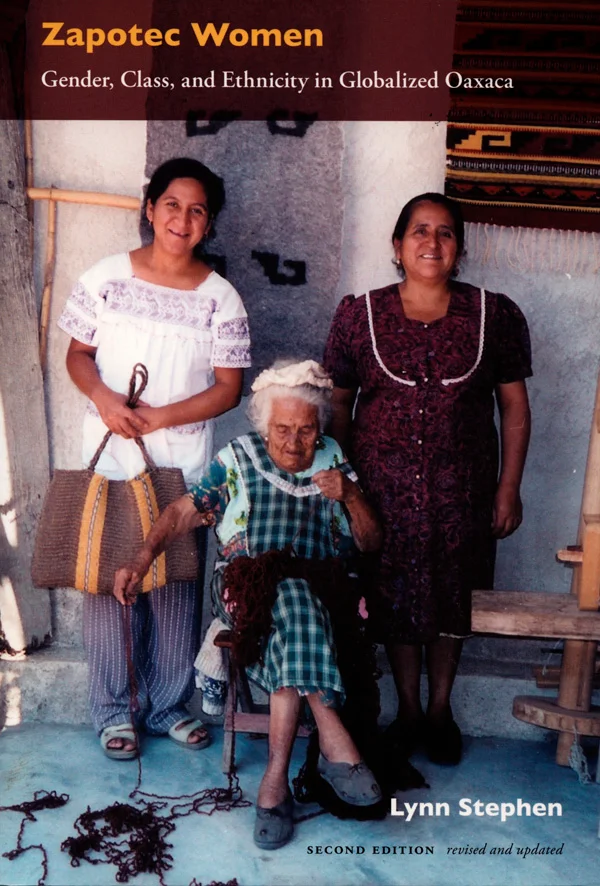
Book
Pages: 408
Illustrations: 22 photos, 37 tables, 2 maps
Published: October 2005
Author: Lynn Stephen
Subjects
Latin American Studies > Mexico, Gender and Sexuality > Feminism and Women’s Studies, Anthropology > Cultural Anthropology
Latin American Studies > Mexico, Gender and Sexuality > Feminism and Women’s Studies, Anthropology > Cultural Anthropology
Praise
Buy
Availability: Loading...
Price: Loading...
This title will be released on October 17, 2005
Buy the e-book:
Information
Author/Editor Bios
Back to TopLynn Stephen is Distinguished Professor of Anthropology at the University of Oregon. She is the author of several books, including Zapata Lives! Histories and Cultural Politics in Southern Mexico; Women and Social Movements in Latin America: Power from Below; and Hear My Testimony: María Teresa Tula, Human Rights Activist of El Salvador.
Table Of Contents
Back to Top
List of Maps, Illustrations, and Tables ix
Acknowledgments xiii
Introduction 1
1. Ethnicity and Class in the Changing Lives of Zapotec Women 15
2. Kinship, Gender, and Economic Globalization 46
3. Six Women’s Stories:Julia, Cristina, Angela, Alicia, Imelda, and Isabel 63
4. Setting the Scene: The Zapotecs of Teotitlan del Valle, Oaxaca 92
5. Contested Histories: Women, Men, and the Relations of Production in Teotitlan, 1920—1950s 122
6. Weaving as Heritage: Folk Art, Aesthetics, and the Commercialization of Zapotec Textiles 152
7. From Contract to Co-op: Gender, Commercialization, and Neoliberalism in Teotitlan 200
8. Changes in the Civil-Religious Hierarchy and Their Impact on Women 231
9: Fiesta. The Gendered Dynamics of Ritual Participation 250
10. Challenging Political Culture:Women’s Changing Political Participation in Teotitlan 282
After Words: On Speaking and Being Heard 324
Notes 333
Glossary of Spanish and Zapotec Terms 339
Bibliography 343
Index 371
Acknowledgments xiii
Introduction 1
1. Ethnicity and Class in the Changing Lives of Zapotec Women 15
2. Kinship, Gender, and Economic Globalization 46
3. Six Women’s Stories:Julia, Cristina, Angela, Alicia, Imelda, and Isabel 63
4. Setting the Scene: The Zapotecs of Teotitlan del Valle, Oaxaca 92
5. Contested Histories: Women, Men, and the Relations of Production in Teotitlan, 1920—1950s 122
6. Weaving as Heritage: Folk Art, Aesthetics, and the Commercialization of Zapotec Textiles 152
7. From Contract to Co-op: Gender, Commercialization, and Neoliberalism in Teotitlan 200
8. Changes in the Civil-Religious Hierarchy and Their Impact on Women 231
9: Fiesta. The Gendered Dynamics of Ritual Participation 250
10. Challenging Political Culture:Women’s Changing Political Participation in Teotitlan 282
After Words: On Speaking and Being Heard 324
Notes 333
Glossary of Spanish and Zapotec Terms 339
Bibliography 343
Index 371
Rights
Back to TopSales/Territorial Rights: World
Rights and licensingAdditional Information
Back to Top
Paper ISBN:
978-0-8223-3641-9 /
Hardcover ISBN:
978-0-8223-3603-7 /
eISBN:
978-0-8223-8751-0 /
DOI:
https://doi.org/10.1215/9780822387510
Publicity material