
Home / Books / A Primer for Teaching Digital History

A Primer for Teaching Digital History

Ten Design Principles
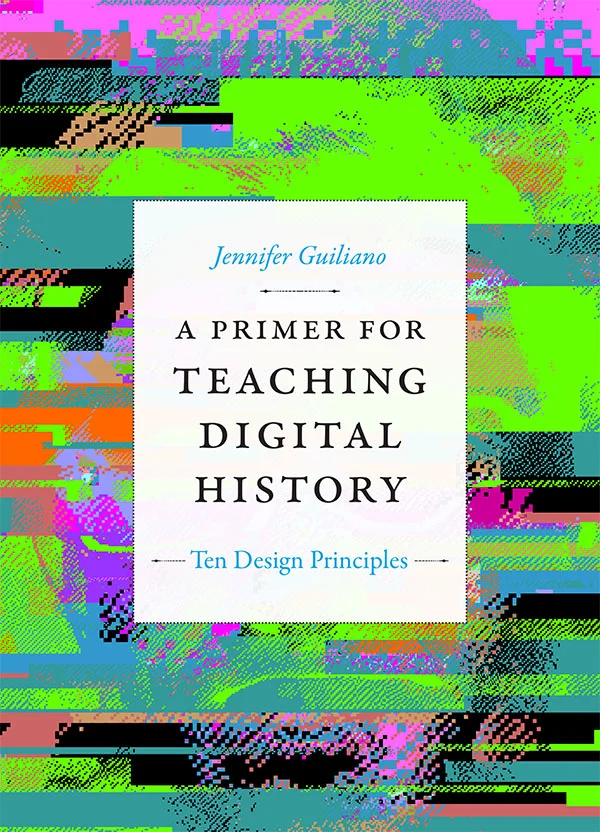
A Primer for Teaching Digital History cover image

Design Principles for Teaching History

More about this series

Read the Introduction

Book

Pages: 272

Illustrations: 11 illustrations

Published: July 2022

A Primer for Teaching Digital History is a guide for college and high school teachers who are teaching digital history for the first time or for experienced teachers who want to reinvigorate their pedagogy. It can also serve those who are training future teachers to prepare their own syllabi, as well as teachers who want to incorporate digital history into their history courses. Offering design principles for approaching digital history that represent the possibilities that digital research and scholarship can take, Jennifer Guiliano outlines potential strategies and methods for building syllabi and curricula. Taking readers through the process of selecting data, identifying learning outcomes, and determining which tools students will use in the classroom, Guiliano outlines popular research methods including digital source criticism, text analysis, and visualization. She also discusses digital archives, exhibits, and collections as well as audiovisual and mixed-media narratives such as short documentaries, podcasts, and multimodal storytelling. Throughout, Guiliano illuminates how digital history can enhance understandings of not just what histories are told but how they are told and who has access to them.

Praise

“For many instructors, the thought of teaching ‘digital history methods’ conjures up the fear that because one doesn’t know how to program, one cannot teach ‘digital.’ Offering a remarkable array of principles, strategies, and digital assignment ideas while effectively explaining how to move from analog research methods and considerations to digital approaches, this book counters such fears.” - Erin Bush, Assistant Professor of US and Digital History, University of North Georgia

A Primer for Teaching Digital History addresses a pressing need for a concise guide to digital history pedagogy. Jennifer Guiliano asks the reader to consider how teaching with digital technologies, tools, and approaches might transform the classroom into a site of student-centered knowledge production. Rather than offering a prescriptive plan, Guiliano presents ten design principles for teaching digital history that highlight various strategies and approaches. A Primer for Teaching Digital History provides an invaluable overview for educators who wish to incorporate digital history into their courses.” - Michelle Moravec, Associate Professor of American History and Women and Gender Studies, Rosemont College

"With the substantial role it has played in higher education since the onset of the pandemic, teaching with technology is an area in need of robust scholarship. For humanities faculty, A Primer for Teaching Digital History fills this gap with a well-organized and comprehensive guide to assignments, digital tools, and pedagogical approaches that assist with teaching not only history but also literature, art, music, and culture. Guiliano’s eminently practical guide is as valuable for experienced digital pedagogies as those just getting started." - Roopika Risam, Public Books

“Guiliano provides a creative, flexible, and comprehensive framework to guide digital history in the classroom. The digital resources linked throughout this book, most of them free, offer teachers and students multiple ways to immediately engage in the digital history methods the author describes and suggests. Teachers seeking to help their students understand their histories, communities, and the world around them will be well-served with this book as their guide.” - Alison Dobrick, Teachers College Record

"The book includes a comprehensive glossary and endnotes, making it a valuable resource for anyone interested in history or digital storytelling, or those looking to refine their teaching practices. Recommended. Advanced undergraduates through faculty; professionals." - C. R. Hilburger, Choice

A Primer for Teaching Digital History is an excellent resource both for people who are new to teaching digital history and for those who have been doing it for a while.”

- William J. Turkel, Historical Studies in Education

"This book is an excellent resource for anyone teaching Digital History or interested in exploring the possibilities of digital tools and methods in history education. It has many references to (re)sources, methods, and suggestions on how these can be used in class. . . . It offers not only suggestions for introductory courses but also intermediate and advanced ones in which students have to select their own methods and tools." - C. Annemieke Romein, Journal for Digital Legal History

"The book offers a variety of approaches that historians can use to integrate the digital into their pedagogical practices, from introducing students to new forms of scholarly publishing or having them explore digital archives and collections to incorporating data analysis with complex computational models into their course design." - Maria José Afanador-Llach, The Public Historian

"A Primer for Teaching Digital History is an indispensable resource for educators who want to dip their toes into digital history as well as for those who have been doing laps in this pool for a while." - Juliette Levy, American Historical Review

Buy

Availability: In stock

Price: $27.95

Request a desk or exam copy

Information

Author/Editor Bios

Back to Top
Jennifer Guiliano is Associate Professor of History at IUPUI and author of Indian Spectacle: College Mascots and the Anxiety of Modern America.

Table Of Contents

Back to Top
Acknowledgments  ix
Introduction  1
Part I. Foundations
1. Sources as Data  19
2. Learning Outcomes  35
3. New Forms of Assignments   53
4. The Basics of Digital Methods  71
Part II. Selected Methods
5. Digital Source Criticism  85
6. Text and Network Analysis  97
7. Visualization  111
Part III. Forms of Scholarship
8. Digital Archives, Digital Exhibits, and Digital Collections  129
9. Storytelling  149
10. Crowdsourcing  163
Conclusion: Embracing Digital History  171
Glossary 179
Notes  201
Bibliography  221
Index  243

Rights

Back to Top

Sales/Territorial Rights: World

Rights and licensing

Additional Information

Back to Top
Related Links Paper ISBN: 978-1-4780-1768-4 / Hardcover ISBN: 978-1-4780-1505-5 / eISBN: 978-1-4780-2229-9 / DOI: https://doi.org/10.1215/9781478022299