
Home / Books / A Wall Is Just a Wall

A Wall Is Just a Wall

The Permeability of the Prison in the Twentieth-Century United States
Book

Pages: 368

Illustrations: 3 illustrations

Published: February 2024

Author: Reiko Hillyer

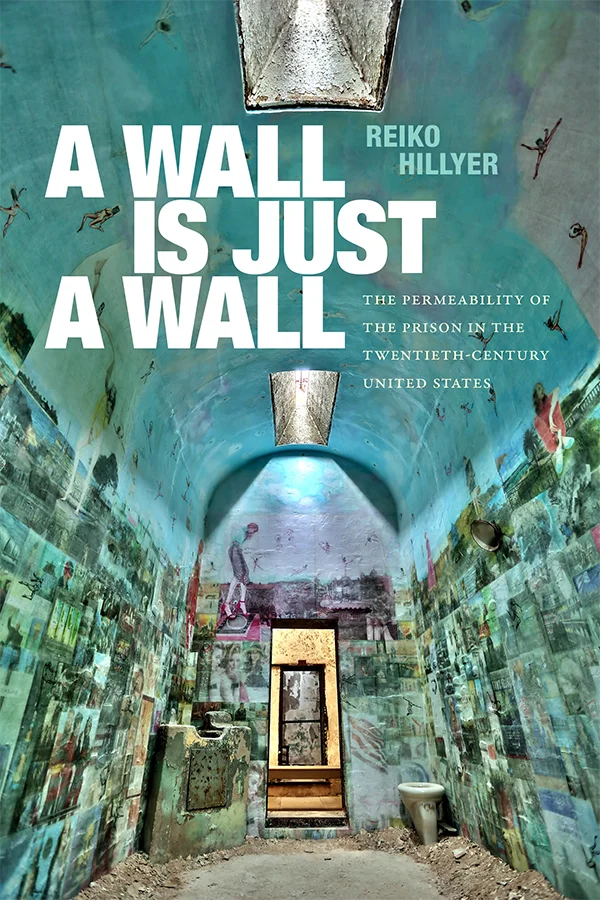
Throughout the twentieth century, even the harshest prison systems in the United States were rather porous. Incarcerated people were regularly released from prison for Christmas holidays; the wives of incarcerated men could visit for seventy-two hours relatively unsupervised; and governors routinely commuted the sentences of people convicted of murder. By the 1990s, these practices had become rarer as politicians and the media—in contrast to corrections officials—described the public as potential victims who required constant protection against the threat of violence. In A Wall Is Just a Wall Reiko Hillyer focuses on gubernatorial clemency, furlough, and conjugal visits to examine the origins and decline of practices that allowed incarcerated people to transcend prison boundaries. Illuminating prisoners’ lived experiences as they suffered, critiqued, survived, and resisted changing penal practices, she shows that the current impermeability of the prison is a recent, uneven, and contested phenomenon. By tracking the “thickening” of prison walls, Hillyer historicizes changing ideas of risk, the growing bipartisan acceptance of permanent exile and fixing the convicted at the moment of their crime as a form of punishment, and prisoners’ efforts to resist.

Praise

“In this smart and urgent history, Reiko Hillyer tracks the building of mass incarceration through assaults on the mobility and relationships of incarcerated people. A Wall Is Just a Wall is a must-read for anyone who cares about how we got our current prison state and how to build something better.” - Dan Berger, author of Stayed on Freedom: The Long History of Black Power through One Family’s Journey

“Drawing on meticulous research and amplifying the voices of prisoners and their families and advocates, A Wall Is Just a Wall is materialist history at its best. Reiko Hillyer’s beautifully narrated historical lessons and analyses of the contested sites of clemency, conjugal visitation, and furlough policies spur us to newly imagine the porosity of prison walls and, ultimately, prison abolition as justice long overdue.” - Sora Y. Han, author of Letters of the Law: Race and the Fantasy of Colorblindness in American Law

"In this impressive study, historian Hillyer documents the relative openness of American prisons in the early 20th century and the subsequent 'thickening and hardening of prison walls.' . . . This thorough work of historical scholarship draws extensively on inmate newspapers to provide an eye-opening look at the high value prisoners placed on family visits, furlough, and the possibility of clemency, making their cancellation its own form of psychological punishment. Readers concerned by mass incarceration should take note." - Publishers Weekly

"Articulating this history of the prison’s permeability can help scholars and organizers communicate the broader contingency—and disruptability—of seemingly entrenched ideas about crime, public safety, rehabilitation, and indeed the prison itself. In so doing, Hillyer upends the idea that mass caging is, or ever should be, accepted common sense." - Charlotte E. Rosen, Public Books

"Deeply researched and beautifully written, A Wall Is Just a Wall expands our understanding of the U.S. carceral state, unsettles firmly entrenched notions of southern exceptionalism. . . . Anyone who considers mass incarceration to be a grave injustice will be taken by Hillyer's powerful exploration of the themes of not only social death, isolation, and inhumanity, but also mercy, redemption, and humanity."
  - Paul Renfro, North Carolina Historical Review

"Everyone who favors safety should read this important book. Recommended. General readers through faculty; professionals." - L. D. Woods, Choice

"With A Wall Is Just a Wall, Hillyer offers a valuable model for historians interested in writing policy history from the perspective of those who are affected. . . . This remarkable book should be widely read and assigned." - Melanie Newport, Journal of American History

Buy

Availability: Loading...

Price: Loading...

Request a desk or exam copy

Information

Author/Editor Bios

Back to Top
Reiko Hillyer is Associate Professor of History at Lewis & Clark College and the author of Designing Dixie: Tourism, Memory, and Urban Space in the New South.

Table Of Contents

Back to Top
Acknowledgments  ix
Introduction  1
Part I. The Boundaries of Mercy: Clemency, Jim Crow, and Mass Incarceration
1. Clemency in the Age of Jim Crow: Mercy and White Supremacy  27
2. Freedom Struggles: Clemency Hangs in the Balance in the Wake of the Civil Rights Movement  46
3. The House of the Dying: The Decline of Clemency under the New Jim Crow  65
Part II. Strange Bedfellows: Conjugal Visits, Belonging, and Social Death
4. Southern Hospitality: The Rise of Conjugal Visits  89
5. “It’s Something We Must Do”: The National Reach of Conjugal Visits  109
6. “Daddy Is in Prison”: The Decline of Conjugal Visits and the Strange Career of Family Values  129
Part III. Weekend Passes: Furloughs and the Risks of Freedom
7. “To Rub Elbows with Freedom”: Temporary Release in the Jim Crow South  13
8. Conquering Prison Walls: Furloughs at the Crossroads of the Rehabilitative Ideal  174
9. The End of Redemption: Willie Horton and Moral Panic  194
Epilogue  213
Notes  229
Bibliography  303
Index  335

Rights

Back to Top

Sales/Territorial Rights: World

Rights and licensing