
Architecture and the Right to Heal
Resettler Nationalism in the Aftermath of Conflict and Disaster
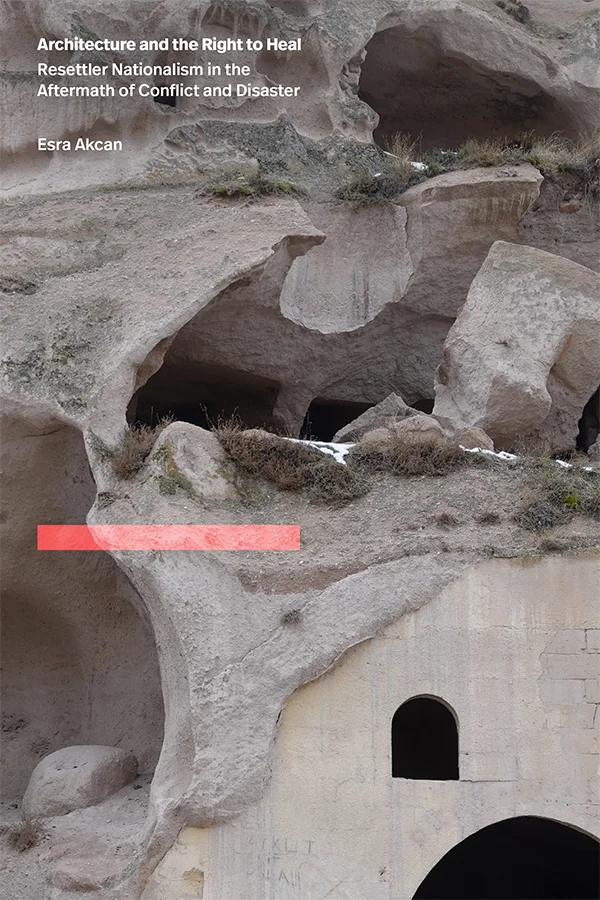
Book
Pages: 464
Illustrations: 149 color images, 1 map
Published: November 2025
Author: Esra Akcan
Subjects
Art and Visual Culture > Architecture, Middle East Studies, Postcolonial and Colonial Studies
Art and Visual Culture > Architecture, Middle East Studies, Postcolonial and Colonial Studies
Praise
Buy
Availability: In stock
Price: $40.00
This title will be released on November 11, 2025
Buy the e-book:
Information
Author/Editor Bios
Back to Top
Esra Akcan is Professor of Architecture at Cornell University and author of Architecture in Translation: Germany, Turkey, and the Modern House, also published by Duke University Press; Open Architecture: Migration, Citizenship and the Urban Renewal of Berlin-Kreuzberg by IBA 1984/87; and Abolish Human Bans: Intertwined Histories of Architecture.
Table Of Contents
Back to Top
Acknowledgments ix
Introduction 1
1. Enforced Disappearance: Urban Squares, Cemeteries, Memorials 40
2. Partition: Camps, Model Villages, Retrofits 76
3. Collapse: Slums, Real Estate, Cultural Buildings 138
4. Climate Disaster: Master Plans, Plantations, Campuses 194
5. Extinction: Gardens, Parks, Ruderal Urban Spaces 277
Notes 323
Bibliography 389
Index 427
Introduction 1
1. Enforced Disappearance: Urban Squares, Cemeteries, Memorials 40
2. Partition: Camps, Model Villages, Retrofits 76
3. Collapse: Slums, Real Estate, Cultural Buildings 138
4. Climate Disaster: Master Plans, Plantations, Campuses 194
5. Extinction: Gardens, Parks, Ruderal Urban Spaces 277
Notes 323
Bibliography 389
Index 427
Rights
Back to TopSales/Territorial Rights: World
Rights and licensingAdditional Information
Back to Top
Related Links
- Read an interview with Esra Akcan via Cornell University
- Read Esra Akcan discuss her new book in the Cornell Chronicle
- Read an excerpt in Platform
Publicity material