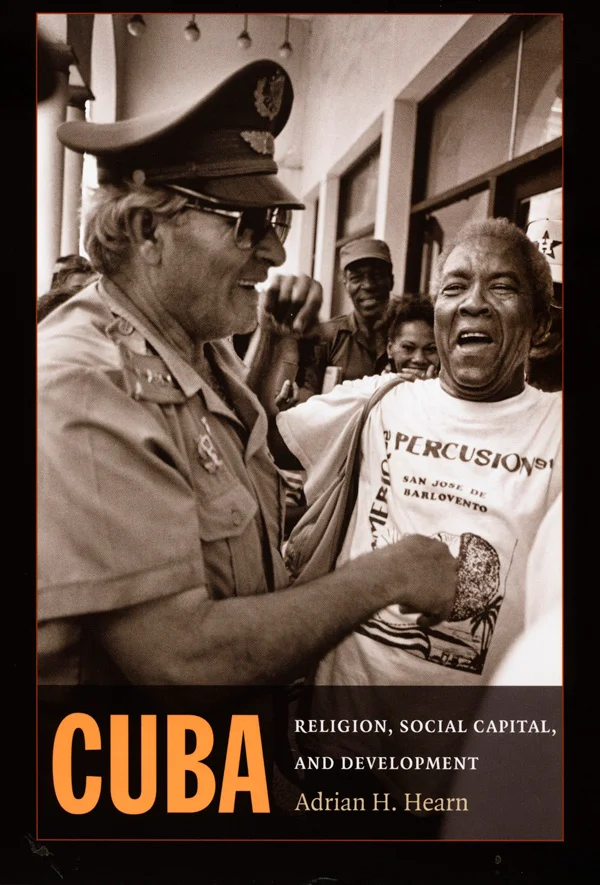
“[Cuba] is rich in personal detail, but maintains its integrity through its impartial stance. It is of value to anybody who is interested in Cuba. The writing style is accessible, and the subject matter is diverse and very well researched, giving a richness of detail as well as a profound analysis of Cuban politics and social movements.” - Jill Szutenberg, Vida Hispánica
“[T]he strength of the book lies in Hearn’s thorough and balanced account of numerous grass-roots initiatives on the island, and their relationship to the state and to foreign NGOs. Readers interested in development issues will be well served by the clarity of his argument about civil society and community-based projects. Even readers with little background knowledge of the island will find Hearn’s work accessible and engaging.” - Nadine Fernandez, New West Indian Guide
“Adrian Hearn makes a fruitful foray into Cuban civil society and uncovers amid the foliage some healthy shoots.” - Gavin O'Toole, Latin American Review of Books
“Adrian Hearn throws some piercing insights into the complex relationship between the Cuban state and grassroots neighbourhood initiatives and formal and informal local organisations that, the author contends, have flourished after the collapse of the Soviet Union and the onset of what was known as the ‘special period in peace time’. . . . [T]he book contains an astonishing amount of detailed knowledge of local social and cultural projects in various poor districts in Havana.” - Francisco Domínguez, Times Higher Education
“Having marshaled a wide array of evidence and executed a nuanced, sophisticated analysis, Hearn argues convincingly for a Cuban state and Revolution that continue to change as they continue to struggle, and that the grassroots of the Revolution will increasingly insist, formally and informally, on a more active role in that process.” - Jason M. Yaremko, The Americas
“Hearn’s book adds new ethnographic details to the ongoing conversation about the nature of contemporary Cuban political life. Cuba specialists across the disciplines should benefit from reading this book, as should scholars of civil society and comparative politics and any upper-level undergraduates or graduate students contemplating fieldwork in Cuba during this era of gradual and often confusing change in the meaning of Cuban citizenship.” - Amelia Rosenberg Weinreb, American Anthropologist
“Hearn’s book stands out as making a useful and original contribution to understanding the structural and cultural conditions in which Cubans negotiate to develop social capital and indeed political power at the beginning of the twenty-first century.” - Anna Cristina Pertierra, Journal of Iberian and Latin American Research
“The book promises to be a very useful resource for development agencies working within Cuba, as its case studies detail the possibilities and limitations of civil society in a context of state economic and legislative domination.” - Erin B. Taylor, The Australian Journal of Anthropology
“The real beauty of [Hearn’s] study . . . lies in how he situates himself and fashions the narrative of a highly complex story, evidencing the sensitivity of a more than willing outsider–insider, which this reviewer had reason to find particularly endearing and evocative.” - Jean Stubbs, Bulletin of Latin American Research
“This is one of the best studies on civil society in Cuba that I have read. Adrian H. Hearn combines first-rate ethnography, theoretical sophistication, and a solid understanding of the complexities of the Cuban political context. By focusing on Afro-Cuban religious communities and international NGOs, Hearn shows how the interpenetration of state and citizen action has shaped civil society in Cuba. The result is a fascinating analysis of the ongoing transformations within the Cuban Revolution.” - Ariel C. Armony, Katz Distinguished Associate Professor of Government, Colby College
“This volume reveals the complexity of Cuban society through remarkable ethnographic research. Based on years of research in Cuba, the work documents the inner workings of communities that use deeply held religious beliefs to promote development projects aimed at securing basic needs. Through skillful analysis, Adrian H. Hearn reveals the realities of life for ordinary Cubans. This book is a major contribution to our understanding of contemporary Cuba, as well as an exemplar for all those interested in how religion and community development can intersect.” - Margaret Crahan, author of Religion, Culture, and Society: The Case of Cuba