
Cultural Politics
 Sign Up for Issue Alerts
For information on how to submit an article, visit submission guidelines. See ethics and policies.
Journal
Current Volume: 22
Frequency: 3 issues annually
Academic Editors: Ryan Bishop, Mark Featherstone, Eva Haifa Giraud, and Tania Roy
Subscribe
Price: $67.00
Read Online
Subscribers and institutions with electronic access can read the journal online.

Information
Editors
Back to TopCultural Politics
attn: Ryan Bishop
Department of Art and Media Technology
Winchester School of Art
University of Southampton
Park Avenue
Winchester, Hampshire
SO23 8DL UK
+44 (0) 23 8059 7137
r.bishop@soton.ac.uk
Editors:
Ryan Bishop, Winchester School of Art, University of Southampton, UK
Mark Featherstone, University of Keele, UK
Eva Haifa Giraud, University of Sheffield, UK
Tania Roy, National University of Singapore
Arts Editor:
Luci Eldridge, Winchester School of Art, University of Southampton, UK
Book Review Editor:
Jack Palmer, University of Leeds, UK
Main Board:
John Beck, University of Westminster, UK
Joff Bradley, Teikyo University, Japan
Sushmita Chatterjee, Colorado State University, USA
Sean Cubitt, University of Melbourne, Australia
Bulent Diken, Lancaster University, UK
Kristoffer Gansing, Linnaeus University, Sweden
Irving Goh, Emory University, USA
Olga Goriunova, Royal Holloway, University of London, UK
Sarah Hayden, University of Southampton, UK
Mehita Iqani, Stellenbosch University, South Africa
Elizabeth Johnson, Durham University, UK
Jo Littler, Goldsmiths, University of London, UK
Linsey McGoey, University of Essex, UK
Gunalan Nadarajan, University of Michigan, USA
Sarah Nuttall, Univerity of the Witwatersrand, South Africa
Jussi Parikka, Aarhus University, Denmark, and University of Southampton, UK
Daniel Ross, Independent Scholar and Translator, Australia
Ma Shaoling, Cornell University, USA
Geoffrey Winthrop-Young, University of British Columbia, Canada
Advisory Board:
Iain Borden, University College London, UK
Tom Conley, Harvard University, USA
Verena Andermatt Conley, Harvard University, USA
James Der Derian, University of Sydney, Australia
Michael J. Fischer, Massachusetts Institute of Technology, USA
Coco Fusco, Artist, USA
Mike Gane, Independent Scholar, France
Philip Graham, Independent Scholar, Australia
Steve Graham, Newcastle University, UK
Chris Hables Gray, University of California, Santa Cruz, USA
Donna Haraway, University of California, Santa Cruz, USA
Alphonso Lingis, Pennsylvania State University (emeritus), USA
Allan Luke, Queensland University of Technology (emeritus), Australia
David Lyon, Queen’s University, Canada
Katya Mandoki, National Autonomous University of Mexico
George Marcus, University of California, Irvine, USA
Achille Mbembe, University of the Witswatersrand, South Africa
Toby Miller, Universidad Autónoma Metropolitana–Cuajimalpa, Mexico
Kate Nash, Newcastle University, UK
John O'Neill, Manchester University, UK
Peggy Phelan, New York University, USA
Elspeth Probyn, University of Sydney, USA
Kevin Robins, Independent Scholar, Turkey
Andrew Ross, New York University, USA
Gayatri Chakravorty Spivak, Columbia University, USA
John Street, University of East Anglia (emeritus), UK
Nigel Thrift, Bristol University, UK
Chris Turner, Translator, UK
Graeme Turner, University of Queensland, Australia
Robert C. J. Young, New York University, USA
Slavoj Žižek, Birkbeck, University of London, UK
For Authors
Back to TopAims and Scope
Cultural Politics is an international, refereed journal that explores the global character and effects of contemporary culture and politics. Cultural Politics explores precisely what is cultural about politics and what is political about culture. Publishing across the arts, humanities, and social sciences, the journal welcomes articles from different political positions, cultural approaches, and geographical locations.
Cultural Politics publishes work that analyzes how cultural identities, agencies and actors, political issues and conflicts, and global media are linked, characterized, examined, and resolved. In so doing, the journal supports the innovative study of established, embryonic, marginalized, or unexplored regions of cultural politics.
Cultural Politics, while embodying the interdisciplinary coverage and discursive critical spirit of contemporary cultural studies, emphasizes how cultural theories and practices intersect with and elucidate analyses of political power. The journal invites articles on representation and visual culture; media, film, and communications; popular and elite art forms; ecological and environmental issues; science, tech, and media/humanities/arts; new materialism; critical software studies; post/nonhumanism; the politics of production and consumption; language; ethics and religion; desire and psychoanalysis; art and aesthetics; the culture industry; technologies; academics and the academy; cultural anthropology; cities, architecture, and the spatial; global capitalism; Marxism; value and ideology; the military, weaponry, and war; power, authority, and institutions; global governance and democracy; political parties and social movements; human rights; community and cosmopolitanism; transnational activism and change; the global public sphere; the body; identity and performance; sexuality; queer and LGBTI+ politics; race, Blackness, whiteness, and ethnicity; indigeneity and Indigenous cultures/knowledges; the social inequalities of the global and the local; patriarchy, feminism, and gender studies; postcolonialism and decolonialism; and political activism.
Ethics and Policies
Please read Duke University Press's "Ethics and Policies for Journals," especially the section titled "Originality and the Use of AI." The use of generative AI must be disclosed in your manuscript in order for it to be published in Cultural Politics.
Peer Review
All articles undergo a rigorous peer review process, including initial editorial board review and two external peer reviews. For each step, the article is anonymized. Upon request, authors will receive reviewers' evaluations.
Notes for Contributors
• Articles should be approximately 5,000–10,000 words in length, including notes and references, and must include a 50-word author biography, a 100- to 300-word abstract, and 3–5 keywords.
• Interviews should not generally exceed 10,000 words in length, including notes and references, and also require an author biography, an abstract, and 3–5 keywords.
• Book reviews are normally 1,000 words in length, while review essays range between 2,000 and 5,000 words in length, including notes and references. Please read the guidelines for book reviews and guidelines for review essays before submission.
Cultural Politics produces three issues a year and occasional issues devoted to a special topic. Persons wishing to organize a special issue are invited to submit a proposal that contains a 500-word description of the special issue, together with a list of potential contributors and paper subjects. Proposals are accepted only after review by the journal editors.
Manuscripts
Manuscripts should be submitted online via the journal’s ScholarOne site: https://mc04.manuscriptcentral.com/dup-cup. (You will have to create an account on our site even if you already have a ScholarOne account for a different journal.)
Submission of a manuscript to the journal will be taken to imply that it is not being considered elsewhere for publication and that if accepted for publication, it will not be published elsewhere, in the same form, in any language, without the consent of the editors and publisher. It is a condition of acceptance by the editors of a manuscript for publication that the publishers automatically acquire the copyright of the published article throughout the world. Cultural Politics does not pay authors for their manuscripts.
Book Reviews
Please contact Jack Palmer (J.D.Palmer@leeds.ac.uk) for consideration for review in Cultural Politics. Please read the guidelines for book reviews before submission. Publishers are asked to contact Jack Palmer prior to sending books to him.
Artwork and Visual Essays
Contemporary artists are encouraged to submit preliminary proposals of no more than 300 words for projects that fit within the parameters of the journal. No attachments, please. Send text and links only in the body of the message to Luci Eldridge (Luci.Eldridge@soton.ac.uk). All images will be posted in color online.
Style
US spelling and style should be used. Authors are advised to consult The Chicago Manual of Style (18th ed.) as a guidebook for style. The online Merriam-Webster's Collegiate Dictionary (https://merriam-webster.com) is our arbiter of spelling. For additional guidance about the journal's style, including an explanation of author-date style of documentation and sample citations, please consult the Cultural Politics style guide. We encourage the use of major subheadings and, where appropriate, second-level subheadings. When submitting a manuscript online, you will be prompted to upload your manuscript and image files, if applicable, answer a few questions, and a build and review a PDF of your submission. Do not place the author's name on any page of the manuscript. You will receive confirmation that your manuscript has been received.
Manuscript Preparation
Manuscripts must be double-spaced (including quotations, notes, and references cited) and formatted for one-inch margins on standard-size paper and must use a typeface no smaller than 12 pts. Accompanying illustrations should be uploaded as individual files (300 dpi or above) on the journal's ScholarOne site. Any necessary artwork must be submitted with the manuscript. It is the author's responsibility to secure written copyright clearance on all photographs and drawings that are not in the public domain. Copyright should be obtained for worldwide rights and online publishing.
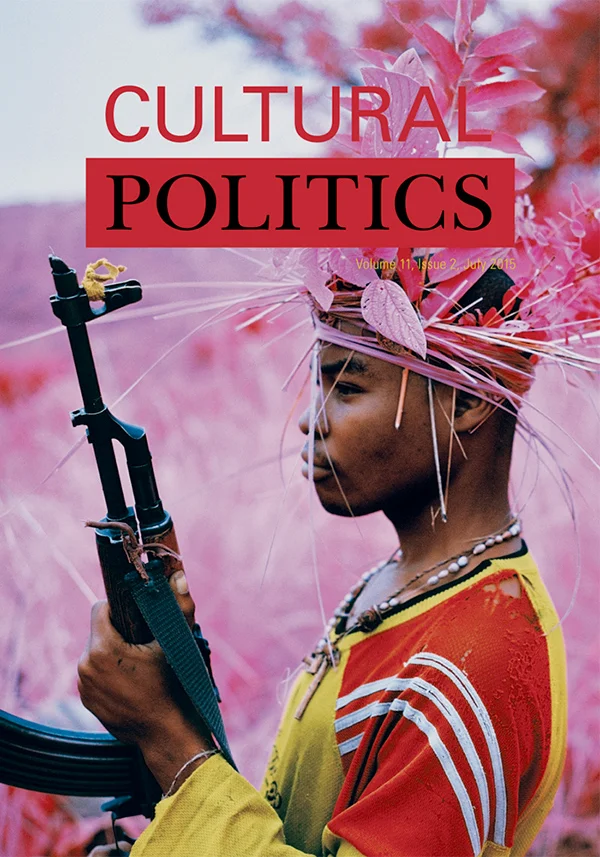
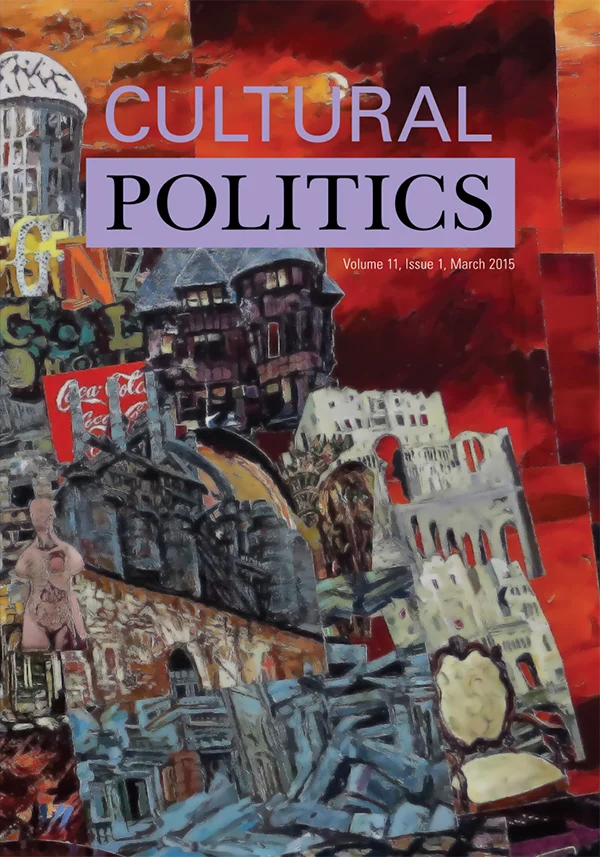
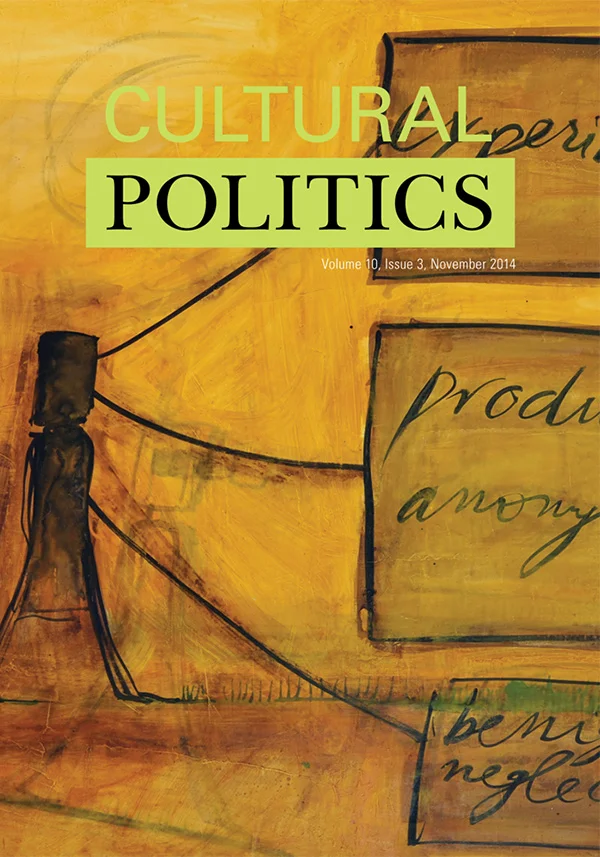
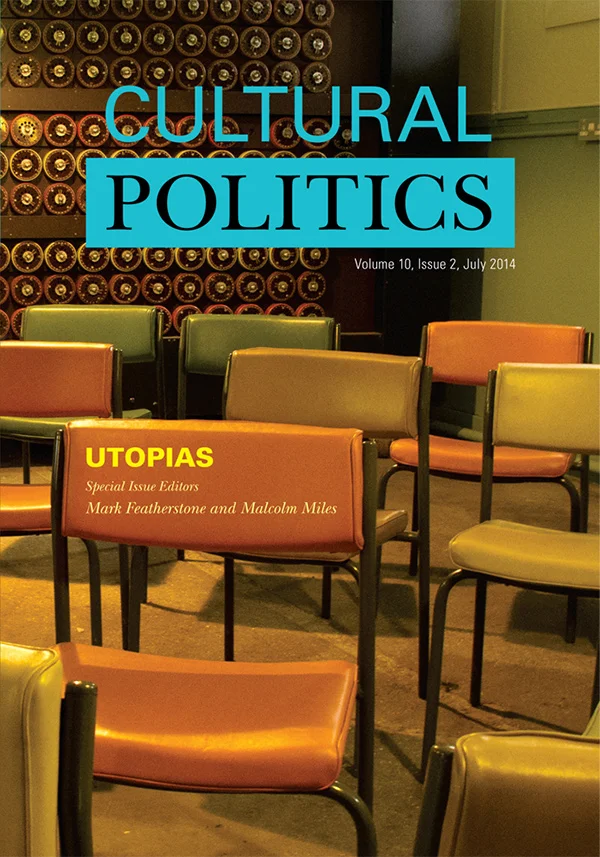
Buy an Issue
Back to TopTo purchase an issue not listed here, please contact our Customer Relations department at orders@dukeupress.edu.

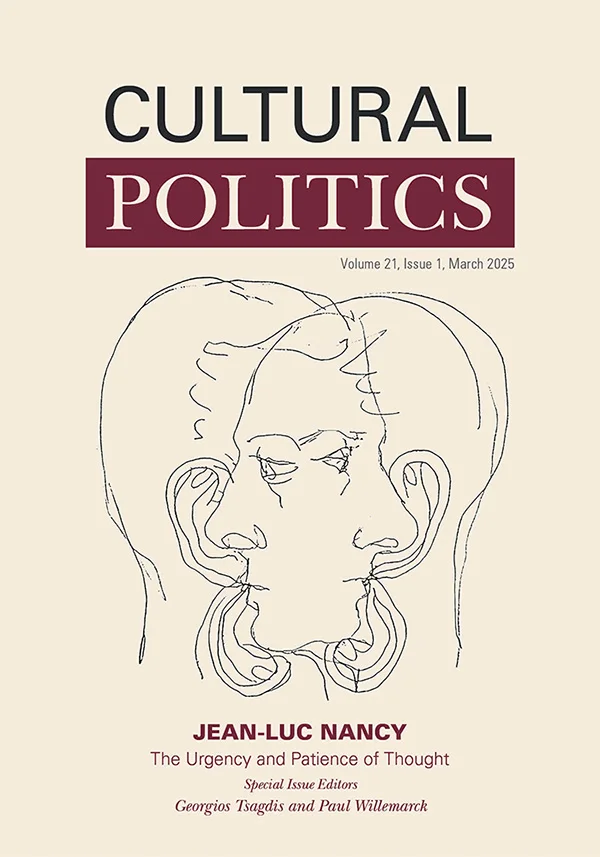




Related Sites
Back to TopAbstractors & Indexers
Back to TopOnline Access
Back to TopIndividual Access Instructions
To activate online access to your subscription, please follow these instructions:
Go to read.dukeupress.edu/my-account/register. (Please ignore the message "Already have a Duke University Press account?" if your previous account was created before November 20, 2017.)
Complete the form to activate your access. Enter your customer number. You can find your customer number on the mailing label of the journal or on the renewal notice. If you are unable to find your customer number, please contact Customer Service.
Click “Register.” You should now have access to your journal.
Advertising
Back to TopRates
Website Ad – 300px × 250px – $285
Issue Alert Email Ad – 726px × 75px – $235
Please refer to the Journals Advertising Rate Catalog (PDF) to view discount offers and our advertising terms.
Reservations and Artwork Submission
To reserve an ad and submit ad artwork, email dup_journals_advertising@duke.edu. Be sure to include the journal title in the email. Please refer to the Journals Advertising Rate Catalog (PDF) to view ad artwork specifications.
Deadlines
Reservations and ad artwork submission for a Website Ad are due by the twentieth of the month prior to the run date.
Reservations and ad artwork submission for an Issue Alert Email Ad are due by the twentieth of the month preceding the Issue Alert Email publication date. To confirm the publication dates for the upcoming Issue Alert Emails for this journal, please contact us at dup_journals_advertising@duke.edu.
Additional Information
Back to TopISSN: 1743-2197
e-ISSN: 1751-7435