
Culture and the Question of Rights
Forests, Coasts, and Seas in Southeast Asia
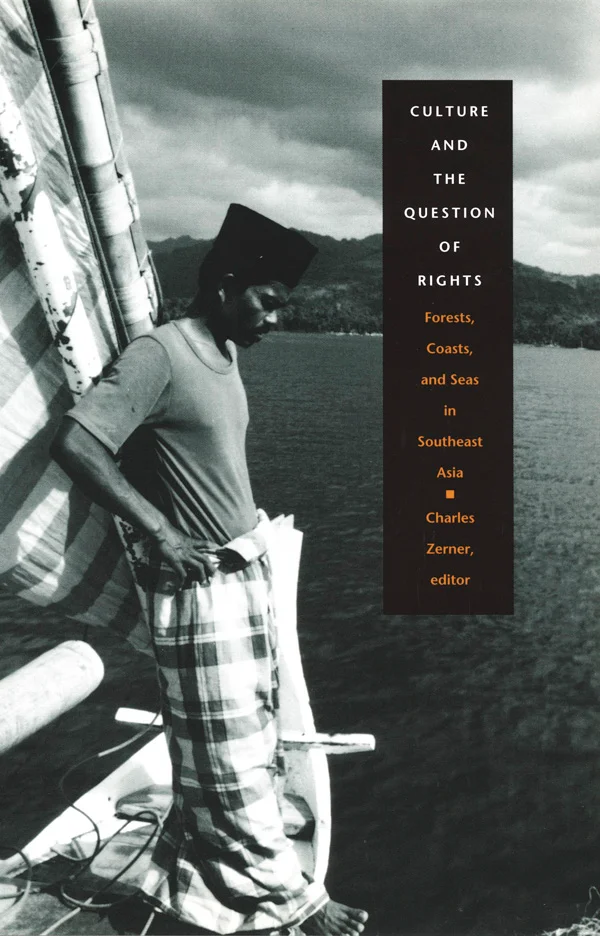
Book
Pages: 304
Illustrations: 16 b&w photos, 7 maps
Published: April 2003
Editor: Charles Zerner
Contributors: Charles Zerner, Anna Lowenhaupt Tsing, Marina Roseman, Stephanie Gorson Fried, Nancy Lee Peluso, Donald Brenneis, and Jane Monnig Atkinson
Subjects
Anthropology > Cultural Anthropology, Asian Studies > Southeast Asia, Environmental Studies
Anthropology > Cultural Anthropology, Asian Studies > Southeast Asia, Environmental Studies
Praise
Buy
Availability: Loading...
Price: Loading...
This title will be released on April 16, 2003
Buy the e-book:
Information
Author/Editor Bios
Back to TopCharles Zerner is Barbara B. and Bertram J. Cohn Professor of Environmental Studies at Sarah Lawrence College.
Table Of Contents
Back to Top
List of Figures ix
Acknowledgments xi
Introduction. Moving Translations: Poetics, Performance, and Property in Indonesia and Malaysia / Charles Zerner 1
Cultivating the Wild: Honey-Hunting and Forest Management in Southeast Kilimantan / Anna Lowenhaupt Tsing 24
Sounding the Makassar Strait: The Poetics and Politics of an Indonesian Marine Environment / Charles Zerner 56
Singers of the Landscape: Song, History, and Property Rights in the Malaysian Rainforest / Marina Roseman 109
Writing for Their Lives: Bentian Dayak Authors and Indonesian Development Discourse / Stephanie Gorson Fried 142
Fruit Trees and Family Trees in an Anthropogenic Forest: Property Zones, Resource Access, and Environmental Change in Indonesia / Nancy Lee Peluso 184
Reflections: Toward New Conceptions of Rights / Donald Brenneis 219
Afterword. By Land and By Sea: Reflections on Claims and Communities in the Malay Archipelago / Jane Monnig Atkinson 235
Works Cited 249
List of Contributors 275
Index 277
Acknowledgments xi
Introduction. Moving Translations: Poetics, Performance, and Property in Indonesia and Malaysia / Charles Zerner 1
Cultivating the Wild: Honey-Hunting and Forest Management in Southeast Kilimantan / Anna Lowenhaupt Tsing 24
Sounding the Makassar Strait: The Poetics and Politics of an Indonesian Marine Environment / Charles Zerner 56
Singers of the Landscape: Song, History, and Property Rights in the Malaysian Rainforest / Marina Roseman 109
Writing for Their Lives: Bentian Dayak Authors and Indonesian Development Discourse / Stephanie Gorson Fried 142
Fruit Trees and Family Trees in an Anthropogenic Forest: Property Zones, Resource Access, and Environmental Change in Indonesia / Nancy Lee Peluso 184
Reflections: Toward New Conceptions of Rights / Donald Brenneis 219
Afterword. By Land and By Sea: Reflections on Claims and Communities in the Malay Archipelago / Jane Monnig Atkinson 235
Works Cited 249
List of Contributors 275
Index 277
Rights
Back to TopSales/Territorial Rights: World
Rights and licensingAdditional Information
Back to Top
Paper ISBN:
978-0-8223-2813-1 /
Hardcover ISBN:
978-0-8223-2802-5 /
eISBN:
978-0-8223-8381-9 /
DOI:
https://doi.org/10.1215/9780822383819
Publicity material