
Halfway to Freedom
The History of Black Washington, DC
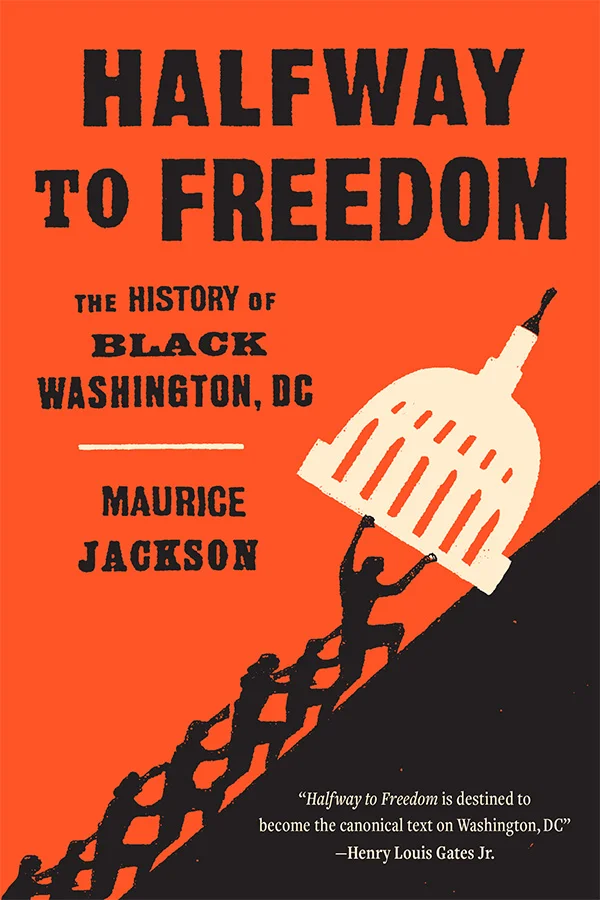
Book
Pages: 776
Illustrations: 47 illustrations
Release Date: December 08, 2026
Subjects
History > U.S. History, African American Studies and Black Diaspora, Sociology > Urban Studies
History > U.S. History, African American Studies and Black Diaspora, Sociology > Urban Studies
Praise
Buy
Availability: Out of stock
Price: $39.95
This title will be released on December 08, 2026
Information
Author/Editor Bios
Back to Top
Maurice Jackson is Professor of History at Georgetown University. He is the author of Rhythms of Resistance and Resilience and Let This Voice Be Heard. He is coeditor of DC Jazz: African Americans and the Haitian Revolution; and Quakers and Their Allies in the Abolitionist Cause, 1754–1808.
Table Of Contents
Back to Top
List of Abbreviations ix
Foreword / Lonnie G. Bunch III xv
Acknowledgments xvii
Introduction: Washington, DC, Is the City Where . . . 1
1. Fighting for Freedom in the “Temple of Liberty” 7
2. “Men of Color, to Arms!”: Black Washington During the Civil War 47
3. Emancipate, Enfranchise, Educate 73
4. “Far from Being a Paradise of Colored People” 109
5. A Red Summer and a “New Negro”: The Rise of Black Militancy 151
6. Struggling for the Double V at Home and Abroad 191
7. “And This in the Capital City, Too” 237
8. Poverty and Chaos in America, War in Vietnam, Riots on Fourteenth Street 283
9. “Black Labs of the Heart” 323
10. “All Labor Has Dignity” 355
11. “It’s the Striving Man, It’s What I Want” 377
12. The Quest for Statehood 421
Epilogue. A Washington Dilemma: What Happens to the Soul of the City? 443
Appendix A: Washington, DC, Timeline 459
Appendix B: Washington, DC, Census Data, 1900–2020 479
Notes 481
Selected Bibliography 667
Index
Foreword / Lonnie G. Bunch III xv
Acknowledgments xvii
Introduction: Washington, DC, Is the City Where . . . 1
1. Fighting for Freedom in the “Temple of Liberty” 7
2. “Men of Color, to Arms!”: Black Washington During the Civil War 47
3. Emancipate, Enfranchise, Educate 73
4. “Far from Being a Paradise of Colored People” 109
5. A Red Summer and a “New Negro”: The Rise of Black Militancy 151
6. Struggling for the Double V at Home and Abroad 191
7. “And This in the Capital City, Too” 237
8. Poverty and Chaos in America, War in Vietnam, Riots on Fourteenth Street 283
9. “Black Labs of the Heart” 323
10. “All Labor Has Dignity” 355
11. “It’s the Striving Man, It’s What I Want” 377
12. The Quest for Statehood 421
Epilogue. A Washington Dilemma: What Happens to the Soul of the City? 443
Appendix A: Washington, DC, Timeline 459
Appendix B: Washington, DC, Census Data, 1900–2020 479
Notes 481
Selected Bibliography 667
Index
Rights
Back to TopSales/Territorial Rights: World
Rights and licensingAdditional Information
Back to Top
Hardcover ISBN:
978-1-4780-3442-1 /
eISBN:
978-1-4780-6301-8 /
Publicity material